
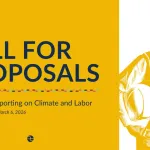
Journalists, editors, and independent media organizations across the world are invited to apply for the 2026 Special Global Call for Climate and Labour Journalism Grants. This international funding opportunity is designed to support high-quality reporting that examines the critical intersection between climate change, environmental transition, and labour rights. As economies shift toward low-carbon systems, the implications for workers, trade unions, industries, and vulnerable communities are profound. This grant program seeks to strengthen investigative and solutions-focused journalism that explores these transformations with depth, rigor, and clarity.
About the Grant Program
The global transition toward renewable energy, green infrastructure, and sustainable production models is reshaping labour markets worldwide. While new employment opportunities are emerging in green sectors, traditional industries are facing restructuring, automation, or decline. Workers in fossil fuel industries, agriculture, manufacturing, and informal sectors are particularly affected. At the same time, issues such as just transition policies, workplace safety, migration, gender equity, and social protection are becoming increasingly relevant.
This grant initiative aims to fund compelling reporting projects that analyze how climate action influences employment patterns, labour protections, supply chains, and economic justice. Successful applicants will produce stories that inform public debate, highlight overlooked perspectives, and provide evidence-based analysis grounded in strong journalistic ethics.
Who Should Apply
The call is open to:
- Professional journalists with demonstrated experience in investigative or in-depth reporting.
- Freelance reporters and independent media practitioners.
- Editorial teams and newsrooms.
- Nonprofit media organizations and journalism collectives.
- Cross-border collaborations focused on labour and environmental reporting.
Applicants from all regions are encouraged to apply. Special consideration may be given to proposals that highlight underreported regions, marginalized communities, or developing economies disproportionately affected by climate change.
Areas of Focus
Proposals may address, but are not limited to:
- The impact of climate transition policies on workers and trade unions.
- Job creation in renewable energy and green industries.
- Worker displacement and reskilling challenges.
- Occupational health and safety risks linked to climate change.
- Climate-induced migration and labour exploitation.
- Gender and youth perspectives in climate-related employment.
- Informal sector workers and climate vulnerability.
- Corporate accountability and environmental labour standards.
- Case studies on just transition frameworks and policy implementation.
Projects can take the form of investigative articles, multimedia features, documentary storytelling, data journalism, or multi-part series. Innovative storytelling formats that expand audience engagement are welcome.
Funding and Support
Selected applicants will receive financial grants to cover reporting expenses, including research, travel, data acquisition, and production costs. In addition to funding, grantees may gain access to editorial mentorship, expert consultations, and professional networks that enhance the quality and reach of their work.
The program prioritizes journalistic integrity, factual accuracy, and impact. Grantees will be expected to adhere to high ethical standards and maintain editorial independence while fulfilling reporting commitments within the agreed timeframe.
Selection Criteria
Applications will be evaluated based on the following criteria:
- Relevance and Significance: The proposal clearly demonstrates the connection between climate change and labour issues and explains why the story matters.
- Originality: The idea presents fresh insights, innovative angles, or underreported narratives.
- Feasibility: The applicant provides a realistic timeline, methodology, and budget.
- Experience and Capacity: The applicant has demonstrated ability to deliver quality reporting.
- Impact Potential: The proposed project shows strong potential to influence public understanding, policy discussions, or community awareness.
Application Process
Applicants are required to submit a detailed proposal outlining the story concept, reporting approach, timeline, estimated budget, and expected outputs. Supporting documents may include work samples, a professional biography, and letters of collaboration if applicable.
All submissions must be completed before the stated deadline. Late or incomplete applications may not be considered. Applicants are encouraged to carefully review eligibility requirements and submission guidelines prior to applying.
Why This Opportunity Matters
Climate change is not only an environmental crisis; it is also a labour, economic, and social justice issue. Workers are on the front lines of environmental transformation, facing both risks and opportunities. By supporting investigative and in-depth journalism, this grant program contributes to informed public dialogue and evidence-based policymaking.
Through this initiative, journalists can play a pivotal role in documenting real-world impacts, amplifying worker voices, and holding institutions accountable during a time of rapid global transition. Media professionals with a passion for environmental justice and labour equity are strongly encouraged to apply and contribute to shaping the global narrative around climate and work.