World Wildlife Fund’s Education for Nature Program · Uganda
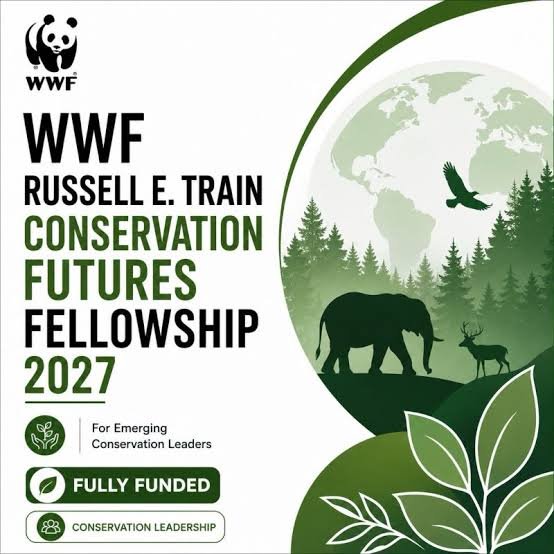
Applications are open for the WWF Russell E. Train Fellowships 2027, an educational funding opportunity supporting conservation professionals and aspiring researchers working to address human and wildlife conflict in Uganda. Offered through the World Wildlife Fund’s Education for Nature Program, the fellowship aims to strengthen local expertise and develop practical solutions to conservation challenges affecting people, wildlife and agricultural communities.
The 2027 fellowship opportunity focuses specifically on human and elephant conflict, particularly incidents in which elephants raid crops on agricultural lands near the northern boundary of Murchison Falls National Park in Uganda. As human populations grow and settlements and farming activities expand into wildlife habitats, conflicts between people and elephants can threaten livelihoods, food security and wildlife conservation efforts.
The programme supports Ugandan nationals pursuing master’s level studies at accredited institutions in Uganda. Applicants are expected to develop research that contributes to practical, interdisciplinary and culturally relevant approaches to reducing human elephant conflict and promoting coexistence. The fellowship is intended to strengthen the capacity of conservation scientists, researchers and practitioners to address these challenges within their own country.
The Russell E. Train Education for Nature Program is a WWF initiative that invests in education, research and professional development for conservation leaders. It supports individuals and organisations working to protect biodiversity and improve the sustainable management of natural resources in WWF priority regions.
The fellowship for 2027 seeks to strengthen Uganda’s capacity to understand and respond to human elephant conflict. Its focus is on building local knowledge and research expertise that can inform conservation practices, agricultural management and community based solutions.
The opportunity is particularly relevant to students whose academic interests include wildlife conservation, ecology, biology, zoology, geography and related disciplines. Research should be directed towards developing solutions to elephant crop raiding and the resulting challenges for agricultural communities around the northern boundary of Murchison Falls National Park.
Eligible applicants may request up to US$15,000 per year for a maximum of two years.
• Funding for tuition and academic fees.
• Support for living expenses during the study period.
• Financial assistance for books and learning materials.
• Support for eligible research expenses.
• Opportunity to develop specialised knowledge of human elephant conflict and coexistence.
• Academic and field based research experience relevant to conservation challenges in Uganda.
• Opportunity to contribute evidence and practical recommendations for wildlife conservation and community livelihoods.
The final award amount will depend on the proposed research, the applicant’s financial needs and the scope of the funding request. Applicants should prepare a realistic budget that explains how the requested support will contribute to their academic programme and research objectives.
The fellowship is designed around a specific conservation challenge in Uganda. Proposed research should address the causes, consequences or potential solutions to human elephant conflict, particularly crop raiding near Murchison Falls National Park.
Relevant research directions may include:
• Understanding the causes and patterns of elephant crop raiding.
• Examining the effects of human elephant conflict on agricultural livelihoods and local communities.
• Developing practical approaches to reduce crop damage caused by elephants.
• Exploring community based strategies for improving coexistence between people and wildlife.
• Evaluating conservation interventions and their effectiveness in reducing conflict.
• Investigating the social, ecological and economic dimensions of human elephant conflict.
These are illustrative research directions rather than a prescribed list of separate fellowship tracks. Applicants should ensure that their proposed research directly addresses the fellowship’s stated focus.
Applicants should meet the following requirements before applying.
• Be a Ugandan national.
• Hold a bachelor’s degree in a relevant discipline, such as biology, ecology, conservation, zoology or geography.
• Be enrolled in, admitted to or have applied to a master’s degree programme at an accredited institution in Uganda.
• Have at least two years of conservation related work, research or academic experience, as specified in the published eligibility information.
• Demonstrate a clear commitment to conservation and addressing environmental challenges in an eligible country.
• Plan to begin the relevant studies no later than January 2028.
• Propose master’s research focused on developing solutions to human elephant conflict associated with crop raiding around the northern boundary of Murchison Falls National Park.
Applicants who are current or former WWF employees, consultants or previous Education for Nature grant recipients should contact the programme team to confirm their eligibility before submitting an application.
Applicants should consult the official application portal and grant guidelines for the complete document requirements. Candidates should be prepared to provide information demonstrating their academic background, proposed research and suitability for the fellowship.
Important application information includes:
• Evidence of a relevant bachelor’s degree.
• Details of admission, application or enrolment in an eligible master’s programme in Uganda.
• A research proposal addressing human elephant conflict and coexistence.
• An explanation of the proposed research methods and expected contribution to conservation.
• A funding request covering eligible academic, living and research expenses.
• Information about relevant conservation experience and commitment to addressing the stated research challenge.
• Any additional documents required by the official application form.
Applicants should ensure that all information is accurate and that the proposed research, study programme and budget are consistent with the fellowship requirements.
The fellowship is competitive, and applicants should demonstrate a clear connection between their academic plans and the programme’s conservation objectives.
Applications should establish the relevance of the proposed research to human elephant conflict in Uganda, the applicant’s ability to undertake graduate level study and the potential value of the research for conservation practice.
A well developed proposal should explain the problem being investigated, the methods that will be used, the expected outcomes and how the findings could contribute to reducing conflict between elephants and agricultural communities. Applicants should also show how the requested funding will support completion of their studies and research.
Uganda
 World Wildlife Fund’s Education for Nature Program





Be the first to comment on this opportunity.