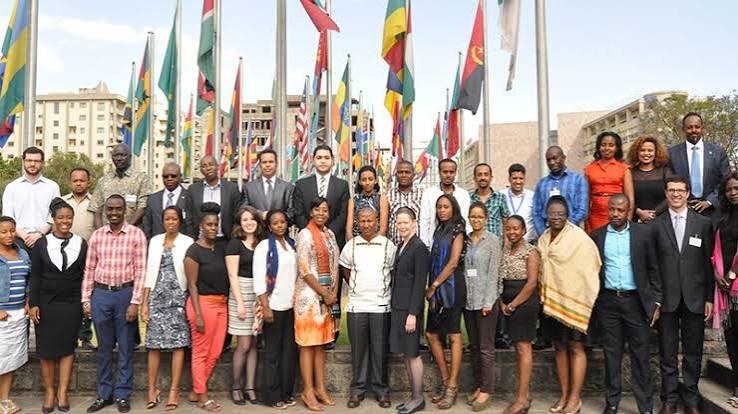
Codification Division of the United Nations Office of Legal Affairs · Addis Ababa, Ethiopia
Applications are open for the United Nations Regional Course in International Law for Africa 2027, a professional training opportunity for African legal practitioners and other qualified professionals with experience in international law. The course is organized by the Codification Division of the United Nations Office of Legal Affairs in cooperation with the Federal Democratic Republic of Ethiopia, the African Union, and the United Nations Economic Commission for Africa.
The programme is designed to strengthen knowledge and professional capacity in international law. It offers participants an opportunity to deepen their understanding of the subject, engage with relevant legal issues, and exchange knowledge with professionals working in related fields across the region.
The 2027 course will take place in person at the facilities of the United Nations Economic Commission for Africa in Addis Ababa, Ethiopia, from 15 March to 7 April 2027. The programme will be conducted entirely in English and will accommodate up to 30 participants. A limited number of places will be available for applicants who can finance their own participation.
The United Nations Regional Course in International Law for Africa is part of the United Nations' broader efforts to promote the teaching, study, dissemination, and wider appreciation of international law. It provides professional training for people who already have practical experience in the field and whose work can benefit from further specialist knowledge.
The programme is open to qualified candidates from United Nations Member States that are also members of the African Group. Applicants may come from government institutions, universities, intergovernmental organizations, nongovernmental organizations, and similar institutions involved in international law activities in the region.
Government officials are not the only professionals who may apply. Academics and practitioners working with relevant organizations are also eligible to be considered, provided they satisfy the course requirements. Candidates who are not government officials may be nominated by their employer or the institution with which they are affiliated.
Selected fellowship recipients can receive the following benefits:
• Return travel to Addis Ababa.
• Accommodation for the duration of the course.
• Meals during the programme.
• Medical insurance.
• Course participation and training materials.
• A modest stipend to support additional living expenses, including local transportation and other everyday costs.
• Professional learning and engagement with international law specialists and other participants.
• An opportunity to receive the same course certificate awarded to other participants upon completion.
The fellowship stipend is intended to support reasonable living expenses and is not designed to provide a luxurious standard of living. Participants should also be aware that some medical providers may require advance payment for services, which may not be covered by the stipend.
A limited number of self funded places are available. These participants receive the training materials and take part in the same course activities, but must pay their own travel, accommodation, meals, medical insurance, and other living expenses.
The course focuses on professional education in international law. Applicants should consult the official course brochure for the detailed curriculum and specific subjects scheduled for the 2027 edition.
The programme is intended to help participants strengthen their professional understanding of international law and apply that knowledge in their work. It may be particularly relevant to professionals whose responsibilities involve legal research, international legal affairs, policy development, academic work, or institutional engagement with international law.
The course also provides a setting for participants from different professional backgrounds and African countries to exchange perspectives and learn from one another.
Applicants must meet the following requirements:
• Have a legal background.
• Possess professional experience in the field of international law.
• Be a national of a United Nations Member State that is also a member of the African Group.
• Demonstrate fluency in English, the language of the 2027 course.
• Be available to attend the entire programme in person from 15 March to 7 April 2027.
• Be able to demonstrate the relevance of the course to their professional responsibilities.
• Provide the required information and institutional support as specified in the official application form.
Female candidates are strongly encouraged to apply. The selection process considers applicants' qualifications, the nature of their professional duties, the relevance of the training to their work, and gender balance.
The programme is intended for professionals with practical experience rather than students who have not yet developed professional experience in international law. Current United Nations staff members are not eligible for the fellowship.
Applicants should obtain and complete the official United Nations application form. The form includes sections that must be completed with the involvement of the applicant's sponsoring institution.
Candidates should prepare to provide the information requested in the application form, including:
• Personal and professional information.
• Educational and legal qualifications.
• Details of professional experience in international law.
• Information about current duties and responsibilities.
• Details of the employer or sponsoring institution, where applicable.
• Information demonstrating how the training relates to the applicant's professional responsibilities.
• Confirmation of availability to attend the complete course.
Applicants should carefully review the form and its instructions before submission. The sponsoring institution must complete the relevant sections, but the applicant may submit the completed form directly to the Codification Division of the United Nations Office of Legal Affairs. Government nomination is not compulsory for professionals who qualify through another relevant institution.
Applications are assessed according to the candidate's qualifications and professional background. The selection process also considers the scope of the applicant's current duties and how relevant the course is to their work.
Gender balance is another consideration, and female applicants are strongly encouraged to apply. The course can accommodate up to 30 participants, including a limited number of self funded participants.
Fellowship recipients and self funded participants are selected through the same process and assessed using the same selection criteria. Both groups participate in the same lectures and activities and receive the same certificate upon successful completion.
Interested candidates should follow these steps:
Addis Ababa, Ethiopia
 Codification Division of the United Nations Office of Legal Affairs





Be the first to comment on this opportunity.