
Applications are now open for the Max Weber Programme (MWP) 2027–2028, one of Europe’s leading postdoctoral fellowship programmes for early-career researchers in the social sciences, law, economics, history, and political science. Hosted by the European University Institute (EUI) in Florence, Italy, the programme provides an outstanding opportunity for scholars to pursue independent research while benefiting from world-class mentoring, interdisciplinary collaboration, and professional development. Established in 2006, the Max Weber Programme is designed to support promising postdoctoral researchers as they transition into successful academic careers. Fellows become part of an international scholarly community where they refine their research, develop teaching skills, publish high-quality work, and engage with leading academics from across Europe and beyond. Unlike many traditional postdoctoral fellowships, the Max Weber Programme combines independent research with structured career development. Fellows participate in seminars, workshops, interdisciplinary discussions, teaching opportunities, publication support, and mentoring activities that prepare them for competitive positions in universities, research institutes, and international organizations. About the Programme The Max Weber Programme is the largest international postdoctoral programme in the social sciences and humanities in Europe. Each year, it welcomes a diverse cohort of scholars representing numerous countries and academic disciplines. The fellowship provides researchers with the freedom to pursue their own projects while encouraging active participation in the intellectual life of the European University Institute. Fellows work alongside internationally recognized faculty members and researchers, contributing to seminars, conferences, collaborative research initiatives, and academic events. Fellowship Benefits Successful applicants will receive: A fully funded postdoctoral fellowship at the European University Institute. A competitive monthly stipend and social security coverage. Dedicated funding to support research activities. Office space and access to EUI’s extensive research facilities. Full access to one of Europe’s premier academic libraries. Individual mentoring from senior faculty members. Opportunities to teach and gain classroom experience. Participation in interdisciplinary seminars, workshops, and conferences. Career development training, including academic publishing and job-market preparation. Membership in an international network of researchers and Max Weber alumni. Eligibility Criteria Applicants must: Hold a PhD awarded within the last five years before the programme begins. Have completed their doctorate by the start of the fellowship. Demonstrate outstanding academic achievement and research potential. Meet the English language requirements specified by the programme. Submit a research proposal that aligns with one of the participating academic departments or centres. Required Application Documents Applicants will typically be required to submit: Completed online application form. Curriculum Vitae (CV). Detailed research proposal. Publication list. Writing sample or published work, where applicable. Academic transcripts and PhD documentation. Contact details for academic referees. Any additional materials requested by the relevant academic department. Selection Criteria Applications will be assessed based on: Academic excellence. Originality and quality of the proposed research. Publication record relative to career stage. Feasibility of the research project. Interdisciplinary potential. Alignment with the academic priorities of the selected department. Overall potential for a successful academic career. How to Apply To apply for the Max Weber Programme 2027–2028: Visit the official European University Institute application portal. Review the eligibility criteria and the requirements of your chosen department. Prepare your research proposal and supporting documents. Complete the online application form. Upload all required materials before the deadline. Carefully review your application before submitting it.
EPFL AI Center and Swiss AI Initiative Postdoctoral Fellowships 2026–2027 (Fully Funded AI Research Fellowship in Switzerland)
Applications are now open for the EPFL AI Center and Swiss AI Initiative Postdoctoral Fellowships 2026–2027, a prestigious fully funded programme that supports exceptional early-career researchers pursuing interdisciplinary artificial intelligence (AI) research. Hosted by the EPFL AI Center and supported through the Swiss AI Initiative, the fellowship enables postdoctoral researchers to collaborate with leading scientists across multiple disciplines while developing innovative AI-driven research projects with real-world impact. The programme is designed for researchers who wish to apply cutting-edge AI methods to scientific, engineering, medical, environmental, and societal challenges. Rather than working within a single laboratory, fellows develop an interdisciplinary research agenda in collaboration with at least two EPFL laboratories led by AI Center faculty members. This collaborative model encourages knowledge exchange across disciplines while giving fellows significant independence to shape their own research direction. EPFL is internationally recognized as one of Europe’s leading science and technology universities, offering researchers access to world-class laboratories, advanced computing infrastructure, and a vibrant international academic community. Through this fellowship, participants become part of EPFL’s growing AI ecosystem and contribute to strategic initiatives advancing open, trustworthy, and impactful artificial intelligence. About the Fellowship The EPFL AI Center Postdoctoral Fellowship Programme aims to nurture future leaders in interdisciplinary AI research by supporting independent, curiosity-driven projects that bridge artificial intelligence with other scientific fields. Each fellow works with multiple research groups across EPFL, enabling collaboration between AI specialists and experts in application domains such as robotics, life sciences, climate science, engineering, digital health, and computational sciences. Fellows enjoy considerable academic freedom while contributing to collaborative research, seminars, workshops, and strategic initiatives organized by the EPFL AI Center. Fellowship Benefits Successful applicants will receive: A fully funded postdoctoral position at EPFL. Competitive salary for up to two years. A research allowance of CHF 5,000 per year to support research activities and conference travel. Access to EPFL’s world-class laboratories and AI research infrastructure. Collaboration with at least two EPFL AI Center laboratories. Opportunities to participate in interdisciplinary AI research projects. Access to seminars, workshops, and networking events. Professional development and mentorship from internationally recognized researchers. Opportunities to contribute to the Swiss AI Initiative and the broader AI research community. Research Areas The fellowship welcomes proposals that integrate artificial intelligence with a wide range of disciplines, including: Artificial Intelligence. Machine Learning. Deep Learning. Robotics. Computer Vision. Natural Language Processing. Data Science. Computational Biology. Biomedical Engineering. Digital Health. Climate Science. Environmental Sustainability. Materials Science. Physics. Chemistry. Engineering. Mathematics. Social Sciences using AI methodologies. Other interdisciplinary research areas where AI can drive scientific discovery. Eligibility Criteria Applicants must: Hold a PhD or expect to complete their PhD before the fellowship begins. Have obtained their PhD within the previous two years, or be in the final stages of doctoral studies. Demonstrate an outstanding academic and research record. Propose an interdisciplinary AI research project. Secure the support of at least two EPFL AI Center faculty members willing to supervise the proposed research. Demonstrate strong potential for an independent research career. Required Application Documents Applicants will generally need to prepare: Completed online application form. Curriculum Vitae (CV). Research proposal using the official programme template. Publication list. Cover letter or motivation statement. Letters or confirmations of support from participating EPFL faculty members. Academic transcripts or PhD certificate where applicable. Contact details for referees. Additional documents requested in the official application guidelines. Selection Criteria Applications will be evaluated based on: Academic achievements. Quality and originality of the proposed research. Scientific impact and innovation. Interdisciplinary nature of the project. Applicant’s research potential. Publication record. Strength of collaboration between participating EPFL laboratories. Alignment with the mission of the EPFL AI Center and Swiss AI Initiative. The fellowship is highly competitive, with successful applicants demonstrating exceptional scientific promise and a clear vision for advancing AI-enabled research. How to Apply To apply for the EPFL AI Center and Swiss AI Initiative Postdoctoral Fellowships 2026–2027: Review the official fellowship guidelines on the EPFL AI Center website. Identify at least two EPFL AI Center faculty members whose research aligns with your interests. Contact potential supervisors to discuss your proposed interdisciplinary research project. Prepare your research proposal and supporting documents using the official templates. Complete the online application through the EPFL submission platform. Submit all required documents before November 3, 2026 (17:00 CET). Applicants are encouraged to contact prospective supervisors well before the deadline, as strong faculty support is an essential component of a competitive application.
SEAREG Postdoctoral Fellowship Program 2027–2028 (Fully Funded Postdoctoral Fellowship in Southeast Asia)
Applications are now open for the SEAREG Postdoctoral Fellowship Program 2027–2028, a newly launched and fully funded fellowship designed to support outstanding early-career scholars conducting research on Southeast Asia. Organized by the Southeast Asia Research Group (SEAREG) with generous support from the Henry Luce Foundation, the fellowship offers a unique opportunity for one postdoctoral researcher to spend 12 months at a leading university in Southeast Asia while advancing their research, expanding professional networks, and gaining valuable academic experience. The fellowship is intended to strengthen the careers of emerging scholars by providing dedicated time for research, mentorship, teaching or public engagement opportunities, and participation in SEAREG’s renowned academic community. During the programme, the selected fellow will be hosted by one of four partner institutions located in Thailand, Malaysia, or Vietnam, where they will collaborate with local faculty, contribute to academic activities, and deepen their engagement with the region they study. As the inaugural edition of the programme, the 2027 fellowship marks an important milestone in SEAREG’s efforts to promote high-quality scholarship on Southeast Asia. The fellowship is expected to become a flagship opportunity for researchers in political science, sociology, anthropology, economics, history, public policy, and related disciplines whose work focuses on Southeast Asia. About the Fellowship The SEAREG Postdoctoral Fellowship was established to provide promising scholars with opportunities for intensive research, regional immersion, and professional development. Unlike many postdoctoral appointments that are based outside the region of study, this fellowship places researchers directly within Southeast Asian universities, enabling closer collaboration with local academics and greater access to fieldwork opportunities. The selected fellow will receive mentorship from two sources throughout the fellowship: a faculty mentor at the host institution and a member of the SEAREG Executive Council. This dual-mentorship model is designed to strengthen both the fellow’s research agenda and long-term career development. In addition to conducting independent research, fellows are expected to contribute to the academic life of their host institution. Depending on the placement, responsibilities may include delivering public lectures, collaborating with faculty, mentoring students, or teaching courses. Fellows will also present their research at SEAREG’s annual Southeast Asian Workshop, providing an opportunity to engage with an international network of scholars specializing in the region. Fellowship Benefits Successful applicants will receive: A fully funded 12-month postdoctoral appointment. A competitive salary provided by the host institution. Research funding to support fieldwork and academic activities. Travel funding to attend the SEAREG Southeast Asian Workshop. Mentorship from a SEAREG Executive Council member. Additional mentorship from a faculty member at the host university. Opportunities to present research to international academic audiences. Access to leading universities and research networks across Southeast Asia. Professional development that strengthens competitiveness for academic and non-academic careers. Opportunities for collaboration with scholars throughout the region. Eligibility Criteria Applicants should: Hold a PhD in a relevant discipline before the fellowship begins. Demonstrate a strong research focus on Southeast Asia. Have a well-developed postdoctoral research agenda. Be interested in conducting research while residing in Southeast Asia. Secure a letter of support from a faculty mentor at one of the partner institutions. Demonstrate the ability to contribute to the academic activities of the host institution. Be committed to participating in SEAREG workshops and professional development activities. Researchers from around the world are encouraged to apply, provided their work aligns with the programme’s focus on Southeast Asian studies. Required Application Documents Applicants will generally need to prepare: Completed online application form. Curriculum Vitae (CV). Research proposal. Cover letter or statement of interest. Letter of support from a faculty mentor at the selected host institution. Academic transcripts or degree documentation if requested. Contact information for referees. Any additional documents specified in the official application guidelines. Selection Criteria Applications will be evaluated based on: Academic excellence. Quality and originality of the proposed research. Relevance to Southeast Asian studies. Feasibility of the research project. Strength of the proposed host institution match. Quality of mentorship arrangements. Potential contribution to SEAREG and the broader scholarly community. Overall potential for future academic leadership. Because only one fellowship will be awarded during this inaugural cycle, the competition is expected to be highly selective. How to Apply To apply for the SEAREG Postdoctoral Fellowship Program 2027–2028: Review the official fellowship guidelines on the SEAREG website. Identify the partner institution that best aligns with your research interests. Contact a faculty member at your preferred institution to discuss mentorship and obtain a letter of support. Prepare your research proposal and supporting documents. Complete the online application form.

Pursuit Awards International Competition 2026 for PhD Students and Graduates
Applications are now open for the Pursuit Awards International Competition 2026, the 16th annual edition of a prestigious global research competition that recognizes outstanding PhD students, postdoctoral researchers, and recent doctoral graduates whose work has the potential to improve the lives of children with disabilities. Organized by the Holland Bloorview Kids Rehabilitation Hospital Foundation, the competition celebrates innovative research that advances childhood disability care, rehabilitation, inclusion, technology, health services, and family-centered support. The Pursuit Awards provide an international platform for emerging researchers to showcase their scientific achievements while competing for financial prizes and professional recognition. Participants submit their research through a compelling video presentation designed to communicate complex scientific ideas to both expert and non-specialist audiences. The competition emphasizes not only research excellence but also the ability to communicate discoveries in an engaging and accessible manner. Since its establishment, the Pursuit Awards have highlighted groundbreaking work from researchers across the globe whose studies address critical issues affecting children and youth with disabilities. By recognizing early-career researchers, the programme encourages innovation, interdisciplinary collaboration, and the translation of research into practical solutions that improve health outcomes and quality of life. About the Competition The Pursuit Awards were created to inspire and recognize the next generation of researchers dedicated to advancing childhood disability research. Unlike conventional academic award programmes that rely solely on published papers, this competition combines scientific excellence with effective science communication. Applicants prepare a short research presentation explaining their work, its significance, methodology, findings, and potential impact. Entries are reviewed by an expert panel that evaluates scientific quality, originality, innovation, clarity of communication, and relevance to childhood disability research. The competition is international in scope, allowing participants from universities, hospitals, and research institutions worldwide to compete on an equal platform. Beyond the monetary prizes, finalists receive valuable international exposure and opportunities to connect with researchers working in related fields. Competition Benefits Successful participants may receive: Cash awards for winning entries. International recognition for outstanding research. Opportunity to showcase research before a global audience. Professional exposure within the childhood disability research community. Recognition from a leading pediatric rehabilitation institution. Enhanced academic profile and career visibility. Networking opportunities with researchers and professionals. Experience presenting research in an engaging public format. Increased visibility for innovative disability research projects. Research Areas Applications are welcomed from researchers working in areas related to childhood disability, including but not limited to: Pediatric rehabilitation. Childhood disability research. Developmental disabilities. Cerebral palsy. Autism spectrum disorders. Rehabilitation engineering. Assistive technology. Inclusive education. Pediatric healthcare. Family-centered care. Mental health. Health services research. Community participation. Accessibility and inclusion. Early intervention. Digital health innovations for children with disabilities. Interdisciplinary research projects that demonstrate practical impact are particularly encouraged. Eligibility Criteria Applicants must: Be a PhD student nearing completion of their doctoral studies, a postdoctoral trainee, or a recent PhD graduate. Conduct research that contributes to improving outcomes for children and youth with disabilities. Be able to present their research clearly in English. Submit all required competition materials before the application deadline. Meet all eligibility requirements outlined in the official competition guidelines. The competition welcomes applicants from universities and research institutions around the world, making it accessible to emerging researchers regardless of nationality. Required Application Materials Applicants should prepare: Completed online application form. Research presentation video prepared according to competition guidelines. Brief research summary or abstract. Curriculum Vitae (CV) or résumé. Academic or institutional information. Any additional supporting materials requested by the organizers. Applicants should carefully review the official submission instructions to ensure their video meets the required technical specifications. Selection Criteria Applications will be evaluated based on: Scientific excellence. Originality and innovation. Potential impact on childhood disability research. Quality of the research methodology. Clarity and effectiveness of the research presentation. Ability to communicate research to diverse audiences. Overall contribution to improving the lives of children and youth with disabilities. How to Apply To apply for the Pursuit Awards International Competition 2026: Review the official competition guidelines and eligibility requirements. Prepare a concise and engaging research presentation video that highlights your research question, methods, findings, and impact. Complete the online application form. Upload all required documents and supporting materials. Carefully review your submission before finalizing your application. Submit your application before September 11, 2026.
Brooke Owens Fellowship – Class of 2027 (Paid Aerospace Internship and Executive Mentorship Programme)
Applications are now open for the Brooke Owens Fellowship ,Class of 2027, one of the most prestigious aerospace fellowship programmes for undergraduate students interested in aviation and space exploration. Named in honor of the late Brooke Owensa respected pilot, aerospace professional, and space policy expert, the fellowship aims to increase diversity and representation within the aerospace sector by providing talented students with paid internships, executive mentorship, and access to an influential professional network. The Brooke Owens Fellowship connects exceptional undergraduate women and gender minority students with leading aerospace companies, research organizations, government agencies, startups, and nonprofit organizations. Fellows gain practical industry experience through paid summer internships while receiving personalized mentorship from experienced leaders across the aviation and space industries. Since its establishment in 2017, the fellowship has helped hundreds of students launch successful careers in aerospace engineering, satellite technology, aviation, space policy, research, entrepreneurship, journalism, and related fields. Many alumni have gone on to work with major organizations including NASA, SpaceX, Blue Origin, Boeing, Lockheed Martin, commercial space companies, and innovative aerospace startups. About the Fellowship The Brooke Owens Fellowship was created to address the underrepresentation of women and gender minorities in the aerospace industry while honoring Brooke Owens’ legacy of leadership, curiosity, and dedication to expanding opportunities for future generations. Unlike traditional internship programmes, the fellowship combines three core components: A paid summer internship with a leading aerospace organization. Executive mentorship from experienced professionals. Membership in a lifelong network of Brooke Owens Fellows and alumni. Each fellow is matched with both an internship host organization and mentors who provide career guidance, technical advice, leadership coaching, and professional support throughout the fellowship year. This combination of practical experience and mentorship enables participants to develop technical skills while building relationships that often continue long after the programme ends. The fellowship also emphasizes collaboration among fellows, creating a supportive community of future aerospace leaders from diverse academic backgrounds and institutions. Fellowship Benefits Successful applicants will receive: A paid summer internship with a leading aerospace employer. Personalized mentorship from experienced aerospace professionals. Professional development throughout the fellowship year. Access to an extensive alumni and mentor network. Career coaching and leadership development. Networking opportunities with industry leaders. Participation in fellowship events and community activities. Exposure to diverse career pathways within aviation and space industries. Long-term membership in the Brooke Owens Fellowship community. The fellowship provides participants with practical work experience while helping them establish professional relationships that support future careers in aerospace and related industries. Internship Areas Host organizations offer internships across numerous disciplines, including: Aerospace Engineering. Mechanical Engineering. Electrical Engineering. Computer Science. Space Systems. Satellite Technology. Flight Operations. Aviation. Space Policy. Research and Development. Robotics. Artificial Intelligence. Earth Observation. Business and Strategy. Communications and Journalism. Product Management. Mission Operations. Entrepreneurship. Finance. Human Resources. Legal and Regulatory Affairs. Internship assignments vary by host organization and are matched according to each fellow’s interests, qualifications, and career aspirations. Eligibility Criteria Applicants should: Be undergraduate students enrolled at an accredited college or university. Identify as women or gender minorities. Have a demonstrated interest in aerospace, aviation, or space exploration. Be available to participate in a full-time summer internship during 2027. Be committed to actively participating in mentorship and fellowship activities. Meet any work authorization requirements applicable to their assigned internship host. Required Application Materials Applicants should prepare: Completed online application form. Current résumé or Curriculum Vitae (CV). Academic information. Responses to essay or short-answer questions. Letters of recommendation, if required. Additional supporting materials requested during the application process. Selection Criteria Applications will be evaluated based on: Academic achievement. Leadership experience. Passion for aerospace and aviation. Quality of application essays. Professional potential. Communication skills. Alignment with fellowship values. Overall readiness to contribute to the aerospace community. How to Apply To apply for the Brooke Owens Fellowship – Class of 2027: Visit the official Brooke Owens Fellowship application portal. Review the eligibility requirements and application guidelines. Complete the online application form. Prepare and upload all required supporting documents. Carefully answer all essay and application questions. Review your application before submission. Submit your completed application no later than October 4, 2026. Applicants are encouraged to begin preparing their applications early, particularly if recommendation letters or additional supporting materials are required.
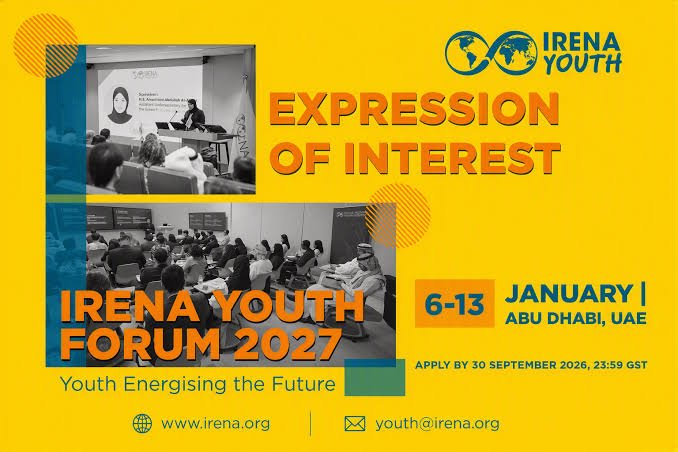
IRENA Youth Forum 2027 (Fully Funded Global Youth Forum on Renewable Energy)
Applications are now open for the IRENA Youth Forum 2027, the eighth edition of the International Renewable Energy Agency’s flagship global platform dedicated to empowering young people to shape the future of renewable energy. Since its launch in 2020, the Youth Forum has brought together outstanding young professionals, entrepreneurs, researchers, innovators, students, and climate advocates from around the world to engage in meaningful dialogue with governments, international organizations, industry leaders, and policymakers on accelerating the global clean energy transition. The 2027 edition will be held alongside the IRENA Assembly in Abu Dhabi under the theme “Youth Energising the Future: Grids, Storage and Flexibility for Renewable Energy Systems.” Discussions will focus on one of the most important challenges facing renewable energy today: ensuring that electricity grids, energy storage technologies, and system flexibility can support the rapid expansion of clean energy while improving energy security and access worldwide. Through interactive discussions, expert-led sessions, networking opportunities, and collaborative activities, participants will explore innovative solutions for integrating renewable energy into modern power systems. The Forum also serves as a platform for young leaders to share successful initiatives, build international partnerships, and influence global conversations on sustainable energy and climate action. About the Forum The IRENA Youth Forum was established to ensure that young people play an active role in designing and implementing the global energy transition. Recognizing that today’s youth will inherit tomorrow’s energy systems, IRENA created the Forum to provide opportunities for emerging leaders to exchange ideas, strengthen technical knowledge, and collaborate across sectors. Each edition brings together participants from diverse backgrounds, including engineering, renewable energy, public policy, environmental science, finance, entrepreneurship, academia, civil society, and youth organizations. Throughout the programme, attendees engage with senior government officials, renewable energy experts, development partners, private-sector representatives, and fellow young innovators working to accelerate sustainable energy solutions. Forum Benefits Selected participants will receive: Fully funded participation in the IRENA Youth Forum 2027. Round-trip international airfare. Hotel accommodation for the duration of the Forum. Visa support where required. Access to all official Forum sessions and networking events. Opportunities to interact with global policymakers, renewable energy experts, and industry leaders. Exposure to international discussions on clean energy policy and innovation. Opportunities to collaborate with youth leaders from around the world. Enhanced professional visibility within the global renewable energy community. IRENA will select up to 40 fully funded participants. Additional applicants may be invited to attend on either a partially funded or self-funded basis. There is no application or participation fee. Forum Objectives The 2027 Forum seeks to: Amplify youth voices in international energy and climate policy. Increase understanding of renewable energy grids, storage technologies, and system flexibility. Strengthen participants’ knowledge of policy and regulatory frameworks supporting renewable energy integration. Build technical and leadership capacity among young professionals. Encourage innovative solutions for accelerating the global energy transition. Highlight opportunities for financing youth-led renewable energy initiatives. Strengthen partnerships between youth, governments, academia, the private sector, and international organizations. These objectives align with IRENA’s broader mission of promoting a sustainable, secure, and inclusive global energy future. Eligibility Criteria Applicants must: Be between 18 and 35 years old at the time of the Forum. Be actively engaged in renewable energy, sustainability, climate action, innovation, or closely related fields. Demonstrate involvement in projects, startups, research, advocacy, or initiatives that contribute to the energy transition. Show motivation to collaborate with international peers and partners. Submit their application in English. Required Application Information Applicants should be prepared to provide: Personal information. Educational and professional background. Details of renewable energy, climate, or sustainability projects and achievements. Responses to application questions demonstrating motivation and leadership. Any additional information requested through the online application portal. Applicants should clearly explain how their experience aligns with the Forum theme and how participation will strengthen their contribution to the global energy transition. Selection Criteria Applications will be assessed based on: Demonstrated commitment to renewable energy and sustainability. Leadership experience. Quality and impact of previous projects or initiatives. Motivation for participating in the Forum. Potential to contribute to discussions and collaborative activities. Geographic and gender balance within the final cohort. How to Apply To apply for the IRENA Youth Forum 2027: Visit the official IRENA Youth Forum application page. Carefully review the eligibility requirements and programme information. Complete the online Expression of Interest (EOI) form in English. Provide accurate personal, academic, and professional details. Highlight your experience in renewable energy, sustainability, innovation, or climate action. Review your application thoroughly before submission.
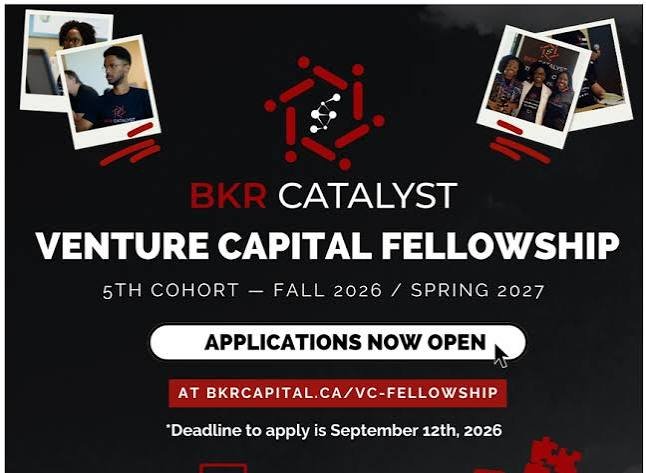
BKR VC Fellowship Program 2026–2027 (Free Virtual Venture Capital Fellowship)
Applications are now open for the BKR VC Fellowship Program 2026–2027, a free nine-month virtual learning programme designed to develop the next generation of venture capital professionals. Organized by BKR Capital, the fellowship seeks to diversify the venture capital ecosystem by equipping aspiring investors, founders, and innovation leaders with the practical knowledge, industry exposure, and professional networks needed to succeed in venture investing. The fellowship was created in response to the lack of diversity within the venture capital industry. BKR Capital believes that increasing representation among investors ultimately leads to greater access to capital for talented entrepreneurs from historically underrepresented communities. Through an immersive curriculum, participants gain a comprehensive understanding of how venture capital firms operate, how investment decisions are made, and how investors support high-growth startups. Delivered entirely online, the programme combines expert-led sessions, practical assignments, mentorship, networking opportunities, and collaborative learning. Participants learn directly from experienced venture capitalists, entrepreneurs, and ecosystem leaders while building relationships with peers from diverse professional backgrounds. Attendance at all programme sessions is mandatory, ensuring fellows remain fully engaged throughout the nine-month experience. About the Fellowship The BKR VC Fellowship is designed to bridge the gap between curiosity and a professional career in venture capital. While many aspiring investors possess strong analytical or entrepreneurial skills, they often lack access to industry knowledge, mentors, and professional networks. This fellowship addresses those barriers by providing structured learning and practical exposure to the venture capital ecosystem. The programme is divided into two major learning phases. During the first phase, fellows develop a strong foundation in venture capital by studying startup ecosystems, fund structures, investment strategies, due diligence, valuation methods, portfolio management, and the mechanics of venture deals. The second phase focuses on practical application, allowing fellows to analyze investment opportunities, participate in discussions, and strengthen their decision-making skills using real-world scenarios. Throughout the programme, participants collaborate with experienced investors and fellow cohort members, creating lasting professional relationships that extend beyond the fellowship itself. The programme’s emphasis on inclusion and collaboration makes it particularly valuable for individuals seeking to enter venture capital through non-traditional pathways. Fellowship Benefits Selected fellows will receive: Free participation in the nine-month fellowship programme. A comprehensive venture capital curriculum delivered by industry experts. Practical training in startup investing and venture capital fundamentals. Mentorship from experienced venture capital professionals. Networking opportunities with investors, founders, and innovation leaders. Exposure to startup ecosystems and investment evaluation processes. Collaborative learning with a diverse cohort of fellows. Opportunities to strengthen analytical and investment decision-making skills. Membership in the growing BKR VC Fellowship alumni network. Enhanced preparation for careers in venture capital, private equity, entrepreneurship, startup advisory, and innovation. Eligibility Criteria Applicants should: Have a strong interest in venture capital, startups, entrepreneurship, or innovation. Be committed to participating fully in the nine-month virtual programme. Be available to attend all required learning sessions. Demonstrate curiosity, motivation, and a willingness to learn. Be interested in contributing to a more diverse and inclusive venture capital ecosystem. Required Application Applicants will generally be required to complete the online fellowship application, providing: Personal and professional information. Educational and career background. Responses to programme-specific application questions. Information demonstrating motivation and interest in venture capital. Any additional information requested through the official application portal. Selection Criteria Applications will be evaluated based on: Demonstrated interest in venture capital. Motivation for joining the programme. Leadership potential. Commitment to completing the fellowship. Diversity of background and experience. Potential contribution to the fellowship community. Alignment with BKR Capital’s mission of building a more inclusive venture capital ecosystem. How to Apply To apply for the BKR VC Fellowship Program 2026–2027: Visit the official BKR VC Fellowship application page. Carefully review the programme details and eligibility requirements. Complete the online application form with accurate personal and professional information. Answer all application questions thoroughly and thoughtfully. Review your application before submission.
WTO Youth Talent Incubator Programme 2026–2027 (Virtual Capacity-Building Programme for Young Researchers and Professionals)
Applications are now open for the WTO Youth Talent Incubator Programme 2026–2027, an international capacity-building initiative designed to equip young researchers and professionals with the knowledge, skills, and networks needed to advance gender equality in international trade. Organized by the World Trade Organization (WTO) Trade and Gender Office in partnership with the WTO Gender Research Hub, the programme brings together emerging leaders from academia, research institutions, think tanks, and government agencies to explore the intersection of trade and gender through mentorship, training, applied research, and global collaboration. Building on the success of its inaugural edition, the programme continues the WTO’s commitment to strengthening the next generation of experts capable of developing evidence-based, gender-responsive trade policies. Participants will engage with internationally recognized experts, WTO Members, policymakers, and researchers while developing practical solutions to contemporary trade and gender challenges. Unlike a traditional academic fellowship, the Youth Talent Incubator emphasizes practical learning and policy engagement. Through interactive mentoring sessions, capacity-building workshops, collaborative research activities, and networking events, participants gain valuable exposure to international trade policymaking while strengthening both their research capabilities and professional networks. Since the programme is delivered entirely online, selected participants can join from anywhere in the world without relocating or incurring travel costs. About the Programme The WTO Youth Talent Incubator Programme originated from the momentum created by the Youth Trade Summit on Gender and the work of the WTO Gender Research Hub. It was established to bridge the gap between academic research and policymaking by helping young professionals transform innovative ideas into practical policy recommendations. The second edition will run from 12 October 2026 to 30 June 2027, bringing together up to 35 participants from different countries and professional backgrounds. Throughout the programme, participants will work closely with experienced mentors while collaborating with fellow researchers and professionals interested in inclusive trade and gender equality. The programme is structured around three core pillars: Mentorship: Personalized guidance from leading experts in trade and gender through one-on-one mentoring, career discussions, and idea development. Capacity Building: Practical training in research methods, policy analysis, communication, and trade-related issues affecting gender equality. Networking: Opportunities to engage with WTO Members, researchers, policymakers, and international stakeholders working on trade and gender issues. Programme Benefits Successful participants will receive: Free participation in the entire programme. Personalized mentorship from internationally recognized trade and gender experts. Capacity-building workshops and professional training. Opportunities to participate in applied policy research. Networking with WTO Members, researchers, and policymakers. Exposure to international discussions on trade and gender. Opportunities to collaborate with researchers from around the world. Professional development in research, policy writing, and communication. Membership in an international network of young trade and gender professionals. Certificate of participation upon successful completion of programme requirements. Eligibility Criteria Applicants must: Be between 20 and 35 years of age. Be currently working in academia, a research institution, think tank, research foundation, policy research organization, or government. Demonstrate current work on trade and gender, or a strong interest in integrating trade and gender into their existing research or professional activities. Complete the official online application form. Submit a motivation letter explaining their interest in the programme. Obtain a formal nomination or endorsement from their academic or research institution. Required Application Documents Applicants should prepare: Completed online application form. Motivation letter. Institutional nomination or endorsement from the applicant’s academic or research institution. Any additional supporting information requested during the online application process. Selection Criteria Applications will be evaluated based on: Demonstrated interest in trade and gender. Academic or professional background. Quality of the motivation letter. Institutional endorsement. Leadership potential. Commitment to completing the programme. Ability to contribute meaningfully to discussions and collaborative activities. How to Apply To apply for the WTO Youth Talent Incubator Programme 2026–2027: Review the programme guidelines and eligibility requirements on the official WTO website. Obtain endorsement from your academic institution, research organization, or employer if required. Prepare a compelling motivation letter describing your interest in trade and gender issues. Complete the online application form with accurate personal and professional information. Upload all required supporting documents.
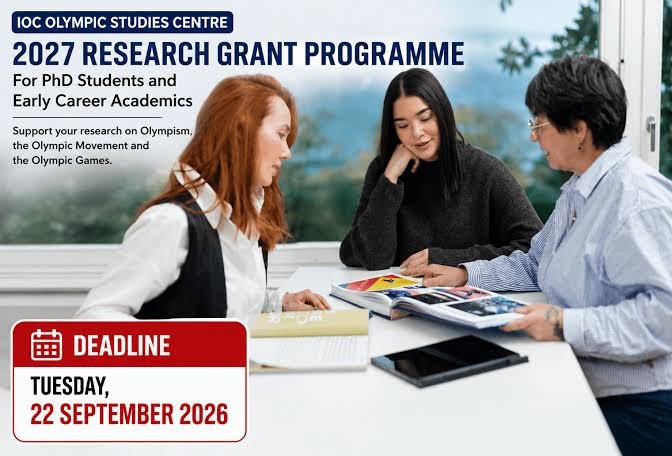
Olympic Studies Centre PhD Students & Early Career Academics Research Grant Programme 2027
Applications are open for the Olympic Studies Centre PhD Students & Early Career Academics Research Grant Programme 2027, an annual research funding opportunity for emerging scholars conducting academic research on the Olympic Movement, Olympic ideals, the history of the Olympic Games, and their impact on contemporary society and culture. The programme is organized by the Olympic Studies Centre (OSC), based in Lausanne, Switzerland, the Olympic Capital. The programme is particularly suitable for researchers working from a humanities and/or social sciences perspective. It provides financial support for research projects while also offering successful applicants the opportunity to undertake a research and study visit at the Olympic Studies Centre. During this visit, researchers can consult the Centre’s collections, including primary sources and the International Olympic Committee’s historical archives. The initiative is designed not simply as a funding opportunity, but as a way of strengthening the next generation of Olympic scholars. Researchers can use the programme to deepen their academic work, access specialized historical materials, and develop research that contributes to wider understanding of Olympism, the Olympic Movement, and the social and cultural significance of the Olympic Games. About the Olympic Studies Centre Research Grant The Olympic Studies Centre runs the annual grant programme to support doctoral students and early-career academics whose research is connected to Olympic studies. The programme recognizes that emerging scholars may require access to specialized archival collections, research materials, and international academic networks to complete high-quality research. For PhD applicants, the proposed project must make a clear contribution to their doctoral thesis. Applicants therefore need to demonstrate how the grant-funded research activities will advance their dissertation and contribute meaningfully to their overall doctoral project. Early Career Academics (ECAs) are also eligible. Under the programme rules, ECAs include academic staff and postdoctoral fellows who completed their doctorate or equivalent highest degree, with a humanities and/or social sciences perspective, in or after 2024. They must also hold a university appointment covering the period from submission of the application through delivery of the final research report. Grant Benefits Successful applicants may receive: A research grant of up to USD 6,000. Opportunity to undertake a research and study visit at the Olympic Studies Centre in Lausanne. Access to OSC collections and specialized research resources. Opportunity to consult primary sources and IOC historical archives. Exposure to the Olympic research community. Support for scholarly research related to Olympism and the Olympic Movement. An opportunity to strengthen a PhD thesis or early-career research programme. International academic and professional networking opportunities. The maximum award is USD 6,000, although the final amount awarded to an individual applicant is determined by the Grant Programme Selection Committee after consideration of the complete application. Who Can Apply? The programme has two principal applicant categories. PhD Students Applicants must be enrolled in a PhD programme with a humanities and/or social sciences perspective. Their research must have Olympism, the Olympic Movement, or the Olympic Games as at least one of its research focuses. Importantly, applicants must remain enrolled in their PhD programme throughout the entire grant period. This means that doctoral enrollment must cover the period beginning with submission of the application and continuing through delivery of the final report. The proposed research must also demonstrate a clear and meaningful contribution to the applicant’s doctoral thesis. Early Career Academics Academic staff and postdoctoral fellows may apply as ECAs if they completed their doctorate or equivalent highest degree in or after 2024, in a relevant humanities or social sciences field. ECA applicants must hold a university appointment that covers the entire grant period, from application submission through delivery of the final report. Research Areas The programme can be relevant to a broad range of humanities and social sciences research connected to the Olympic Movement. Potential themes may include: History of the Olympic Games. History of Olympism. Olympic institutions and governance. Olympic diplomacy. Sport and international relations. Olympic politics. Sport and society. Cultural studies of the Olympic Games. Olympic education. Gender and the Olympic Movement. Race and representation in sport. Olympic heritage. Social and cultural impacts of the Games. Olympic movements and national identity. Media and the Olympics. Sport, culture, and globalization. Required Application Documents Applications must be submitted in English or French, the two official languages of the Olympic Movement. A complete application must include: The official Olympic Studies Centre application form. Proof of registration covering the entire grant period. For PhD students, current proof of doctoral enrollment issued by the university administration on institutional letterhead. For ECAs, current proof of university appointment, including academic or research status. A letter of recommendation from the applicant’s supervisor or mentor. Any required ethics approval documentation for research involving human subjects, human data, interviews, surveys, or fieldwork. The proposed research information required by the official application form. How to Apply To apply for the Olympic Studies Centre PhD Students & Early Career Academics Research Grant Programme 2027: Review the official programme rules and eligibility requirements. Determine whether you qualify as a PhD student or Early Career Academic. Develop a research proposal clearly connected to Olympic studies. Explain how the proposed research will contribute to your PhD thesis or wider research programme. Obtain the required proof of doctoral enrollment or university appointment. Request a recommendation letter from your supervisor or mentor. Obtain ethics approval documentation if your project requires it. Complete the official application form in English or French. Review all supporting documents carefully. Submit the completed application before the deadline.
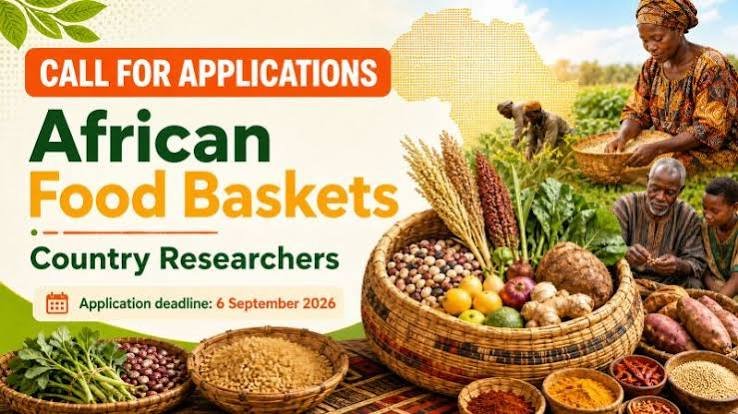
African Food Baskets Country Researchers Programme 2026 (Paid Research Consultancy for African Researchers)
Applications are now open for the African Food Baskets Country Researchers Programme 2026, a paid consultancy opportunity for experienced researchers across Africa to document, preserve, and promote the continent’s rich food heritage. Organized by the Alliance for Food Sovereignty in Africa (AFSA) under the Transforming African Food Systems (TAFS) Project with support from the Swedish International Development Cooperation Agency (Sida), the initiative seeks to recruit 10 Country Researchers to lead field-based documentation of indigenous food systems, traditional knowledge, and local food cultures. The programme forms part of AFSA’s broader MyFoodIsAfrican campaign, which aims to celebrate Africa’s diverse culinary traditions while strengthening food sovereignty through the preservation of indigenous knowledge. Across many African communities, traditional food practices have been passed from one generation to another through oral traditions. However, rapid urbanization, climate change, changing diets, and modernization threaten the survival of this valuable knowledge. The African Food Baskets initiative seeks to address this challenge by creating a comprehensive continental resource that documents local foods, farming practices, recipes, and cultural traditions before they disappear. Selected researchers will work directly with local communities, traditional knowledge holders, farmers, food processors, and cultural practitioners to collect reliable information using participatory research methods. Their findings will contribute to a growing database that highlights Africa’s rich food diversity while supporting advocacy for sustainable and locally driven food systems. The programme offers researchers an opportunity to contribute to a project with continent-wide significance while strengthening their own expertise in food systems research, qualitative fieldwork, and community engagement. About the Programme The African Food Baskets initiative is designed to showcase the richness of African food heritage through systematic documentation carried out by experienced researchers. During the first phase of implementation, AFSA plans to work with researchers from ten African countries selected to ensure balanced representation across Anglophone, Francophone, and Lusophone Africa. Country Researchers will conduct field visits within their assigned countries to document indigenous crops, traditional farming systems, local food preparation techniques, community food practices, cultural traditions, and the stories behind African cuisines. Data collection will primarily be carried out using KoboToolbox, enabling standardized digital documentation across participating countries. The programme emphasizes participatory research that respects indigenous knowledge systems and places local communities at the center of the documentation process. Rather than simply collecting information, researchers are expected to build trust with community members, ensure ethical data collection, and accurately represent the cultural significance of traditional food systems. The final outputs will contribute to a continental knowledge resource that supports food sovereignty, biodiversity conservation, and cultural preservation across Africa. Programme Benefits Successful applicants will receive: A paid consultancy contract as a Country Researcher. Opportunity to contribute to a continental African food heritage project. Professional experience working with the Alliance for Food Sovereignty in Africa (AFSA). Practical field research experience on indigenous food systems. Training and use of KoboToolbox for digital data collection. Opportunities to engage directly with local communities and traditional knowledge holders. Contribution to the preservation of African food heritage. Experience in qualitative research, documentation, and community engagement. Participation in an internationally funded project supported by Sida. Enhanced professional visibility within food systems and agricultural research networks. Key Responsibilities Selected Country Researchers will be responsible for: Conducting community-based field research. Identifying and documenting indigenous foods and traditional recipes. Recording local food production and preparation practices. Interviewing farmers, elders, cooks, and community knowledge holders. Collecting qualitative and quantitative research data. Using KoboToolbox for digital data collection and reporting. Maintaining high standards of ethical research and informed consent. Preparing country-level research reports. Supporting the creation of a continental African Food Baskets database. Collaborating closely with AFSA throughout the research process. Eligibility Criteria Applicants should: Be citizens of an African country. Have demonstrated experience in research or community-based fieldwork. Possess knowledge of African food systems, agriculture, cultural studies, anthropology, sociology, or related disciplines. Have strong qualitative research and interviewing skills. Be comfortable conducting field visits and engaging with local communities. Be able to collect and organize digital data using KoboToolbox or be willing to learn. Demonstrate excellent written communication skills. Be able to work independently while meeting project deadlines. Required Application Documents Applicants should prepare: A current Curriculum Vitae (CV). A cover letter explaining their suitability for the consultancy. Evidence of relevant research or fieldwork experience. Contact information for professional referees where applicable. Any additional supporting documents requested by AFSA. Applications may be submitted in English, French, or Portuguese, reflecting the programme’s commitment to regional inclusion across the African continent. Selection Criteria Applications will be assessed based on: Relevant research experience. Knowledge of African food systems and indigenous food cultures. Experience with community engagement and qualitative fieldwork. Communication and report-writing skills. Ability to use digital research tools. Overall suitability for conducting country-level research. Geographic balance across participating countries. How to Apply To apply for the African Food Baskets Country Researchers Programme 2026: Review the official call for applications issued by AFSA. Prepare your Curriculum Vitae and cover letter highlighting your relevant research experience. Gather any additional supporting documents requested in the application guidelines. Submit your complete application via email to afsa@afsafrica.org before the application deadline. Wait for further communication regarding the selection process.