

The Population Council is inviting applications from experienced Monitoring, Evaluation and Learning (MEL) professionals for a consultancy supporting development programmes implemented across Africa. The assignment focuses on strengthening monitoring systems, improving programme evaluation, developing partner capacity and ensuring that reliable evidence informs programme decisions. Coordinated by Population Council Kenya, the consultancy supports initiatives connected to the Mastercard Foundation’s Impact Strategy. The selected consultant will work with implementing partners to assess their existing monitoring systems, identify gaps, improve data quality and establish practical approaches to measuring programme results. The opportunity is suitable for professionals with advanced qualifications and substantial experience in monitoring and evaluation, impact assessment, strategic planning or development research. Applicants should have a strong understanding of results frameworks, theories of change, performance indicators, organisational learning and adaptive programme management. About the Population Council MEL Consultancy The Population Council is an international research organisation working to address critical health and development challenges through research, evidence generation and programme support. For this assignment, Population Council Kenya leads an interregional consortium of Function Oriented Impact Partner Organizations, including ThinkPlace Kenya, Le Barometre and the Centre for the Study of the Economies of Africa. The consortium contributes to the Mastercard Foundation’s Impact Strategy through impact measurement, evaluation, programme design and organisational learning. Its work covers several programme platforms, including the Pan Africa Program, Scholars, Secondary Education and Transition, Higher Education Collaboratives and Strategic Initiatives, as well as Strategic Partnerships and Innovations. These programmes operate across 35 African countries. Consistent monitoring systems, clear performance measures and strong institutional capacity are therefore essential to understanding progress and identifying where programmes can improve. The consultant will help establish and deliver a structured MEL accompaniment programme tailored to participating implementing partners. This involves reviewing existing systems, diagnosing organisational needs, strengthening technical processes and helping partners use evidence to improve implementation. Opportunity Benefits • Professional consultancy experience: Apply specialist MEL expertise to programmes operating across multiple African countries. • Regional development exposure: Contribute to initiatives supported by the Mastercard Foundation and implemented through a network of partner organisations. • Technical leadership: Help improve theories of change, monitoring frameworks, indicators, reporting processes and data management systems. • Partner capacity development: Support training, coaching, technical working sessions and communities of practice. • Evidence based decision making: Help programme teams turn monitoring findings into practical recommendations and improvements. • Professional compensation: Receive consultancy payments based on agreed rates and accepted deliverables. • Travel support: Relevant travel costs will be covered directly by Population Council Kenya when travel is required for the assignment. Key Responsibilities The consultant will work across six main areas. • Inception and partner prioritisation: Review programme frameworks, monitoring documentation, reporting requirements and previous evaluation findings. Identify participating partners, prioritise technical assistance and prepare an implementation workplan. • MEL capability assessments: Assess partner monitoring systems, theories of change, results chains, indicators, targets, data collection tools and reporting processes. Prepare improvement plans that respond to identified gaps. • Framework and infrastructure development: Strengthen MEL plans, learning questions, data collection tools, reporting calendars, data architecture, participant records, data dictionaries, quality procedures and access controls. • Measurement and reporting alignment: Align partner systems with Shared Measures 2.0 and relevant measures relating to employment, youth transitions, inclusion, institutional strengthening and systems change. Clarify responsibilities and reduce double counting of shared programme contributions. • Learning and adaptive management: Support learning agendas, coaching and technical discussions. Document how evidence informs programme adjustments and prepare concise learning briefs for decision makers. • Monitoring, reporting and handover: Maintain partner support records, prepare monthly dashboards and quarterly analytical reports, document outstanding risks and deliver final recommendations for sustaining improvements. Expected Deliverables and Timeline The assignment includes several deliverables across the consultancy period. • 30 October 2026: Inception package covering methodology, workplan and quality assurance arrangements. • 15 November 2026: Operational partner MEL support register. • 15 December 2026: Partner diagnostic assessments and improvement plans. • 31 March 2027: Strengthened MEL products, including refined frameworks, learning agendas, data collection tools and reporting templates. • 31 May 2027: Evidence of capacity development, coaching activities and partner application of learning. • 30 June 2027: Final synthesis, handover documentation and sustainability recommendations. Monthly and quarterly reporting will also be required according to the agreed workplan. Eligibility Criteria Applicants should meet the following qualifications and experience requirements. • Hold an advanced degree in monitoring and evaluation, statistics, economics, development studies, social sciences or a related discipline. • Have at least five years of professional experience in monitoring and evaluation, impact evaluation or strategic planning. • Demonstrate experience developing theories of change and designing monitoring, evaluation and learning frameworks. • Have experience tracking performance indicators, assessing programme results and supporting adaptive management. • Demonstrate experience mentoring, training or providing technical support to teams and partner organisations. • Possess excellent written and spoken English. • Have strong analytical, problem solving and organisational skills, with attention to detail. • Be able to collaborate effectively with diverse teams and organisations across Africa. • Have experience working with international organisations, nongovernmental organisations or development programmes in Africa. Candidates should also be prepared to comply with applicable data protection, safeguarding and responsible data management requirements. Consultancy Location, Duration and Compensation The assignment is associated with Nairobi, Kenya, although remote work is indicated as an option. The contract period is 26 October 2026 to 30 June 2027, with no more than 30 working days scheduled across that period. The consultancy does not advertise a fixed total fee. Compensation will be based on existing consultancy rates for consortium supported activities. Payments are output based and are expected within 30 calendar days after a valid invoice is received and the corresponding deliverable receives written approval. Payment depends on satisfactory acceptance of the work. The consultant may need to travel for project activities. Population Council Kenya will cover applicable travel costs directly. Required Application Information The announcement emphasises demonstrating relevant technical expertise and a strong record of strengthening programme monitoring and evidence based decision making. Applicants should ensure that their submissions clearly
University of Zurich PhD and Postdoctoral Positions in Artificial Intelligence and Robotics 2026
The University of Zurich in Switzerland is inviting applications for multiple fully funded PhD and postdoctoral research positions in artificial intelligence, robotics, computer vision and autonomous navigation. The opportunities are offered through the university’s Robotics and Perception Group, which conducts research into intelligent machines capable of navigating complex environments using onboard cameras and computing systems. The research positions provide opportunities for qualified candidates to work on advanced technologies with applications in autonomous vehicles, aerial robots, mobile devices and accessible navigation systems. Researchers will collaborate with experienced academics, contribute to innovative projects and use specialised research facilities while developing their expertise in artificial intelligence and robotics. Applications are open to candidates with relevant academic qualifications and strong programming and research skills. The group is seeking individuals who are interested in solving challenging problems in computer vision, machine learning, robot learning and autonomous systems. International applicants are welcome. About the Opportunity The Robotics and Perception Group is part of the Department of Informatics at the University of Zurich. Its research focuses on fundamental challenges in robotics and computer vision, particularly how autonomous machines can interpret visual information, make decisions and navigate without depending on external infrastructure. The available positions cover four main research areas. Applicants should review the individual projects and identify those that best match their academic background, technical skills and research interests. 1. Low Energy and Low Latency World Models with Event Cameras and Frames This project explores how event cameras, conventional cameras and inertial sensors can be combined to improve the efficiency and speed of computer vision systems. Potential applications include simultaneous localisation and mapping, object tracking, autonomous vehicles and augmented or virtual reality devices. Researchers will investigate algorithms that use event based visual information to improve perception in challenging lighting conditions and during fast movement. 2. Vision Based Robot Learning with World Models This research area focuses on machine learning methods that enable robots to understand their surroundings, adapt through experience and navigate complex environments. Potential approaches include imitation learning, reinforcement learning and differentiable simulation. Research platforms may include flying robots, legged robots and cars, with opportunities to investigate learning from real world experience and existing video data. 3. Learning Vision Based Navigation Without State Estimation This project examines whether robots can translate visual observations directly into navigation and control actions without relying on a separate state estimation system. Research directions include combining event camera data with conventional images, developing learning based control methods, improving adaptation between simulated and real environments, and testing navigation systems on agile robotic platforms. The project involves collaboration with the National University of Singapore, with approximately one or two trips to Singapore expected each year. 4. Spatial AI for Indoor Navigation of Blind People This project aims to improve independent indoor navigation for blind and visually impaired people. Researchers will develop accessible and privacy aware systems that help users navigate large buildings where satellite positioning is unavailable. Possible topics include indoor localisation, semantic mapping, personalised route planning, accessible navigation instructions and multimodal interaction through speech, audio or haptic feedback. Opportunity Benefits Successful candidates can expect the following benefits: • Fully funded research positions with competitive salaries. • Regular employment with social benefits, including a pension plan and accident insurance. • Access to advanced computing infrastructure, including GPU resources. • Access to specialised robotics facilities, motion capture equipment, 3D printing and electronic and mechanical workshops. • Opportunities to collaborate with researchers at international institutions. • Participation in academic seminars and research discussions with scientists and industry experts. • Opportunities to contribute to research with practical applications in autonomous systems, accessibility and intelligent navigation. • A collaborative academic environment with research group activities and professional development opportunities. The announcement does not specify exact salary figures. Candidates should consult the official recruitment page for further information about compensation and employment arrangements. Eligibility Criteria Applicants should have a master’s or PhD degree in computer science, computer engineering, mechanical engineering, robotics, physics, aerodynamics or a closely related discipline. Candidates are expected to demonstrate the following: • Strong interest in robotics, computer vision, mathematics, programming and analytical problem solving. • Very strong programming skills in C++ and Python. • Excellent written and spoken English. • Substantial experience with robotic systems or aerial robots. • Knowledge of one or more relevant fields, including deep learning, reinforcement learning, control, path planning, aerodynamics, state estimation, computer vision or numerical optimisation. • Academic and technical experience relevant to the selected research project. Postdoctoral applicants must also demonstrate an excellent research record, including publications in respected conferences or journals, as well as theoretical and practical experience in solving complex robotics or computer vision problems. Experience with ROS, PyTorch, TensorFlow, OpenCV and Git is desirable. Required Application Materials Applicants should prepare an application that clearly demonstrates their qualifications and suitability for the relevant research position. Recommended materials include: • An up to date academic CV. • Details of educational qualifications and relevant research experience. • Evidence of programming proficiency in C++ and Python. • Information about previous robotics, computer vision or machine learning projects. • Publications and research contributions, particularly for postdoctoral applicants. • A clear explanation of research interests and their connection to the selected project. • Any supporting letters already available. These are optional at the initial application stage. Candidates should emphasise relevant technical achievements and explain how their skills could contribute to the research group. Postdoctoral applicants should pay particular attention to their publication records and evidence of independent research. How to Apply Visit the official University of Zurich Robotics and Perception Group recruitment page: https://rpg.ifi.uzh.ch/positions.html Review the four research areas and determine whether your qualifications and interests align with one or more projects. Select the appropriate online application form for the PhD or postdoctoral position. Prepare your application materials and clearly demonstrate your technical expertise, research experience and suitability for the position. Submit your application through the designated online form before 27 October 2026. Applications sent directly by email will not be considered. Apply as early as possible because
ELLIS PhD Programme 2027 in Artificial Intelligence and Machine Learning
The ELLIS PhD Programme 2027 is inviting applications from talented researchers interested in pursuing doctoral studies in artificial intelligence, machine learning and related fields at leading research institutions across Europe. The programme connects promising PhD candidates with established researchers, creating opportunities for advanced research, international collaboration and interdisciplinary learning. The programme is part of the European Laboratory for Learning and Intelligent Systems, known as ELLIS, a pan European network focused on strengthening European research excellence in artificial intelligence. Through its network of academic researchers, research institutions and industry partners, ELLIS supports the development of the next generation of AI researchers and promotes collaboration across national and disciplinary boundaries. Selected candidates undertake doctoral research under joint supervision from researchers based in different European countries, with opportunities to participate in research workshops, summer schools, networking activities and international exchanges. The programme is designed for researchers who want to contribute to the development of machine learning and AI while working with leading experts in their chosen fields. About the ELLIS PhD Programme The ELLIS PhD Programme brings together researchers working on artificial intelligence and machine learning through a network of academic institutions and industry partners. Its central objective is to help outstanding doctoral candidates develop their research expertise while benefiting from international supervision and access to a wider scientific community. Candidates apply through a central application portal, where they can indicate their preferred research areas and potential supervisors participating in the current recruitment round. The programme places particular importance on matching applicants with a suitable primary advisor and research opportunity. Students can pursue one of three tracks, depending on their research interests and the type of collaboration available. • Academic Track: Research collaboration between academic partners in different European countries. • Industry Track: Collaboration between a European academic institution and an industry partner, combining academic research with an industrial research environment. • Interdisciplinary Track: Research that connects artificial intelligence or machine learning with another discipline, such as biology, law or finance. The programme includes an international exchange component. Depending on the selected track, students must spend at least six months working with their secondary advisor or partner institution. Specific requirements differ between tracks. Opportunity Benefits Successful candidates can benefit from the following opportunities. • Joint supervision by experienced researchers in artificial intelligence and related fields. • Access to a broad European research network spanning universities, research centres and industry. • Opportunities to collaborate across institutions and countries. • Participation in research workshops, summer schools, winter schools and other academic events. • Opportunities to develop expertise in machine learning, AI systems and related research areas. • Research and conference travel support where provided by the relevant advisor or host institution. • Access to an international community of doctoral researchers and established scientists. • Opportunities to pursue interdisciplinary research addressing challenges in science, technology and society. • ELLIS Certificate and membership upon completion, subject to programme requirements. Funding note: ELLIS is a research network rather than a direct employer or funding body for every PhD student. Salary, tuition coverage and other financial support depend on the host institution, the advertised doctoral position and any applicable scholarship. Applicants should confirm the financial terms of each position before accepting an offer. Research Areas The programme covers a wide range of machine learning and AI research fields. Applicants should review the current list of participating advisors and available positions to identify opportunities that match their interests. Relevant research areas include: • Artificial intelligence and machine learning algorithms. • Deep learning and machine learning theory. • Computer vision and computer graphics. • Natural language processing and information retrieval. • Robotics and human robot interaction. • Reinforcement learning and control. • Bayesian and probabilistic learning. • Bioinformatics and computational neuroscience. • Earth and climate sciences. • Machine learning for health, chemistry and materials science. • Machine learning for sustainability. • Human behaviour, psychology and emotion. • Interpretability, fairness and trustworthy AI. • AI safety, privacy, security and ethics. • Multi agent systems and game theory. • Social sciences, humanities, entrepreneurship and technology transfer. The available research topics and supervisors may vary by recruitment round. Applicants should therefore select advisors who are explicitly listed as recruiting for the 2027 intake. Eligibility Criteria Applicants should demonstrate strong academic preparation, research potential and a clear interest in doctoral research in artificial intelligence, machine learning or a related discipline. • Applicants should have a relevant academic background and qualifications suitable for admission to a PhD programme at the host institution. • Applicants should demonstrate academic excellence and the potential to conduct independent research. • Applicants should have research interests that align with the participating advisor and an available doctoral position. • Applicants should be prepared to undertake joint supervision and the international collaboration required by their selected track. • Applicants should be able to provide academic transcripts and supporting documentation in English or with English translations. • Applicants should identify suitable referees who can assess their academic performance and research abilities. • Applicants must complete all required application sections and submit reference requests before the main application deadline. The programme is highly competitive. ELLIS reports that, in a typical recruitment round, fewer than five percent of all registered applicants and approximately five to ten percent of eligible applicants are accepted. Women and people living with disabilities are explicitly encouraged to apply. Required Application Materials Applicants should prepare the following materials for the online application. • Motivational letter and research statement: A document of up to two pages explaining why the applicant wants to pursue a PhD within the ELLIS network, summarising previous research projects and describing future research interests. • Current curriculum vitae: Include educational background, relevant work experience, publications with full citations, research presentations and awards. • Academic transcripts: Unofficial transcripts covering university studies, including bachelor’s and master’s studies where applicable. • English translations: Provide English translations of academic transcripts where the original documents are in another language. • Referee details: Contact details for at least two and no more than three
Liverpool John Moores University Vice Chancellor’s PhD Scholarships 2027
Liverpool John Moores University (LJMU) in the United Kingdom is inviting applications for its Vice Chancellor’s PhD Scholarships Scheme 2027. The programme offers a maximum of 20 doctoral studentships to outstanding candidates and their academic supervisors who propose high quality research projects. Applications opened on October 7, 2026, and the deadline is January 29, 2027, at 5:00 p.m. UK time. The scheme welcomes applicants with both UK and international fee status, subject to the university’s eligibility requirements. Candidates must work with an eligible lead supervisor, who is responsible for submitting the final application. Now in its twelfth year, the programme supports research excellence and strengthens the university’s research and knowledge exchange activities. It encourages innovative projects across different disciplines, including neuroscience, engineering, public health, criminology and other fields represented across the university. About the Scholarship Programme The Vice Chancellor’s PhD Scholarships Scheme supports promising doctoral researchers undertaking projects that align with LJMU’s research strengths and institutional priorities. It aims to recruit academically strong students, encourage collaboration and contribute to the university’s long term research strategy. The programme is open to research proposals across the university’s two faculties, covering a wide range of academic and professional disciplines. Interdisciplinary research and collaboration with institutions around the world are encouraged. Each application is developed jointly by the prospective doctoral student and their lead supervisor. The proposed research should demonstrate academic quality, clear objectives, an appropriate training plan and a meaningful connection to the university’s research priorities. The university will assess applications through a faculty review followed by a university level panel. A maximum of 20 studentships will be awarded for the 2027 competition. Scholarship Benefits The funding available depends on whether the successful applicant receives a full time or part time studentship. • Full time doctoral studentships: Three years of support. • Tuition fees: Course fees are covered under the published scholarship conditions. • Research support: Full time studentships include a bench fee currently set at £1,600 per year, allocated to the lead supervisor to support research costs. • Stipend: Full time awards include a stipend. Applicants should consult the university’s Doctoral Academy for the applicable rate. • Part time doctoral studentships: Six years of support, with course fees covered under the published conditions. • Research development: Students can develop their research skills through a structured doctoral project and training plan. • Academic supervision: Successful applicants work with an eligible lead supervisor and the relevant academic research community. • International research environment: The university encourages multidisciplinary research and collaboration with institutions worldwide. Applicants should note that the published scheme distinguishes between full time and part time awards. The part time scholarship information lists course fee coverage but does not list a stipend. Candidates should confirm the financial conditions that apply to their proposed studentship before accepting an award. Research Areas Liverpool John Moores University supports doctoral research across a broad range of subjects. Applicants should explore the university’s research areas and identify a project that fits its academic expertise. Potential areas include: • Neuroscience and related health research. • Engineering and technology. • Public health and population health research. • Criminology and criminal justice. • Biological and environmental sciences. • Computer science and mathematics. • Psychology and behavioural research. • Nursing and allied health. • Business and management. • Education and social sciences. • Humanities, law and creative disciplines. These are examples of research areas at LJMU rather than a guaranteed list of available scholarship projects. Candidates should consult faculty pages and discuss their proposed research with a suitable supervisor before applying. Eligibility Criteria The university welcomes applications from UK and international candidates who meet its academic and admission requirements for doctoral study. Applicants should meet the following conditions: • Meet the academic requirements for PhD level study at LJMU. • Identify an eligible lead supervisor before the application is submitted. • Develop a high quality research proposal with the supervisor. • Demonstrate relevant academic qualifications, research achievements, experience, skills and abilities. • Present a clear research question and a suitable plan for conducting the proposed studies. • Explain how the proposed project connects with the university’s Strategy 2030 or the relevant faculty research and knowledge exchange plan. • Complete any applicable English language and immigration requirements if applying internationally. • Complete an existing master’s programme before enrolling in the PhD in August or September 2027, if currently studying at master’s level. • Apply for a PhD rather than a professional doctorate or another qualification outside the scheme. Students already enrolled in a PhD or another level 8 programme at LJMU or another institution are not eligible for this scholarship scheme. International applicants should contact LJMU International Admissions while preparing their applications to clarify eligibility, English language requirements and visa procedures. The university also publishes country specific restrictions that prospective applicants must review. Required Application Materials The university specifies the following core information for applications: • Student information and personal details. • A lay summary of up to 250 words explaining the research rationale, aims, objectives and planned outcomes for a general audience. • A detailed research proposal describing the proposed doctoral work. • A research and training plan. • A statement explaining how the project connects with LJMU Strategy 2030 or the relevant Faculty Research and Knowledge Exchange Plan. • A completed Equal Opportunities Monitoring Form submitted separately by the student. The university states that additional materials beyond those requested will not be included in the assessment. Applicants should therefore follow the official template and avoid sending unnecessary documents. Selection Criteria Applications will be assessed through a two stage process involving faculty and university panels. The assessment focuses on the quality of the candidate, the supervisory team and the proposed research project. The principal criteria include: • Academic qualifications, research achievements, outputs, experience, skills and abilities of the candidate. • Relevant experience and quality of the supervisory team. • Clarity and quality of the lay summary. • Academic quality and clarity of the proposed research. • Suitability and relevance of the
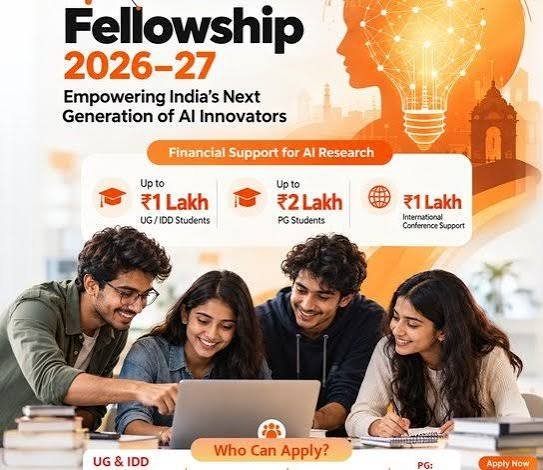
IndiaAI Fellowship 2026 to 2027: Research Funding for Undergraduate and Postgraduate Students
The IndiaAI Fellowship 2026 to 2027 offers financial support to eligible students in India who want to develop their knowledge and research experience in artificial intelligence. The initiative is part of the Government of India’s IndiaAI Mission, which aims to strengthen the country’s artificial intelligence ecosystem, encourage innovation and develop a skilled workforce capable of working with emerging technologies. The fellowship supports students undertaking AI related research and projects across different academic disciplines. Rather than limiting participation to computer science and engineering students, the programme also recognises the potential for artificial intelligence to contribute to fields such as medicine, law, commerce, business and the liberal arts. Funding varies according to the applicant’s level of study. Eligible undergraduate and integrated degree students may receive up to ₹1 lakh, while postgraduate students may receive up to ₹2 lakh for the duration of their programme, subject to the applicable conditions. Eligible students whose research papers are accepted for qualifying international AI conferences may also receive additional financial support for travel or accommodation. About the IndiaAI Fellowship The IndiaAI Fellowship is implemented through the IndiaAI initiative under the Ministry of Electronics and Information Technology. It forms part of the broader IndiaAI Mission and its FutureSkills initiative, which seeks to expand access to artificial intelligence education, research and practical applications. The fellowship is intended to help students translate academic knowledge into research projects that address relevant technological and societal challenges. Supported students can work on AI related topics while developing research skills and gaining experience that may support future academic or professional opportunities. The programme covers undergraduate, integrated degree, postgraduate and doctoral categories. Each category has its own academic requirements, funding arrangements and documentation rules. Applicants should therefore consult the official guidelines for the category that matches their current enrolment. Fellowship Benefits • Undergraduate students may receive financial support of up to ₹1 lakh, subject to the programme requirements. • Eligible integrated degree students may receive up to ₹1 lakh in research funding. • Postgraduate students may receive up to ₹2 lakh for the duration of their programme, depending on their entry semester and continued eligibility. • Eligible researchers may receive additional support of up to ₹1 lakh for travel or accommodation associated with presenting a paper at a qualifying international AI conference. • Students can develop practical experience through AI related research and project work. • The fellowship supports academic development in artificial intelligence and related fields. • Participants can strengthen their research portfolios and build experience relevant to further study or careers in technology and innovation. Funding is subject to the applicable category rules and conditions. Applicants should not assume that every benefit is automatically awarded to every fellow. Research Areas The fellowship supports projects based on artificial intelligence or related areas. Relevant fields may include: • Artificial intelligence and machine learning. • Intelligent systems and AI applications. • AI applications in medicine and healthcare. • AI applications in business, commerce and financial services. • AI related research in law and public policy. • AI applications in science, engineering and other academic disciplines. Applicants should ensure that their proposed projects have a clear connection to artificial intelligence and comply with the official programme guidelines. Eligibility Criteria The programme is intended for eligible Indian nationals enrolled in recognised academic institutions. Requirements vary according to the applicant’s study level. Undergraduate applicants • Must be in the eligible stage of their undergraduate programme. • Students in three year programmes may apply after completing the fourth semester, subject to the official rules. • Students in four year programmes may apply after completing the sixth semester, subject to the official rules. • Must have completed at least three full time courses in artificial intelligence. • Must have achieved a CGPA of at least 8.0 or 80 percent in the last completed semester. • Must be undertaking an AI related project. Integrated degree applicants • Must meet the prescribed semester requirements for their integrated degree programme. • Must have completed at least three full time AI courses. • Must meet the required academic performance threshold. • Must be undertaking a relevant AI project. Postgraduate applicants • Must have confirmed admission to an eligible postgraduate programme. • Must apply during the first, second or third semester. • Must have achieved at least 80 percent or an equivalent grade in their undergraduate degree. • Applicants in their second or third postgraduate semester must also meet the required postgraduate academic performance threshold. • Must be undertaking an AI related project. Part time students are not eligible under the published undergraduate and postgraduate criteria. The official portal also sets separate requirements for doctoral applicants, including full time enrolment, research in AI and specific academic performance standards. Required Application Materials The official portal lists supporting documents that applicants must prepare according to their category. These may include: • An endorsement letter from the project guide, signed and stamped on official letterhead. • An endorsement letter from the institution head, Head of Department or registrar, signed and stamped on official letterhead. • Academic marksheets or records covering the required semesters. • A cancelled cheque or bank passbook cover page showing an account in the student’s name. • A passport size photograph in an accepted image format. • Additional documents specified in the official guidelines for the relevant student category. Applicants should use the current official document formats and ensure that endorsements and academic records are complete before submitting their applications. How to Apply Visit the official IndiaAI Fellowship portal at https://fellowship.indiaai.gov.in/. Read the programme guidelines and identify the application category that matches your current level of study. Confirm your nationality, institution, academic standing, semester and AI research eligibility. Review the funding conditions and the required documents for your category. Obtain the required endorsements from your project guide and institution. Prepare your academic records, banking information and other supporting documents in the prescribed formats. Follow the instructions on the official portal to complete the applicable application or nomination process. Check the portal regularly for updates

American Express Product Manager Graduate Job 2027 in London
American Express is inviting applications for its 2027 Campus Full Time Product Manager position in London, United Kingdom. The opportunity is designed for graduates interested in digital product management, technology, customer experience, data analytics and artificial intelligence. The successful candidate will join the Enterprise Technology Services team as an Associate Digital Product Management professional. The role offers practical exposure to developing digital products, understanding customer needs, analysing data and working with multidisciplinary teams to improve technology platforms and business processes. This graduate position is suited to candidates who expect to graduate in 2027 and want to build a career at the intersection of business, technology and product innovation. Applicants should demonstrate analytical thinking, communication skills, technical curiosity and an interest in using data and technology to solve real business problems. About the Opportunity American Express is a global financial services company whose technology teams develop and improve digital platforms and customer experiences. Product management plays an important role in connecting business strategy, technology, design, analytics and customer needs. As an Associate Digital Product Management professional, the selected graduate will contribute to identifying customer and colleague problems, evaluating possible solutions and supporting product decisions. The position provides exposure to the product development lifecycle, from initial research and planning to implementation and performance evaluation. The graduate will collaborate with product managers, software engineers, designers, data analysts, architects and other business stakeholders. This environment offers an opportunity to understand how digital products are planned, developed, tested and improved within a large organisation. The role also includes exposure to artificial intelligence, automation and enterprise technology platforms. Candidates will have opportunities to explore how these technologies can improve customer journeys, internal workflows and product development while taking responsible technology practices into account. Opportunity Benefits • Full time graduate employment with American Express. • Practical experience in digital product management and technology. • Exposure to product strategy, discovery, planning and delivery. • Opportunities to work with engineering, design, analytics and business teams. • Experience analysing data and customer feedback to inform decisions. • Exposure to artificial intelligence, automation and digital platforms. • Hybrid working arrangements under the company’s Amex Flex approach, where available. • Professional development and career training opportunities. • Access to employee wellbeing support, including confidential counselling. • Opportunities to develop skills in customer research, product performance measurement and business problem solving. The vacancy does not specify an exact salary figure. American Express describes its compensation as competitive and outlines a range of employee benefits. Applicants should consult the official job listing for the most current employment information. Key Responsibilities Successful candidates will support several aspects of product development and delivery, including: • Product strategy and discovery: Help identify customer and colleague needs, assess opportunities and contribute to product roadmap planning. • Requirements development: Document product requirements, user stories, acceptance criteria and proposed solutions. • Customer research: Participate in customer discovery, stakeholder discussions, usability testing and analysis of feedback. • Prioritisation: Assess initiatives according to customer value, business impact, technical feasibility, implementation effort and risk. • Data analysis: Examine product, customer, operational and business information to identify trends and recommend improvements. • Performance measurement: Help define key performance indicators, dashboards and plans for evaluating product performance after launch. • Cross functional collaboration: Work with engineering, design, analytics, risk, security, finance and operations teams. • AI and automation: Explore how artificial intelligence and automation can improve products and workflows while supporting responsible use. Eligibility Criteria Applicants should meet the stated minimum qualifications and demonstrate the potential to succeed in a technology focused product management role. • Expect to graduate in 2027. • Hold or be pursuing a relevant bachelor’s degree. • Demonstrate a strong interest in technology, digital products, customer experience, product management, artificial intelligence or data informed decision making. • Possess analytical and problem solving skills, including the ability to interpret information, identify patterns and develop recommendations. • Have strong written and verbal communication skills. • Be able to collaborate effectively with multidisciplinary teams and stakeholders. • Demonstrate relevant potential through university coursework, projects, internships, research, student organisations or extracurricular activities. • Already be eligible to work in the United Kingdom without employer sponsored visa arrangements. Previous employment specifically in product management is not stated as a mandatory requirement. Applicants can demonstrate their suitability through academic projects, leadership experience, internships and other activities that show initiative, organisation, technical understanding or customer focus. Preferred Qualifications The following capabilities may strengthen an application, although they are presented as preferred rather than minimum requirements. • Familiarity with Agile, Scrum, Kanban, Lean methods, product roadmaps and backlog prioritisation. • Exposure to customer research, design thinking, usability testing and customer journey mapping. • Understanding of software development lifecycles, application programming interfaces, system integrations or platform products. • Experience with dashboards, key performance indicators, quantitative data or qualitative research. • Interest in generative artificial intelligence, intelligent automation and responsible AI practices. • Familiarity with tools such as Jira, Confluence, Figma, Miro, Excel, PowerPoint, Tableau or Power BI. American Express also values curiosity, ownership, resilience, customer focus and a willingness to learn. Required Application Materials The published listing directs candidates to the official recruitment portal. Applicants should prepare an up to date CV that clearly demonstrates their qualifications and relevant experience. • Current CV highlighting education, relevant projects, internships and leadership activities. • Evidence of analytical ability, teamwork and problem solving. • Examples of technical, customer focused or data related work where available. • Information needed to complete the online application. The listing does not provide a definitive separate checklist of required supporting documents. Candidates should follow the instructions shown in the official application system. How to Apply Visit the official American Express Careers application portal. Search for the position titled Campus Full Time Product Manager 2027, UK London, or use job identification number 26013779. Review the role description and confirm that your expected graduation date meets the requirement. Verify that you already have the right to work in the United Kingdom, since visa sponsorship is not available for this

Ghent University Doctoral Scholarships for Candidates from the Global South 2027
Ghent University in Belgium is inviting applications for its 2027 Special Research Fund doctoral scholarships for candidates from eligible countries in the Global South. The programme offers 15 scholarships to early stage doctoral researchers seeking to conduct research through a partnership between Ghent University and a university or research centre in their home region. The scholarship follows a sandwich PhD model, allowing researchers to undertake part of their doctoral studies in Belgium and the remaining research at a partner institution in the Global South. The programme aims to strengthen international research collaboration, support emerging scholars and encourage knowledge exchange between institutions in the Global South and the Global North. The doctoral programme lasts 48 months and is open to applicants across academic disciplines. Proposals demonstrating relevance to collaboration between the Global South and Global North are particularly encouraged. Applicants must establish supervision arrangements at both institutions and secure a commitment from their partner institution to fund the locally based research period. About the Opportunity The Ghent University Doctoral Scholarships for Candidates from the Global South are provided through the university’s Special Research Fund, known as BOF. The scheme supports doctoral researchers who intend to obtain a PhD degree from Ghent University or pursue a joint doctoral degree through collaboration with an eligible institution in the Global South. The programme is designed to help researchers benefit from international academic expertise while maintaining strong connections with universities and research centres in their home regions. It encourages partnerships that strengthen research capacity, promote shared knowledge and contribute to addressing challenges relevant to participating countries. All research disciplines may be considered, although proposals with clear relevance to South and North collaboration receive preference. Candidates should develop a well defined research proposal and identify suitable supervisors before applying. Scholarship Benefits • PhD scholarship support from Ghent University for 24 months of research conducted in Belgium. • A total doctoral programme duration of 48 months, combining research in Belgium and the Global South. • A travel budget of €8,000 administered through the Ghent University supervisor to support eligible operational and travel expenses. • A monthly bench fee of €310 for each month of research conducted in Ghent, provided to the Ghent based supervisor for eligible research costs. • Opportunities to collaborate with international researchers and academic institutions. • Access to the research environment and academic expertise available at Ghent University. • The possibility of obtaining a PhD degree or joint PhD degree from Ghent University. Important funding condition: This is not an automatically fully funded four year scholarship from Ghent University alone. The partner university or research centre in the Global South must guarantee full time scholarship or salary funding for the other 24 months. Applicants should secure this commitment before submitting their applications. Research Areas The scholarship accepts proposals from different academic fields. No single discipline is specified as the exclusive focus of the programme. Potential applicants should demonstrate how their proposed research can benefit from collaboration between institutions in Belgium and the Global South. Priority may be given to proposals that: • Address research questions relevant to the needs and priorities of participating countries. • Demonstrate opportunities for meaningful collaboration between institutions. • Contribute to shared research goals and international knowledge exchange. • Establish sustainable academic partnerships. Eligibility Criteria Applicants must meet the programme’s nationality, academic and institutional requirements. • Be a national of a country included on Ghent University’s official list of eligible Global South countries for the 2027 call. • Meet the programme’s residence and country eligibility conditions. • Be at the beginning of their doctoral research and intend to obtain a PhD degree from Ghent University, either independently or through a joint doctoral arrangement. • Have at least 36 months of doctoral research remaining as of 1 October 2027. • Secure the support of a qualified supervisor at Ghent University. • Identify a supervisor at a partner university or research centre in an eligible country in the Global South. • Obtain written confirmation that the partner institution will provide full time funding for the 24 month research period in the Global South. • Have sufficient release from teaching and other duties to concentrate on research. Such duties may account for no more than 10 percent of a full time appointment. • Comply with the programme’s research mobility requirements unless an exception is approved. Exchange students who are not seeking a PhD degree from Ghent University are not eligible. The university also encourages female researchers to apply. Research Mobility Requirements Selected candidates must follow the programme’s prescribed research schedule. Under the standard arrangement, doctoral researchers must begin and end their PhD programme with research stays at Ghent University, each lasting between three and 12 months. The first research stay must begin between 1 October 2027 and 28 February 2028. At least 24 months of locally funded research in the Global South must take place between the first and final research stays in Belgium. Limited exceptions may be available in specific circumstances, including certain academic programme requirements or field research needs. Applicants seeking an exception must submit the relevant request and supporting documents by 15 January 2027. Required Application Materials Applicants should prepare the official application and supporting documents in accordance with the 2027 call requirements. • Completed official 2027 application form in English. • Written confirmation from the partner institution in the Global South guaranteeing 24 months of full time scholarship or salary funding. • Confirmation of the candidate’s research arrangements and limits on teaching or other duties at the partner institution. • Candidate assessment form completed and submitted by the Ghent University supervisor. • Assessment of the ethical and biosafety context of the proposed research, submitted by the Ghent University supervisor. • Additional mobility or funding exception documents, where applicable. Applicants should consult the official call documents to confirm the complete requirements and ensure that both supervisors provide the necessary support. Selection Criteria Applications are expected to demonstrate academic quality, research potential and a credible partnership between the participating institutions.

United Nations University Junior Fellows Internship 2027
Applications are open for the United Nations University (UNU) Junior Fellows Internship Programme 2027, offering graduate students and recent postgraduate graduates an opportunity to gain practical experience within the United Nations system. The programme is hosted by the Office of the Rector at UNU headquarters in Tokyo, Japan, and is designed for young scholars and professionals interested in international development, research, public policy, institutional administration and global affairs. The Spring 2027 internship is expected to run from March 1 to August 27, 2027, for approximately six months. Applicants based in Japan and those living overseas are eligible to be considered for the Spring 2027 intake, subject to the programme requirements. Through this opportunity, Junior Fellows contribute to the work of the Office of the Rector while developing professional skills in an international institutional environment. Participants gain exposure to the administrative and operational processes of a United Nations institution and learn how research, communication, planning and coordination support the university’s wider mission. The programme is particularly suitable for candidates seeking to apply their postgraduate education in a professional setting and build experience relevant to careers in international organisations, public policy, research, education and development. About the Internship The United Nations University is a global research and policy institution that contributes knowledge and research to address challenges related to sustainable development, peace, human welfare and other pressing international issues. It works with universities, research institutions, United Nations agencies and other partners to support evidence informed approaches to global challenges. The Junior Fellows Internship Programme connects emerging professionals with the activities of the Office of the Rector. Interns support institutional initiatives while learning about the operations of UNU and the wider United Nations system. The programme begins with an orientation period intended to familiarise participants with the university, their colleagues, facilities and working processes. Throughout the placement, Junior Fellows receive guidance and practical experience while undertaking assignments that contribute to the work of the office. Interns generally work full time during regular university working hours, Monday to Friday. The programme may involve on site work in Tokyo, with some flexibility for remote work depending on the applicable arrangements. Internship Benefits Selected Junior Fellows can benefit from: • Monthly stipend: Eligible interns receive a monthly stipend to partially subsidise basic living expenses, including transportation to and from UNU headquarters. The amount depends on the applicable duty station rate. • Practical United Nations experience: Gain first hand experience working within a United Nations institution. • Professional development: Strengthen research, writing, analytical, communication and administrative skills. • Institutional exposure: Learn about the work of the Office of the Rector and the operations of the United Nations University. • Research and policy experience: Contribute to background research, executive briefs and institutional information documents. • Event coordination experience: Assist with conferences, workshops, lectures, meetings and academic forums. • International professional networks: Work with colleagues from different professional and cultural backgrounds. • Learning resources: Access UNU headquarters library and gym facilities, subject to availability and programme arrangements. • Career preparation: Develop experience that may support future applications for roles in international development, research, policy and administration. Please note that the stipend is intended to provide partial financial support. Applicants should not assume that it will cover all accommodation and living expenses in Tokyo. Internship Areas Junior Fellows may support activities in several areas of the Office of the Rector, including: • Administrative research and writing: Conduct background research, prepare executive briefs and draft information documents supporting institutional development and internal policy work. • Planning and project management: Help develop project management tools, systems and processes. • Event coordination: Assist with the planning and organisation of online and in person conferences, lectures, workshops and public events. • Meeting coordination: Provide logistical support, prepare meeting documentation and record minutes. • Editorial support: Proofread reports, edit documents and help improve written communications. • Communications: Prepare newsletters, event summaries and other materials to communicate UNU activities. Assignments depend on institutional priorities and the needs of the Office of the Rector. Eligibility Criteria Applicants should meet the following requirements: • Be currently pursuing a postgraduate degree at master’s or doctoral level, or have completed postgraduate studies within the two years preceding the application. • Be under 32 years of age at the time of application. • Have no more than five years of relevant professional experience in their field. • Demonstrate native or fluent written and spoken English. • Possess strong research, writing and analytical skills. • Demonstrate the ability to work effectively with people from diverse backgrounds. • Show resourcefulness, creativity and sound problem solving skills. • Have advanced computer skills, including practical knowledge of Microsoft Office applications. • Have a demonstrated interest in the United Nations and the work of the United Nations University. • Be able to meet the practical requirements of the internship, including access to a suitable computer and reliable internet if working remotely. Applicants with strong Microsoft Excel skills and familiarity with information and communication technology tools may have an advantage. Required Application Materials Applicants should prepare the following documents and information: • Current CV: Submit an updated CV in English, limited to two single sided pages. Upload it in the section designated for the P11 Form. The P11 Form is not required for this internship. • Cover letter: Provide a cover letter in English of no more than one single sided page. Explain your motivation for applying, how you could contribute to the Office of the Rector and how the internship relates to your future career goals. • Application form: Complete the application form and answer the questions relevant to the position. • Funding form: Outline the sources, amounts and duration of actual or expected financial support while in Tokyo. • Two letters of recommendation: Arrange for two referees familiar with your academic abilities, professional performance or personal character to submit recommendations. At least one referee is expected to be a professor who knows your academic abilities. Referees must not be family members or friends. •

CMU Africa Certificate in Artificial Intelligence for Africa 2027
Applications are open for the Carnegie Mellon University Africa Certificate in Artificial Intelligence for Africa 2027, an online learning programme designed for students and professionals who want to develop practical artificial intelligence skills and build AI applications relevant to African needs. The programme combines technical training with an understanding of the development and application of AI across the continent. Offered by Carnegie Mellon University Africa, the certificate programme provides structured learning in artificial intelligence, machine learning, programming, mathematical foundations and generative AI. Participants will engage with practical exercises using industry standard tools and learn how to develop solutions to real world challenges. The curriculum is designed by Carnegie Mellon University engineering professors. The programme is intended for learners seeking to strengthen their technical capabilities, prepare for career opportunities in AI and apply emerging technologies to problems in African communities, industries and institutions. It is suitable for undergraduate students and professionals who already have basic mathematical and programming knowledge and want to build on that foundation. About the Opportunity The CMU Africa Certificate in Artificial Intelligence for Africa aims to equip learners with the knowledge and practical skills needed to understand, develop and evaluate AI applications. Rather than focusing only on the theory behind artificial intelligence, the programme connects foundational concepts with the tools, frameworks and techniques used to develop working solutions. Participants will learn to assess the capabilities and limitations of AI tools, apply analytical and technical methods, develop AI models and translate practical challenges into data driven solutions. The programme also emphasises evaluating the effectiveness of AI applications through appropriate metrics, validation techniques and critical thinking. The programme is delivered online, allowing participants to complete their learning remotely. It is not a university credit programme. However, learners receive digital badges for individual courses and a shareable, verifiable certificate after completing all six courses. Opportunity Benefits • Free participation: Qualified applicants can complete the certificate programme without paying programme fees. • Practical AI skills: Develop the foundational capabilities needed to understand and build artificial intelligence applications. • Six structured courses: Follow a curriculum covering AI concepts, programming, machine learning and generative AI. • Digital credentials: Earn a digital badge for each completed course. • Verifiable certificate: Receive a shareable certificate after successfully completing all six courses. • Career development: Strengthen preparation for internships and entry level opportunities while building relevant technical skills for professional advancement. • African context: Explore AI and machine learning applications relevant to African challenges and opportunities. • Flexible online learning: Study remotely while committing the necessary time to complete lessons and practical exercises. Programme Areas The certificate includes six courses divided into two learning tracks. Perspective and Context Track • Artificial Intelligence: Past, Present and Future • AI and Machine Learning in Africa Technical Track • Python for AI • Mathematical Foundations of Machine Learning • Machine Learning Essentials • Applied Generative AI Together, these courses introduce participants to the development of artificial intelligence, the mathematical concepts behind machine learning, programming techniques and the practical use of generative AI. The curriculum is intended to help learners progress from understanding core concepts to developing and evaluating AI solutions. Eligibility Criteria Applicants must satisfy the programme’s stated prerequisites to be considered for admission. • Have completed introductory coursework in linear algebra. • Have introductory knowledge of probability and statistics. • Possess experience in computer programming. • Have access to a laptop or desktop computer. • Have a reliable internet connection suitable for online learning. • Be able to dedicate at least five hours per week to programme lessons. The university recommends approximately five to six hours weekly to maintain the expected learning pace. • Demonstrate an interest in developing AI skills and applying them to practical challenges. The programme is designed for a broad range of learners, including undergraduate students and working professionals. Applicants should ensure that they have the necessary mathematical and programming foundations before submitting their applications. Required Application Information Applicants should prepare the following information and materials: • Full name and contact information. • Academic background. • Professional experience, where applicable. • An updated curriculum vitae. • A brief statement describing personal and professional goals. Applicants should provide accurate information about their education, experience and objectives. The statement of goals should explain how the certificate relates to their interests and future plans. Selection Criteria Admission is by invitation and depends on the submitted application and the availability of places in the next cohort. Meeting the prerequisites does not automatically guarantee admission. Applicants should clearly present their academic preparation, programming experience and professional or educational goals. A well prepared application should demonstrate how the programme could support their plans to develop AI capabilities or apply artificial intelligence in their area of interest. How to Apply Visit the official programme website. Review the curriculum, prerequisites and application instructions on the Carnegie Mellon University Africa website: https://www.africa.engineering.cmu.edu/academics/ai-certificate/ Prepare your application information. Gather your contact details, academic background, professional experience and curriculum vitae. Write your statement of goals. Briefly explain your professional or academic objectives and how the certificate could help you achieve them. Complete the online application. Use the application link provided on the official programme page and submit the requested information during the application period. Submit before the deadline. Applications and recommendations are accepted from October 15 to November 15, 2026. Monitor your communications. Enrollment is by invitation, subject to the quality of the application and available places. Check your email for updates from the programme team.

Toronto Metropolitan University Global Migration Institute Scholarships 2027 to 2028
Applications are open for the Toronto Metropolitan University Global Migration Institute Scholarships for the 2027 to 2028 academic year in Canada. Offered through the university’s Bridging Divides program, these graduate student stipends support research that examines migration, inclusion, social participation, employment, health and other issues affecting communities. The scholarships are available to eligible domestic and international students pursuing full time master’s or PhD studies at Toronto Metropolitan University (TMU). Successful applicants receive financial support while joining an interdisciplinary research community focused on understanding social challenges and developing evidence that can inform policy and practice. The program offers up to CAD $35,000 per year for eligible master’s students and up to CAD $45,000 per year for eligible PhD students. Funding is limited, and applicants must demonstrate a clear connection between their research and at least one of the Bridging Divides program’s four research themes. About the Opportunity The Global Migration Institute at Toronto Metropolitan University supports interdisciplinary research and collaboration on migration and related social issues. Through its Bridging Divides program, the institute provides graduate stipends to students whose research contributes to its thematic priorities. The program welcomes eligible students applying to begin a master’s degree in Fall 2027, as well as current master’s students entering their second year during the 2027 to 2028 academic year. Eligible PhD students already enrolled at TMU may also apply for support. Applicants do not necessarily need to be enrolled in a program explicitly focused on migration. Students from a range of academic disciplines may qualify if their research has a clear connection to one of the program’s four themes. Course based graduate programmes are not eligible for this stipend. Scholarship Benefits • Master’s stipend: Up to CAD $35,000 per year for eligible domestic and international students. • PhD stipend: Up to CAD $45,000 per year for eligible domestic and international students. • Funding duration for incoming master’s students: A maximum of two years, subject to the program’s conditions. • Research development: Participation in research training activities and workshops. • Academic integration: Opportunities to become part of the Global Migration Institute research team. • Professional development: Engagement with an interdisciplinary community of researchers and graduate students. • Potential funding renewal: Continued support may be available following an annual review of academic progress and funding availability. Students who hold external scholarships or research grants may also apply for supplementary funding. Such requests are considered individually and require a strong justification. Programme Areas Applicants must connect their proposed or ongoing research to at least one of the four Bridging Divides research themes. • Immigrant Health and Well Being: Research examining health, access to services and the well being of immigrant communities. • Employment and Lifelong Learning: Studies concerning employment opportunities, labour market participation, education and continuing learning. • Place and Infrastructure: Research on places, built environments, infrastructure and their relationships with communities. • Citizenship and Participation: Studies exploring citizenship, inclusion, civic engagement and participation in society. Eligible academic programmes include selected graduate degrees in criminology, economics, public policy, psychology, spatial analysis, social work, urban development, engineering, management, communication, journalism, immigration and settlement studies, environmental science and data science. Other programmes may be considered individually when their research clearly aligns with a Bridging Divides theme. Eligibility Criteria Applicants should meet the following requirements relevant to their application category. • Be applying to or enrolled in an eligible graduate programme at Toronto Metropolitan University. • Be pursuing full time master’s or PhD studies. • Demonstrate a clear connection between the proposed or ongoing research and at least one Bridging Divides research theme. • For incoming master’s applicants, apply separately for admission to the relevant TMU graduate programme. • For existing master’s applicants, be entering the second year of an eligible programme in the 2027 to 2028 academic year. • For PhD applicants, be enrolled full time in an eligible TMU doctoral programme. • Have a supervisor or co supervisor who is a TMU faculty member directly involved in the Bridging Divides program. • Meet any additional academic or supervisory requirements applicable to the chosen graduate programme. Students in course based graduate programmes are not eligible. Applicants should confirm whether their particular programme and research project qualify before applying. Required Application Materials The application requirements vary according to whether the candidate is applying for an incoming master’s stipend, an existing master’s stipend or an existing PhD stipend. Incoming and existing master’s applicants • Completed online stipend application form. • Curriculum vitae. • Academic transcript. • Statement of Interest or Letter of Intent submitted with the graduate programme application. • Bridging Divides motivation letter of no more than two pages explaining why the applicant should receive the stipend and how their research connects with the program’s themes. • For applicants in the Faculty of Engineering and Architectural Science, the proposed or expected supervisor’s name, including at least one Bridging Divides researcher, and the required statement from the Associate Dean of Graduate Studies where applicable. Existing PhD applicants • Completed online stipend application form. • TMU student identification number and enrolled programme details. • Curriculum vitae. • Academic transcript. • Statement of Interest or Letter of Intent from the PhD application. • Writing sample of no more than 10 pages. • Bridging Divides motivation letter of no more than two pages. • Name of the supervisor or supervisors, including at least one Bridging Divides researcher, for applicants subject to the additional engineering faculty requirements. How to Apply Review the research themes. Visit the Global Migration Institute website and identify the Bridging Divides theme that best matches your research. Check programme eligibility. Review the list of affiliated graduate programmes and contact the relevant academic department if your programme is not listed. Apply for graduate admission if necessary. Incoming master’s candidates must first apply to their chosen TMU graduate programme according to its admission requirements. Prepare the required documents. Assemble the appropriate application materials and write a motivation letter explaining the importance of your research and its connection to the program. Submit the