
The Localization Development Accelerator (LDA) 2027 is inviting applications from locally led organisations in East Africa that want to strengthen their internal systems, improve organisational effectiveness and build long term sustainability. The nine month programme is designed for community rooted organisations that are committed to creating meaningful change but may need additional support to strengthen their institutional foundations. The accelerator welcomes eligible organisations based in Kenya, Tanzania, Uganda and Rwanda. Through practical learning, mentorship, peer exchange and organisational development activities, participating organisations will have opportunities to review their current structures, identify areas for improvement and develop strategies that support their missions and community impact. The programme is particularly relevant to smaller organisations working directly with local communities. Rather than focusing only on individual professional development, the accelerator supports organisations in improving the systems and strategies that enable them to operate effectively, respond to community needs and sustain their work over time. About the Opportunity The Localization Development Accelerator is an organisational capacity building initiative intended to help locally led organisations strengthen their foundations and improve their ability to deliver lasting results. The programme brings together organisations from across East Africa to learn, reflect on their practices and work towards stronger organisational systems. During the nine month programme, participating organisations can examine their existing operational processes, leadership arrangements and development priorities. They will have opportunities to identify organisational challenges and consider practical ways to address them. The accelerator also creates space for peer learning. Organisations can exchange experiences with others working in different communities and contexts, learn from shared challenges and explore approaches that may improve their effectiveness. The programme recognises that community based organisations often have strong local relationships and a clear understanding of the challenges affecting the people they serve. However, limited resources and organisational capacity can make it difficult to develop internal systems and plan for long term growth. The accelerator is designed to help eligible organisations address these needs. Opportunity Benefits Selected organisations can benefit from: • Free participation for organisations that meet the eligibility requirements. • Practical learning to strengthen organisational foundations and internal systems. • Mentorship to support organisational development and strategic planning. • Peer exchange with locally led organisations across East Africa. • Opportunities to assess current structures and identify areas for improvement. • Support for improving organisational effectiveness and long term sustainability. • A structured nine month development experience focused on strengthening the organisation. • Opportunities to clarify institutional priorities and develop practical strategies for future growth. The programme does not list a cash grant or direct financial award as a standard benefit. Organisations should therefore apply for the learning, mentorship and organisational development opportunities rather than assume that participation includes funding. Programme Focus Areas The accelerator is designed to support organisations in strengthening their capacity and improving their long term effectiveness. Relevant areas include: • Organisational systems: Reviewing internal structures and processes to identify areas that need improvement. • Leadership and strategy: Strengthening organisational direction and planning for future development. • Institutional sustainability: Building stronger foundations to help organisations maintain their work over time. • Community engagement: Demonstrating meaningful relationships with the communities the organisation serves. • Peer learning and collaboration: Exchanging experiences and ideas with other locally led organisations in East Africa. • Operational effectiveness: Identifying practical changes that can help an organisation work more efficiently and respond to community priorities. Applicants should connect their organisation’s current needs with the programme’s focus on institutional strengthening and sustainable community impact. Eligibility Criteria The Localization Development Accelerator 2027 is intended for locally led organisations that meet the following requirements: • The organisation must be based in Kenya, Tanzania, Uganda or Rwanda. • The organisation must have an annual operating budget below US$100,000. • The organisation must demonstrate strong relationships with the community it serves. • The organisation must meet the programme’s requirements for being locally led. • The organisation must be able to commit approximately two to four hours per week throughout the nine month programme. • The organisation must be willing to participate in learning, mentorship, peer exchange and organisational development activities. The opportunity is for organisations rather than individuals applying solely in a personal capacity. Interested applicants should check the official application form for the full definition of locally led organisations and any additional requirements. Required Application Information Applicants should be prepared to explain their organisation’s work, community relationships and development priorities. The published opportunity encourages applicants to clearly demonstrate the following: • The organisation’s mission, including the community it serves and the challenges it addresses. • Information about its local leadership structure. • Examples of community participation, partnerships and locally identified priorities. • The organisational systems, strategies or operational processes it wants to strengthen. • An explanation of how the organisation will allocate two to four hours per week to the programme. • Confirmation that its annual operating budget is below US$100,000. Review the official application form carefully to identify all required fields and supporting information before submitting. Selection Considerations Organisations should present a clear and credible explanation of why the accelerator would be valuable to their work. Applications should demonstrate that the organisation has meaningful community relationships and understands its own institutional development needs. Applicants should also explain how participation could help strengthen their operations and support more sustainable outcomes for the communities they serve. A realistic commitment of staff time is important because the programme requires approximately two to four hours of participation each week over nine months. Meeting the basic eligibility requirements does not guarantee selection. Shortlisted organisations may be invited to an interview as part of the selection process. How to Apply Eligible organisations in Kenya, Tanzania, Uganda and Rwanda can follow these steps: Review the programme requirements. Confirm that your organisation is locally led, operates in an eligible country and has an annual operating budget below US$100,000. Identify your organisational priorities. Consider which internal systems, leadership strategies or operational processes would benefit most from further development. Prepare your application information. Clearly describe your mission,

Allianz MoveNow Social Innovation Challenge 2026 for Young Innovators Worldwide
Applications are open for the Allianz MoveNow Social Innovation Challenge 2026, a global initiative supporting young innovators who are developing practical solutions to social and environmental challenges. The challenge is organised through a partnership between Allianz and Social Shifters, with the aim of helping young entrepreneurs turn ideas into impactful ventures that improve lives and strengthen communities. The competition is open to young founders aged 18 to 30 from anywhere in the world. It welcomes youth led startups, projects and ventures that address clearly defined problems, particularly those affecting underserved communities. Successful applicants can compete for a share of US$90,000 in grant funding, alongside opportunities for business mentorship, learning resources and access to a global network of changemakers. The 2026 challenge focuses on three major areas: financial confidence in the digital economy, equality in health ecosystems, and community led climate resilience. These categories reflect the programme’s commitment to supporting innovative solutions that respond to real community needs and create measurable social impact. About the Opportunity The Allianz MoveNow Social Innovation Challenge is designed to help young people transform their commitment to social change into practical and sustainable solutions. Through the collaboration between Allianz and Social Shifters, the initiative supports entrepreneurs who understand the challenges facing their communities and are developing ways to address them. The challenge recognises that effective social innovation can emerge from different settings, including local communities, universities, rural areas and urban centres. Rather than focusing exclusively on established businesses, it seeks youth led initiatives with a clear purpose, a defined social or environmental problem and the potential to demonstrate meaningful results. The programme also connects applicants with opportunities to develop their entrepreneurial skills and engage with a wider community of innovators. Finalists receive additional support as they prepare to advance their ventures. Opportunity Benefits Selected founders and eligible applicants can access the following benefits: • A total grant funding pool of US$90,000 distributed across three award categories. • One award of US$10,000 in each category. • Four additional awards of US$5,000 in each category. • Access to exclusive founder and startup learning materials. • Business mentorship from Allianz for finalist founders. • Opportunities to strengthen business development and innovation skills. • Access to the Social Shifters global opportunities network. • Potential access to additional grant opportunities, paid work and training through Social Shifters. Each category has a total allocation of US$30,000, divided among five award recipients. The challenge provides both financial support and opportunities for founders to develop their ideas further. Programme Areas Applicants must align their projects with one of the three award categories. 1. Move the Mind: Financial Confidence in the Digital Economy This category supports solutions that help entrepreneurs and small and medium sized enterprises start, grow and sustain their businesses. Projects may focus on digital financial tools, financial knowledge, accessible services and skills that help people make informed financial decisions in an evolving digital economy. 2. Move the Body: Closing the Health Gap This category focuses on improving equality within health ecosystems. It supports solutions addressing gaps in health research, healthcare services and diagnostics, particularly those affecting women and marginalised groups. Community led initiatives and technology enabled approaches that improve access, representation and health outcomes are especially relevant. 3. Move Society: Community Led Climate Resilience This category supports solutions that help vulnerable communities prepare for and respond to climate change. Projects may address early warning systems, resilient livelihoods, local adaptation and the use of technology alongside community knowledge to strengthen resilience in rural and urban settings. Eligibility Criteria Applicants should meet the following requirements: • Be between 18 and 30 years old. • Be based anywhere in the world. • Be a founder or leader with clear decision making authority over the startup, venture or project. • Address a clearly defined social or environmental challenge. • Develop a solution intended to benefit underserved communities. • Demonstrate the potential for measurable social outputs and impact. • Show a clear connection between the proposed solution and at least one of the three challenge categories. • Consider inclusive design and accessibility for people with diverse needs. • Demonstrate responsible and ethical use of technology and personal data where applicable. Solutions developed with and for underserved communities are prioritised. Applicants are encouraged to explain how their ideas respond to the experiences and needs of the people they intend to serve. Required Application Information Applicants should be prepared to provide information about their startup, project or proposed solution. Based on the published challenge information, relevant details include: • A description of the social or environmental problem being addressed. • An explanation of the proposed solution and its intended beneficiaries. • The challenge category that best matches the project. • Information about the founder or founding team and their decision making responsibilities. • Evidence of existing or expected social impact, including measurable outputs where available. • An explanation of how the solution serves underserved communities. • Details of how technology, accessibility and responsible data use are considered, where relevant. Applicants should consult the official application platform for the complete submission questions and any additional requirements. How to Apply Visit the official challenge website. Go to the Allianz MoveNow Social Innovation Challenge page hosted by Social Shifters: https://www.socialshifters.co/allianz-movenow-social-innovation-challenge/ Review the award categories. Identify whether your venture fits financial confidence in the digital economy, equality in health ecosystems, or community led climate resilience. Assess your eligibility. Confirm that the founder leading the project is aged 18 to 30 and has clear decision making authority. Ensure the initiative addresses a defined social or environmental issue. Prepare your project information. Clearly explain the problem, your proposed solution, the people who will benefit and the impact you expect to achieve. Include evidence of progress or results where available. Complete the online application. Follow the instructions on the official platform and provide the requested information. Explain how your solution supports underserved communities and, where relevant, incorporates inclusive design and responsible technology use. Submit before the deadline. Ensure that your application is completed by December
EJN Reporting Fellowships 2026 for Journalists to Cover BBNJ COP1
Applications are open for the Earth Journalism Network (EJN) Reporting Fellowships 2026 for journalists to cover the first Conference of the Parties to the Biodiversity Beyond National Jurisdiction Agreement, known as BBNJ COP1, in New York City, United States. The programme is organised by Internews through its Earth Journalism Network and aims to strengthen global media coverage of international efforts to protect marine biodiversity and conserve ocean resources. The fellowship forms part of a new three year programme designed to support journalists reporting on the implementation of the BBNJ Agreement, commonly known as the High Seas Treaty. The initiative seeks to promote diverse, informed and accessible reporting on decisions that affect the world’s oceans, marine ecosystems and communities that depend on them. For the 2027 conference, EJN plans to select 10 journalists, with equal representation from the Global North and Global South. Selected fellows will travel to New York City to attend the full conference, engage with developments surrounding the agreement and produce journalism for established media outlets. About the Fellowship The Earth Journalism Network works to strengthen environmental journalism by supporting media professionals who report on issues affecting the natural world and the communities connected to it. Through training, reporting opportunities and access to relevant experts, the network seeks to improve the quality and reach of environmental news coverage. The BBNJ Reporting Fellowship will help journalists cover the first Conference of the Parties under the international agreement on the conservation and sustainable use of marine biological diversity in areas beyond national jurisdiction. These areas include parts of the ocean beyond the national jurisdiction of individual countries. The agreement is significant because it provides an international framework for addressing marine biodiversity conservation in areas beyond national jurisdiction. Its implementation involves complex discussions about ocean protection, sustainable use of marine resources and international cooperation. Fellows will have an opportunity to report on the conference proceedings and pursue stories that explain the issues to audiences in their respective countries. Applicants should identify the stories they intend to cover and demonstrate how their reporting can contribute to informed public understanding of ocean governance. Fellowship Benefits Selected journalists will receive financial and logistical support for their participation. • Non refundable economy class return airfare. • Accommodation in New York City during the fellowship. • Meals related to fellowship participation. • Travel medical insurance. • Ground transportation costs connected with fellowship activities. • A daily allowance to help cover expenses during the stay in New York City. • Assistance with the press accreditation process. • Logistical support for travel and conference participation. • Reimbursement of visa costs, although obtaining the required visa remains the fellow’s responsibility. These benefits are intended to reduce the financial barriers that might otherwise prevent journalists from attending and reporting on the international conference. Applicants should confirm any additional arrangements directly with EJN before travelling. Reporting Areas The fellowship is intended for journalists with a demonstrated interest in ocean conservation, marine biodiversity and environmental governance. Potential reporting areas include the following. • Marine biodiversity conservation: International efforts to protect marine species, habitats and ecosystems. • Marine protected areas: Policies and negotiations concerning the establishment and management of protected ocean areas. • Sustainable fisheries: The management of fisheries and the protection of marine resources for future generations. • Illegal, unreported and unregulated fishing: Reporting on unlawful fishing practices and their environmental and economic consequences. • Marine pollution: The effects of pollution on ocean health, coastal communities and marine wildlife. • The blue economy: Economic activities involving ocean resources and the challenge of balancing development with conservation. • International ocean governance: Negotiations, policy decisions and cooperation connected with implementation of the BBNJ Agreement. Applicants should propose realistic and relevant stories that they can pursue during the conference and explain how those stories will serve their intended audiences. Eligibility Criteria Applicants must meet the fellowship’s professional and reporting requirements. • Be a professional journalist from or representing an established media organisation and reporting from a coastal country. • Have previous experience reporting on ocean issues or related environmental topics. • Demonstrate a clear interest in continuing to cover ocean issues through journalism. • Be available to travel to New York City, arriving on January 9 and departing on January 23, 2027. • Have a good command of English. • Submit an up to date resume or curriculum vitae. • Provide a signed letter of support from an editor, producer or supervisor confirming that stories produced during the fellowship can be published or broadcast by an established media outlet. • Provide recent journalistic work samples focused on ocean issues, published within the previous 12 months. • Ensure submitted work samples have clear bylines. Samples may be provided as documents or web links. • Provide a short English synopsis for work samples published in another language. Freelance journalists may apply, provided they can obtain a letter of support from a media outlet for which they intend to report. The support letter should confirm the outlet’s willingness to publish or broadcast the journalist’s work. Selection Criteria EJN will assess applicants based on their professional experience, commitment to environmental journalism and ability to produce publishable reporting. • Demonstrated experience covering ocean and other environmental topics. • A sustained commitment to journalism and continued reporting on ocean issues. • An established relationship with a media outlet or a clear publication arrangement. • A signed letter of support confirming that reporting produced during the fellowship can be published or broadcast. • A clear and relevant plan for the stories the applicant intends to pursue during the conference. Applicants should present their experience and proposed coverage clearly, showing how their reporting could help audiences understand the importance of international ocean conservation efforts. Required Application Materials Prepare the following materials before beginning the application. • An updated resume or curriculum vitae. • A signed letter of support from an editor, producer or supervisor at an established media outlet. • Recent work samples covering ocean issues, published within the last 12 months.
John S. Knight Journalism Fellowships 2027 to 2028
Applications are open for the John S. Knight Journalism Fellowships 2027 to 2028 at Stanford University in the United States. The programme offers experienced journalists and professionals who support journalism an opportunity to step away from their regular responsibilities, explore innovative ideas, strengthen their leadership skills and develop solutions to some of journalism’s most pressing challenges. Organised by the John S. Knight Journalism Fellowships at Stanford, the programme supports journalists who want to make meaningful changes in the profession and improve the way people access and understand news and information. It brings together professionals from different countries, backgrounds and areas of expertise to exchange ideas, question existing practices and explore new approaches to journalism. The fellowship lasts nine months, from September 2027 through May 2028. During this period, selected fellows will be based at Stanford University in California, where they can engage with the university’s academic and creative community while pursuing an individual professional development focus. About the Fellowship The John S. Knight Journalism Fellowships are designed for professionals who want to help shape the future of journalism. Rather than following a fixed academic curriculum, fellows identify an important question, professional challenge or opportunity they want to explore during their time at Stanford. Participants may focus on improving their professional skills, addressing a challenge affecting their news organisation or community, exploring an idea for a new initiative, or developing deeper expertise in a particular area of journalism. The programme encourages fellows to experiment with new approaches, learn from colleagues with different perspectives and develop the confidence and resilience needed to lead change. It also emphasises collaboration, thoughtful discussion and the importance of strengthening journalism’s contribution to informed and democratic communities. Fellows are expected to participate fully in the programme, attend cohort meetings and coaching sessions, engage with Stanford activities, and share insights from their experiences with wider audiences. Fellowship Benefits Selected fellows receive the following benefits: • $135,000 stipend to support fellows during the nine month programme. • Stanford tuition coverage, providing access to the university’s educational resources. • Health insurance for fellows through Stanford. • Health coverage support for eligible dependants enrolled in Stanford’s health insurance arrangements. • Individual coaching to support professional growth, leadership development and personal goals. • Specialised workshops tailored to fellows’ interests and professional challenges. • Access to Stanford’s academic, intellectual and creative resources. • Guidance on finding rental accommodation and settling into the Stanford area, including support relevant to accompanying family members. • Membership in a global network of journalism professionals and fellowship alumni. • Opportunities to collaborate with journalists, innovators and other professionals from diverse backgrounds. • Time and space to investigate important questions, test ideas and develop new approaches to journalism. Fellowship Areas and Professional Focus The programme does not prescribe a single subject area. Instead, applicants are encouraged to identify a meaningful challenge or opportunity that connects with their experience and ambitions. Potential areas of exploration include: • Journalism innovation and the development of new approaches to news production. • Newsroom leadership, management and organisational change. • Audience engagement and community building. • Improving access to reliable news and information. • Journalism entrepreneurship and the exploration of new professional ventures. • Strengthening public trust in journalism. • Developing professional skills and leadership resilience. • Addressing challenges affecting journalism organisations and the communities they serve. • Exploring ways to support informed democratic participation through journalism. Eligibility Criteria To be considered for the John S. Knight Journalism Fellowships 2027 to 2028, applicants should meet the following requirements: • Have at least five years of professional work experience. Student work and internships do not count towards this requirement. • Be directly involved in producing journalistic content or work in a professional capacity that supports journalism. • Eligible professional backgrounds may include reporting, editing, photography, producing, publishing, audience engagement, community building, newsroom operations, strategy and journalism support organisations. • Independent journalists and freelancers may apply. Most of their professional work must be within the journalism sector. • Demonstrate an interest in exploring important challenges facing journalism and developing ideas for meaningful change. • Be proficient in written and spoken English to participate effectively in programme activities and at Stanford. • Demonstrate the ability and willingness to collaborate respectfully with people who have different experiences, ideas and perspectives. • Be able to commit full time to the fellowship and live at Stanford from September through May. A university degree is not required, and applicants do not need to have worked in a traditional newsroom. The programme is not intended for people seeking an academic degree, public relations professionals, individuals producing in house or industry communications, government agency employees, or full time academics. Required Application Materials Applicants should prepare the following information and documents: • Completed online application form covering professional background, career journey and fellowship goals. • A one minute selfie video explaining what they want to be doing in journalism three to five years from now. • An up to date resume outlining relevant professional experience and achievements. • One work sample demonstrating their professional abilities. • Names and contact information for three professional references who can speak about their experience and qualities. • Responses explaining what they hope to contribute to the fellowship cohort and how the programme fits their professional goals. • Disclosure of any artificial intelligence tools used to prepare application materials, as requested in the application form. Application materials must be submitted in English. Applicants whose work sample is in another language may submit the original alongside a brief English summary. TOEFL scores are not required. Selection Criteria The fellowship seeks experienced professionals who demonstrate a strong interest in improving journalism and the ability to contribute constructively to a diverse group. Applications are reviewed through a multistage process involving the fellowship directors, alumni and other selection representatives. A limited number of applicants will be invited to interviews conducted through Zoom. Applicants should clearly communicate their professional experience, the questions they want to explore, their goals for the fellowship year and
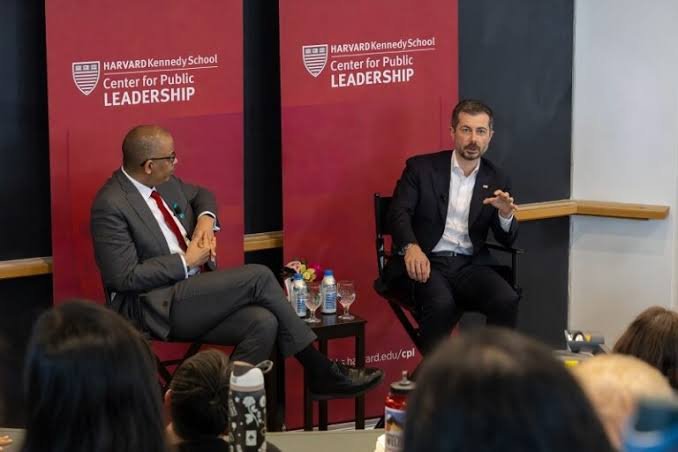
Harvard Kennedy School Center for Public Leadership Equity Fellowship 2027 to 2028
Applications are open for the Harvard Kennedy School Center for Public Leadership Equity Fellowship for the 2027 to 2028 academic year. The fellowship supports emerging leaders who are committed to reducing inequality, addressing systemic barriers, and advancing equity in underserved communities. It combines financial support toward a master’s degree at Harvard Kennedy School with a yearlong leadership development programme. Hosted by the Center for Public Leadership at Harvard Kennedy School in Cambridge, Massachusetts, United States, the fellowship is designed for students who want to strengthen their leadership abilities while preparing for careers focused on public service and social change. Fellows participate in structured learning activities, mentorship, reflective practice, and conversations with experienced leaders The programme brings together students from different academic disciplines and professional backgrounds who share an interest in tackling challenges affecting marginalized communities. Through collaborative learning and engagement with peers, mentors, and public leaders, fellows develop the knowledge and practical leadership skills needed to contribute to their communities and institutions. About the Opportunity The Equity Fellowship is a yearlong, noncredit programme developed by Harvard Kennedy School’s Center for Public Leadership. It complements students’ academic studies with activities that encourage personal reflection, leadership development, and collaboration across disciplines. The fellowship aims to prepare leaders who can understand and address barriers to equity through public leadership. Fellows explore complex social challenges, learn from individuals with experience creating change, and build relationships with people working across public service, policy, community development, and related fields. The fellowship community also extends beyond the academic year through relationships among students and alumni. Participants are encouraged to exchange ideas, develop collaborative approaches to social problems, and strengthen their capacity to serve the communities they represent. Opportunity Benefits Selected fellows receive the following benefits: • Financial support toward a master’s degree programme at Harvard Kennedy School. • A yearlong leadership development programme. • Mentorship and opportunities to learn from experienced public leaders. • Participation in dinner seminars and an annual retreat. • Experiential learning activities and leadership discussions. • Opportunities for reflection, practical skill development, and collaborative problem solving. • Access to an interdisciplinary network of fellows, students, and alumni. • Opportunities to contribute to service activities and initiatives addressing challenges faced by marginalized communities. Financial support is limited to the cost of attendance at Harvard Kennedy School. The fellowship announcement does not specify a universal award amount, so applicants should consult the official programme information and financial aid guidance before making financial plans. For joint or concurrent degree students, fellowship support applies when Harvard Kennedy School is the school of residence, as determined by the financial aid office. Fellowship Focus Areas Applicants must select one focus area and identify it clearly in the title of their first essay. • Black or African American communities in the United States: Addressing disparities and barriers affecting Black and African American communities. • Latino communities in the United States: Exploring challenges and opportunities related to equity for Latino communities. • Global marginalized populations: Examining inequalities and systemic barriers affecting underserved populations around the world. Applicants should demonstrate how their interests, experience, and future plans connect with their selected area. Eligibility Criteria The fellowship is open to newly admitted students in degree programmes at Harvard Kennedy School. Applicants should be prepared to undertake full time study on campus in Cambridge, Massachusetts. Potential applicants should meet the following expectations: • Apply for admission to a Harvard Kennedy School master’s degree programme. • Demonstrate leadership promise and the potential to contribute to public service. • Show a clear interest in understanding and reducing disparities. • Have relevant professional, academic, or community experience connected to their selected focus area. • Present a clear vision for advancing equity through leadership. • Be prepared to participate in the fellowship’s activities throughout the programme. Applicants from all backgrounds may apply. The Center for Public Leadership particularly encourages applications from students belonging to underrepresented groups. Required Application Materials Applicants should prepare the materials required for the fellowship application through the Harvard Kennedy School financial aid system. • Biographical profile: A third person profile of no more than 150 words, covering the applicant’s name, degree programme, place of origin and current residence, professional experience, leadership achievements, and educational background. • Equity essay: An essay of no more than 500 words discussing an issue related to reducing disparities within the selected focus area. The title must clearly identify the chosen area. • Leadership essay: A response of no more than 200 words explaining how the applicant hopes to develop as a leader and contribute to the Harvard Kennedy School community during the fellowship. • Admissions application materials: Letters of recommendation submitted as part of the Harvard Kennedy School admissions application may also be considered during fellowship selection. Applicants should review the official application instructions carefully to confirm the current prompts and submission requirements. Selection Criteria The selection process considers applicants’ academic credentials, leadership potential, and commitment to reducing disparities. A competitive application should clearly connect the applicant’s experience and future goals with the chosen focus area. The selection committee may consider: • Demonstrated leadership promise and initiative. • A sustained commitment to addressing inequality and barriers to opportunity. • Relevant professional, academic, or community engagement. • The clarity and substance of the applicant’s essays. • The potential to contribute to the fellowship community and public leadership. Finalists are expected to be interviewed by members of the Center for Public Leadership Equity Fellowship Selection Committee in late February 2027. Applicants will be notified of the fellowship outcome following the relevant admission and selection decisions. How to Apply Applicants should complete both the Harvard Kennedy School admissions process and the separate Equity Fellowship application. Review the master’s programmes. Identify the Harvard Kennedy School degree programme that aligns with your academic interests and career goals. Apply for admission. Submit your application to the selected master’s programme by December 1, 2026, at noon Eastern Time. Prepare the fellowship materials. Draft the required profile and essays, ensuring that your chosen equity focus area

Weidenfeld Hoffmann Scholarships and Leadership Programme 2027 to 2028
Applications are open for the Weidenfeld Hoffmann Scholarships and Leadership Programme 2027 to 2028 at the University of Oxford in the United Kingdom. The programme offers outstanding graduates and early career professionals the opportunity to pursue eligible postgraduate studies at one of the world’s leading universities while developing the leadership skills needed to contribute to public life and long term social progress. The scholarship is designed primarily for talented applicants from developing and emerging economies who would not otherwise have the financial means to study at Oxford. It combines comprehensive financial support with a structured leadership development programme that encourages scholars to connect their academic studies with practical challenges in their home countries and regions. Successful applicants receive full coverage of their eligible course fees and a grant towards living expenses. They also participate in leadership training, professional development activities, discussions and networking opportunities throughout the academic year. The programme aims to prepare scholars to take on leadership roles and make meaningful contributions in their chosen fields. About the Opportunity The Weidenfeld Hoffmann Scholarships and Leadership Programme was established in 2015 through a partnership involving the University of Oxford and the Weidenfeld Hoffmann Trust. It forms part of Oxford’s graduate scholarship arrangements and is supported through university funding and donations. The programme combines academic study with leadership development. Scholars take part in philosophical discussions, business skills training, communication activities and other learning opportunities intended to strengthen their ability to address complex challenges. The Trust also provides mentoring and networking opportunities that can support scholars during their studies and beyond. A central principle of the programme is that education should contribute to the improvement of public life. Applicants are therefore expected to explain how their proposed field of study connects with their long term professional objectives and how they intend to use their knowledge and skills to contribute to their country of origin or to wider regional and international development. Scholarship Benefits Selected scholars may receive the following benefits: • Full payment of eligible university course fees. • A living cost grant of at least £21,805 at the published 2026 to 2027 rate, subject to the applicable award terms. • Financial support covering the full duration of the agreed course fee liability. • Participation in the Weidenfeld Hoffmann Leadership Programme. • Leadership development through philosophical discussions and professional learning activities. • Business skills and communication training. • Mentoring and opportunities to build relationships with experienced professionals and other scholars. • Access to a supportive community of scholars and a wider professional network. • Opportunities to strengthen the connection between academic knowledge, career development and public service. Applicants should review the official award conditions to confirm the financial arrangements that apply to their course and year of study. Eligible Study Areas The scholarship supports a range of selected graduate programmes at the University of Oxford. Eligible courses include: • Bachelor of Civil Law. • Master of Business Administration. • Magister Juris. • Master of Public Policy. • Advanced Computer Science. • African Studies. • Asian and Middle Eastern Studies. • Biodiversity, Conservation and Nature Recovery. • Comparative Social Policy. • Criminology and Criminal Justice. • Diplomatic Studies. • Economics for Development. • Education, including Comparative and International Education and Digital and Social Change. • Energy Systems. • Environmental Change and Policy. • Evidence Based Social Intervention and Policy Evaluation. • Global Governance and Diplomacy. • Global Health Science and Epidemiology. • Migration Studies. • Social Data Science. • Sustainability, Enterprise and the Environment. • Water Science, Policy and Management. This is a selection of eligible programmes rather than a complete list. Applicants should consult the official University of Oxford scholarship page to confirm whether their intended course qualifies for the 2027 to 2028 award. Eligibility Criteria Applicants must meet the scholarship requirements and the admission requirements of their chosen Oxford course. • Applicants must be ordinarily resident in one of the countries listed as eligible by the University of Oxford. • Applicants must be applying to begin a new full time graduate course at Oxford. • Candidates must receive an offer of admission to an eligible course. • Applicants should intend to return to their country of ordinary residence after completing their studies. • Candidates must demonstrate a clear connection between their proposed academic subject and their long term career objectives. • Applicants must explain how their future professional work could contribute to improving public life in their country of origin or at a wider regional or international level. • Applicants must submit the scholarship statement alongside their graduate application. • Applicants holding deferred offers to begin in the 2027 to 2028 academic year are not eligible under the standard scholarship criteria. • Students already studying at Oxford cannot apply unless they are current Weidenfeld Hoffmann scholars. The programme particularly seeks outstanding graduates and professionals who can demonstrate academic ability, a commitment to public service and a clear vision for using their education to make a difference. There is no stated age limit for applicants. Required Application Materials Applicants should prepare the following information and documents as required by their Oxford course application: • Completed University of Oxford graduate application form. • Completed Weidenfeld Hoffmann Scholarships Statement. • Academic qualifications and supporting documents required for the selected course. • Evidence of nationality and ordinary residence in the relevant application sections. • Information explaining the relationship between the proposed course and long term career objectives. • A clear explanation of how the applicant intends to contribute to public life and development after graduation. • Any additional documents required by the specific graduate course. Applicants should review the relevant course page carefully because admission requirements and supporting documents vary between programmes. Selection Criteria The selection process considers applicants’ academic applications, scholarship statements and, where relevant, interviews. Candidates should demonstrate: • Strong academic qualifications and suitability for their chosen course. • A clear understanding of how their proposed studies relate to their career goals. • A credible commitment to contributing to public life in
Population Council Monitoring, Evaluation and Learning Consultant 2026 to 2027
The Population Council is inviting applications from experienced Monitoring, Evaluation and Learning (MEL) professionals for a consultancy supporting development programmes implemented across Africa. The assignment focuses on strengthening monitoring systems, improving programme evaluation, developing partner capacity and ensuring that reliable evidence informs programme decisions. Coordinated by Population Council Kenya, the consultancy supports initiatives connected to the Mastercard Foundation’s Impact Strategy. The selected consultant will work with implementing partners to assess their existing monitoring systems, identify gaps, improve data quality and establish practical approaches to measuring programme results. The opportunity is suitable for professionals with advanced qualifications and substantial experience in monitoring and evaluation, impact assessment, strategic planning or development research. Applicants should have a strong understanding of results frameworks, theories of change, performance indicators, organisational learning and adaptive programme management. About the Population Council MEL Consultancy The Population Council is an international research organisation working to address critical health and development challenges through research, evidence generation and programme support. For this assignment, Population Council Kenya leads an interregional consortium of Function Oriented Impact Partner Organizations, including ThinkPlace Kenya, Le Barometre and the Centre for the Study of the Economies of Africa. The consortium contributes to the Mastercard Foundation’s Impact Strategy through impact measurement, evaluation, programme design and organisational learning. Its work covers several programme platforms, including the Pan Africa Program, Scholars, Secondary Education and Transition, Higher Education Collaboratives and Strategic Initiatives, as well as Strategic Partnerships and Innovations. These programmes operate across 35 African countries. Consistent monitoring systems, clear performance measures and strong institutional capacity are therefore essential to understanding progress and identifying where programmes can improve. The consultant will help establish and deliver a structured MEL accompaniment programme tailored to participating implementing partners. This involves reviewing existing systems, diagnosing organisational needs, strengthening technical processes and helping partners use evidence to improve implementation. Opportunity Benefits • Professional consultancy experience: Apply specialist MEL expertise to programmes operating across multiple African countries. • Regional development exposure: Contribute to initiatives supported by the Mastercard Foundation and implemented through a network of partner organisations. • Technical leadership: Help improve theories of change, monitoring frameworks, indicators, reporting processes and data management systems. • Partner capacity development: Support training, coaching, technical working sessions and communities of practice. • Evidence based decision making: Help programme teams turn monitoring findings into practical recommendations and improvements. • Professional compensation: Receive consultancy payments based on agreed rates and accepted deliverables. • Travel support: Relevant travel costs will be covered directly by Population Council Kenya when travel is required for the assignment. Key Responsibilities The consultant will work across six main areas. • Inception and partner prioritisation: Review programme frameworks, monitoring documentation, reporting requirements and previous evaluation findings. Identify participating partners, prioritise technical assistance and prepare an implementation workplan. • MEL capability assessments: Assess partner monitoring systems, theories of change, results chains, indicators, targets, data collection tools and reporting processes. Prepare improvement plans that respond to identified gaps. • Framework and infrastructure development: Strengthen MEL plans, learning questions, data collection tools, reporting calendars, data architecture, participant records, data dictionaries, quality procedures and access controls. • Measurement and reporting alignment: Align partner systems with Shared Measures 2.0 and relevant measures relating to employment, youth transitions, inclusion, institutional strengthening and systems change. Clarify responsibilities and reduce double counting of shared programme contributions. • Learning and adaptive management: Support learning agendas, coaching and technical discussions. Document how evidence informs programme adjustments and prepare concise learning briefs for decision makers. • Monitoring, reporting and handover: Maintain partner support records, prepare monthly dashboards and quarterly analytical reports, document outstanding risks and deliver final recommendations for sustaining improvements. Expected Deliverables and Timeline The assignment includes several deliverables across the consultancy period. • 30 October 2026: Inception package covering methodology, workplan and quality assurance arrangements. • 15 November 2026: Operational partner MEL support register. • 15 December 2026: Partner diagnostic assessments and improvement plans. • 31 March 2027: Strengthened MEL products, including refined frameworks, learning agendas, data collection tools and reporting templates. • 31 May 2027: Evidence of capacity development, coaching activities and partner application of learning. • 30 June 2027: Final synthesis, handover documentation and sustainability recommendations. Monthly and quarterly reporting will also be required according to the agreed workplan. Eligibility Criteria Applicants should meet the following qualifications and experience requirements. • Hold an advanced degree in monitoring and evaluation, statistics, economics, development studies, social sciences or a related discipline. • Have at least five years of professional experience in monitoring and evaluation, impact evaluation or strategic planning. • Demonstrate experience developing theories of change and designing monitoring, evaluation and learning frameworks. • Have experience tracking performance indicators, assessing programme results and supporting adaptive management. • Demonstrate experience mentoring, training or providing technical support to teams and partner organisations. • Possess excellent written and spoken English. • Have strong analytical, problem solving and organisational skills, with attention to detail. • Be able to collaborate effectively with diverse teams and organisations across Africa. • Have experience working with international organisations, nongovernmental organisations or development programmes in Africa. Candidates should also be prepared to comply with applicable data protection, safeguarding and responsible data management requirements. Consultancy Location, Duration and Compensation The assignment is associated with Nairobi, Kenya, although remote work is indicated as an option. The contract period is 26 October 2026 to 30 June 2027, with no more than 30 working days scheduled across that period. The consultancy does not advertise a fixed total fee. Compensation will be based on existing consultancy rates for consortium supported activities. Payments are output based and are expected within 30 calendar days after a valid invoice is received and the corresponding deliverable receives written approval. Payment depends on satisfactory acceptance of the work. The consultant may need to travel for project activities. Population Council Kenya will cover applicable travel costs directly. Required Application Information The announcement emphasises demonstrating relevant technical expertise and a strong record of strengthening programme monitoring and evidence based decision making. Applicants should ensure that their submissions clearly
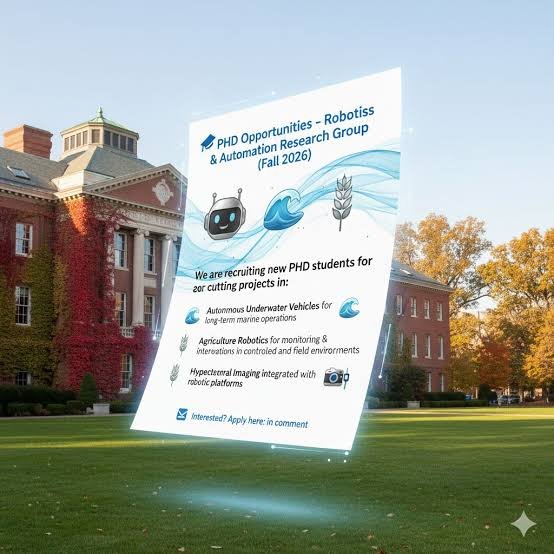
University of Zurich PhD and Postdoctoral Positions in Artificial Intelligence and Robotics 2026
The University of Zurich in Switzerland is inviting applications for multiple fully funded PhD and postdoctoral research positions in artificial intelligence, robotics, computer vision and autonomous navigation. The opportunities are offered through the university’s Robotics and Perception Group, which conducts research into intelligent machines capable of navigating complex environments using onboard cameras and computing systems. The research positions provide opportunities for qualified candidates to work on advanced technologies with applications in autonomous vehicles, aerial robots, mobile devices and accessible navigation systems. Researchers will collaborate with experienced academics, contribute to innovative projects and use specialised research facilities while developing their expertise in artificial intelligence and robotics. Applications are open to candidates with relevant academic qualifications and strong programming and research skills. The group is seeking individuals who are interested in solving challenging problems in computer vision, machine learning, robot learning and autonomous systems. International applicants are welcome. About the Opportunity The Robotics and Perception Group is part of the Department of Informatics at the University of Zurich. Its research focuses on fundamental challenges in robotics and computer vision, particularly how autonomous machines can interpret visual information, make decisions and navigate without depending on external infrastructure. The available positions cover four main research areas. Applicants should review the individual projects and identify those that best match their academic background, technical skills and research interests. 1. Low Energy and Low Latency World Models with Event Cameras and Frames This project explores how event cameras, conventional cameras and inertial sensors can be combined to improve the efficiency and speed of computer vision systems. Potential applications include simultaneous localisation and mapping, object tracking, autonomous vehicles and augmented or virtual reality devices. Researchers will investigate algorithms that use event based visual information to improve perception in challenging lighting conditions and during fast movement. 2. Vision Based Robot Learning with World Models This research area focuses on machine learning methods that enable robots to understand their surroundings, adapt through experience and navigate complex environments. Potential approaches include imitation learning, reinforcement learning and differentiable simulation. Research platforms may include flying robots, legged robots and cars, with opportunities to investigate learning from real world experience and existing video data. 3. Learning Vision Based Navigation Without State Estimation This project examines whether robots can translate visual observations directly into navigation and control actions without relying on a separate state estimation system. Research directions include combining event camera data with conventional images, developing learning based control methods, improving adaptation between simulated and real environments, and testing navigation systems on agile robotic platforms. The project involves collaboration with the National University of Singapore, with approximately one or two trips to Singapore expected each year. 4. Spatial AI for Indoor Navigation of Blind People This project aims to improve independent indoor navigation for blind and visually impaired people. Researchers will develop accessible and privacy aware systems that help users navigate large buildings where satellite positioning is unavailable. Possible topics include indoor localisation, semantic mapping, personalised route planning, accessible navigation instructions and multimodal interaction through speech, audio or haptic feedback. Opportunity Benefits Successful candidates can expect the following benefits: • Fully funded research positions with competitive salaries. • Regular employment with social benefits, including a pension plan and accident insurance. • Access to advanced computing infrastructure, including GPU resources. • Access to specialised robotics facilities, motion capture equipment, 3D printing and electronic and mechanical workshops. • Opportunities to collaborate with researchers at international institutions. • Participation in academic seminars and research discussions with scientists and industry experts. • Opportunities to contribute to research with practical applications in autonomous systems, accessibility and intelligent navigation. • A collaborative academic environment with research group activities and professional development opportunities. The announcement does not specify exact salary figures. Candidates should consult the official recruitment page for further information about compensation and employment arrangements. Eligibility Criteria Applicants should have a master’s or PhD degree in computer science, computer engineering, mechanical engineering, robotics, physics, aerodynamics or a closely related discipline. Candidates are expected to demonstrate the following: • Strong interest in robotics, computer vision, mathematics, programming and analytical problem solving. • Very strong programming skills in C++ and Python. • Excellent written and spoken English. • Substantial experience with robotic systems or aerial robots. • Knowledge of one or more relevant fields, including deep learning, reinforcement learning, control, path planning, aerodynamics, state estimation, computer vision or numerical optimisation. • Academic and technical experience relevant to the selected research project. Postdoctoral applicants must also demonstrate an excellent research record, including publications in respected conferences or journals, as well as theoretical and practical experience in solving complex robotics or computer vision problems. Experience with ROS, PyTorch, TensorFlow, OpenCV and Git is desirable. Required Application Materials Applicants should prepare an application that clearly demonstrates their qualifications and suitability for the relevant research position. Recommended materials include: • An up to date academic CV. • Details of educational qualifications and relevant research experience. • Evidence of programming proficiency in C++ and Python. • Information about previous robotics, computer vision or machine learning projects. • Publications and research contributions, particularly for postdoctoral applicants. • A clear explanation of research interests and their connection to the selected project. • Any supporting letters already available. These are optional at the initial application stage. Candidates should emphasise relevant technical achievements and explain how their skills could contribute to the research group. Postdoctoral applicants should pay particular attention to their publication records and evidence of independent research. How to Apply Visit the official University of Zurich Robotics and Perception Group recruitment page: https://rpg.ifi.uzh.ch/positions.html Review the four research areas and determine whether your qualifications and interests align with one or more projects. Select the appropriate online application form for the PhD or postdoctoral position. Prepare your application materials and clearly demonstrate your technical expertise, research experience and suitability for the position. Submit your application through the designated online form before 27 October 2026. Applications sent directly by email will not be considered. Apply as early as possible because
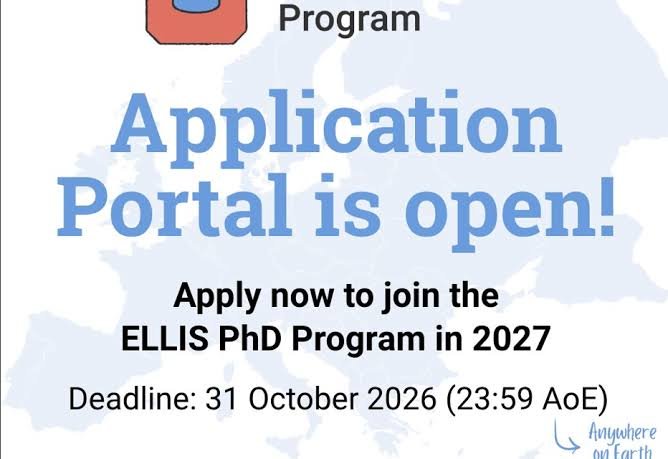
ELLIS PhD Programme 2027 in Artificial Intelligence and Machine Learning
The ELLIS PhD Programme 2027 is inviting applications from talented researchers interested in pursuing doctoral studies in artificial intelligence, machine learning and related fields at leading research institutions across Europe. The programme connects promising PhD candidates with established researchers, creating opportunities for advanced research, international collaboration and interdisciplinary learning. The programme is part of the European Laboratory for Learning and Intelligent Systems, known as ELLIS, a pan European network focused on strengthening European research excellence in artificial intelligence. Through its network of academic researchers, research institutions and industry partners, ELLIS supports the development of the next generation of AI researchers and promotes collaboration across national and disciplinary boundaries. Selected candidates undertake doctoral research under joint supervision from researchers based in different European countries, with opportunities to participate in research workshops, summer schools, networking activities and international exchanges. The programme is designed for researchers who want to contribute to the development of machine learning and AI while working with leading experts in their chosen fields. About the ELLIS PhD Programme The ELLIS PhD Programme brings together researchers working on artificial intelligence and machine learning through a network of academic institutions and industry partners. Its central objective is to help outstanding doctoral candidates develop their research expertise while benefiting from international supervision and access to a wider scientific community. Candidates apply through a central application portal, where they can indicate their preferred research areas and potential supervisors participating in the current recruitment round. The programme places particular importance on matching applicants with a suitable primary advisor and research opportunity. Students can pursue one of three tracks, depending on their research interests and the type of collaboration available. • Academic Track: Research collaboration between academic partners in different European countries. • Industry Track: Collaboration between a European academic institution and an industry partner, combining academic research with an industrial research environment. • Interdisciplinary Track: Research that connects artificial intelligence or machine learning with another discipline, such as biology, law or finance. The programme includes an international exchange component. Depending on the selected track, students must spend at least six months working with their secondary advisor or partner institution. Specific requirements differ between tracks. Opportunity Benefits Successful candidates can benefit from the following opportunities. • Joint supervision by experienced researchers in artificial intelligence and related fields. • Access to a broad European research network spanning universities, research centres and industry. • Opportunities to collaborate across institutions and countries. • Participation in research workshops, summer schools, winter schools and other academic events. • Opportunities to develop expertise in machine learning, AI systems and related research areas. • Research and conference travel support where provided by the relevant advisor or host institution. • Access to an international community of doctoral researchers and established scientists. • Opportunities to pursue interdisciplinary research addressing challenges in science, technology and society. • ELLIS Certificate and membership upon completion, subject to programme requirements. Funding note: ELLIS is a research network rather than a direct employer or funding body for every PhD student. Salary, tuition coverage and other financial support depend on the host institution, the advertised doctoral position and any applicable scholarship. Applicants should confirm the financial terms of each position before accepting an offer. Research Areas The programme covers a wide range of machine learning and AI research fields. Applicants should review the current list of participating advisors and available positions to identify opportunities that match their interests. Relevant research areas include: • Artificial intelligence and machine learning algorithms. • Deep learning and machine learning theory. • Computer vision and computer graphics. • Natural language processing and information retrieval. • Robotics and human robot interaction. • Reinforcement learning and control. • Bayesian and probabilistic learning. • Bioinformatics and computational neuroscience. • Earth and climate sciences. • Machine learning for health, chemistry and materials science. • Machine learning for sustainability. • Human behaviour, psychology and emotion. • Interpretability, fairness and trustworthy AI. • AI safety, privacy, security and ethics. • Multi agent systems and game theory. • Social sciences, humanities, entrepreneurship and technology transfer. The available research topics and supervisors may vary by recruitment round. Applicants should therefore select advisors who are explicitly listed as recruiting for the 2027 intake. Eligibility Criteria Applicants should demonstrate strong academic preparation, research potential and a clear interest in doctoral research in artificial intelligence, machine learning or a related discipline. • Applicants should have a relevant academic background and qualifications suitable for admission to a PhD programme at the host institution. • Applicants should demonstrate academic excellence and the potential to conduct independent research. • Applicants should have research interests that align with the participating advisor and an available doctoral position. • Applicants should be prepared to undertake joint supervision and the international collaboration required by their selected track. • Applicants should be able to provide academic transcripts and supporting documentation in English or with English translations. • Applicants should identify suitable referees who can assess their academic performance and research abilities. • Applicants must complete all required application sections and submit reference requests before the main application deadline. The programme is highly competitive. ELLIS reports that, in a typical recruitment round, fewer than five percent of all registered applicants and approximately five to ten percent of eligible applicants are accepted. Women and people living with disabilities are explicitly encouraged to apply. Required Application Materials Applicants should prepare the following materials for the online application. • Motivational letter and research statement: A document of up to two pages explaining why the applicant wants to pursue a PhD within the ELLIS network, summarising previous research projects and describing future research interests. • Current curriculum vitae: Include educational background, relevant work experience, publications with full citations, research presentations and awards. • Academic transcripts: Unofficial transcripts covering university studies, including bachelor’s and master’s studies where applicable. • English translations: Provide English translations of academic transcripts where the original documents are in another language. • Referee details: Contact details for at least two and no more than three

Liverpool John Moores University Vice Chancellor’s PhD Scholarships 2027
Liverpool John Moores University (LJMU) in the United Kingdom is inviting applications for its Vice Chancellor’s PhD Scholarships Scheme 2027. The programme offers a maximum of 20 doctoral studentships to outstanding candidates and their academic supervisors who propose high quality research projects. Applications opened on October 7, 2026, and the deadline is January 29, 2027, at 5:00 p.m. UK time. The scheme welcomes applicants with both UK and international fee status, subject to the university’s eligibility requirements. Candidates must work with an eligible lead supervisor, who is responsible for submitting the final application. Now in its twelfth year, the programme supports research excellence and strengthens the university’s research and knowledge exchange activities. It encourages innovative projects across different disciplines, including neuroscience, engineering, public health, criminology and other fields represented across the university. About the Scholarship Programme The Vice Chancellor’s PhD Scholarships Scheme supports promising doctoral researchers undertaking projects that align with LJMU’s research strengths and institutional priorities. It aims to recruit academically strong students, encourage collaboration and contribute to the university’s long term research strategy. The programme is open to research proposals across the university’s two faculties, covering a wide range of academic and professional disciplines. Interdisciplinary research and collaboration with institutions around the world are encouraged. Each application is developed jointly by the prospective doctoral student and their lead supervisor. The proposed research should demonstrate academic quality, clear objectives, an appropriate training plan and a meaningful connection to the university’s research priorities. The university will assess applications through a faculty review followed by a university level panel. A maximum of 20 studentships will be awarded for the 2027 competition. Scholarship Benefits The funding available depends on whether the successful applicant receives a full time or part time studentship. • Full time doctoral studentships: Three years of support. • Tuition fees: Course fees are covered under the published scholarship conditions. • Research support: Full time studentships include a bench fee currently set at £1,600 per year, allocated to the lead supervisor to support research costs. • Stipend: Full time awards include a stipend. Applicants should consult the university’s Doctoral Academy for the applicable rate. • Part time doctoral studentships: Six years of support, with course fees covered under the published conditions. • Research development: Students can develop their research skills through a structured doctoral project and training plan. • Academic supervision: Successful applicants work with an eligible lead supervisor and the relevant academic research community. • International research environment: The university encourages multidisciplinary research and collaboration with institutions worldwide. Applicants should note that the published scheme distinguishes between full time and part time awards. The part time scholarship information lists course fee coverage but does not list a stipend. Candidates should confirm the financial conditions that apply to their proposed studentship before accepting an award. Research Areas Liverpool John Moores University supports doctoral research across a broad range of subjects. Applicants should explore the university’s research areas and identify a project that fits its academic expertise. Potential areas include: • Neuroscience and related health research. • Engineering and technology. • Public health and population health research. • Criminology and criminal justice. • Biological and environmental sciences. • Computer science and mathematics. • Psychology and behavioural research. • Nursing and allied health. • Business and management. • Education and social sciences. • Humanities, law and creative disciplines. These are examples of research areas at LJMU rather than a guaranteed list of available scholarship projects. Candidates should consult faculty pages and discuss their proposed research with a suitable supervisor before applying. Eligibility Criteria The university welcomes applications from UK and international candidates who meet its academic and admission requirements for doctoral study. Applicants should meet the following conditions: • Meet the academic requirements for PhD level study at LJMU. • Identify an eligible lead supervisor before the application is submitted. • Develop a high quality research proposal with the supervisor. • Demonstrate relevant academic qualifications, research achievements, experience, skills and abilities. • Present a clear research question and a suitable plan for conducting the proposed studies. • Explain how the proposed project connects with the university’s Strategy 2030 or the relevant faculty research and knowledge exchange plan. • Complete any applicable English language and immigration requirements if applying internationally. • Complete an existing master’s programme before enrolling in the PhD in August or September 2027, if currently studying at master’s level. • Apply for a PhD rather than a professional doctorate or another qualification outside the scheme. Students already enrolled in a PhD or another level 8 programme at LJMU or another institution are not eligible for this scholarship scheme. International applicants should contact LJMU International Admissions while preparing their applications to clarify eligibility, English language requirements and visa procedures. The university also publishes country specific restrictions that prospective applicants must review. Required Application Materials The university specifies the following core information for applications: • Student information and personal details. • A lay summary of up to 250 words explaining the research rationale, aims, objectives and planned outcomes for a general audience. • A detailed research proposal describing the proposed doctoral work. • A research and training plan. • A statement explaining how the project connects with LJMU Strategy 2030 or the relevant Faculty Research and Knowledge Exchange Plan. • A completed Equal Opportunities Monitoring Form submitted separately by the student. The university states that additional materials beyond those requested will not be included in the assessment. Applicants should therefore follow the official template and avoid sending unnecessary documents. Selection Criteria Applications will be assessed through a two stage process involving faculty and university panels. The assessment focuses on the quality of the candidate, the supervisory team and the proposed research project. The principal criteria include: • Academic qualifications, research achievements, outputs, experience, skills and abilities of the candidate. • Relevant experience and quality of the supervisory team. • Clarity and quality of the lay summary. • Academic quality and clarity of the proposed research. • Suitability and relevance of the