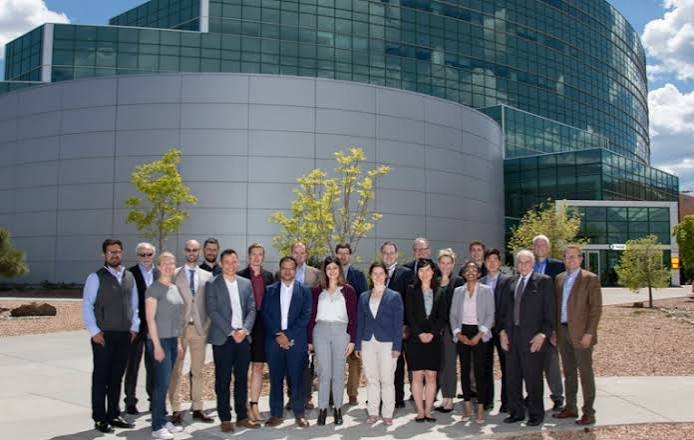
Center for International Security and Cooperation (CISAC), · Stanford University, Encina Hall
Applications are open for the Stanford Center for International Security and Cooperation Fellowship for the 2027 to 2028 academic year. Hosted by the Center for International Security and Cooperation at Stanford University, the fellowship provides scholars and professionals with an opportunity to spend an academic year at Stanford researching major international security challenges and developing innovative solutions.
The Stanford CISAC Fellowship brings together predoctoral scholars, postdoctoral researchers, junior faculty members and professionals working on important questions related to international security. Fellows spend the academic year engaged in research and writing while participating in seminars, workshops and intellectual activities alongside leading Stanford faculty and researchers.
The fellowship welcomes applicants from the United States and other countries. International applicants do not need to be United States citizens, and Stanford provides visa support and guidance to successful international fellows. Applicants are considered for all CISAC fellowship opportunities for which they are eligible.
The Center for International Security and Cooperation is part of Stanford University's Freeman Spogli Institute for International Studies. CISAC brings together researchers from different disciplines to study complex international security problems and produce research that can contribute to a safer world.
CISAC fellows spend their fellowship period in residence at Stanford and work closely with faculty mentors. The programme supports rigorous scholarship while encouraging fellows to engage with policy discussions, interdisciplinary research and the wider CISAC community.
Fellowships generally last between nine and twelve months, and some may be renewable depending on circumstances and available funding.
During the fellowship, participants are expected to make substantial progress on their proposed research, participate actively in CISAC activities and contribute to the intellectual community.
• Stipend for predoctoral fellows comparable to Stanford Graduate Fellowships
• Non matriculated student tuition paid for eligible predoctoral fellows as required by Stanford
• Postdoctoral stipend based on experience and Stanford established minimums
• Stipends for junior faculty and professionals based on experience
• Medical insurance coverage according to Stanford requirements
• One on one faculty mentorship
• Opportunity to conduct research at Stanford University
• Access to CISAC seminars, workshops and research activities
• Interaction and collaboration with leading scholars and researchers
• Opportunity to develop policy relevant research and public facing work
• Visa sponsorship and guidance for eligible international fellows
This fellowship examines questions surrounding artificial intelligence, human decision making and compliance with the laws of armed conflict. Research may involve AI agents, wargaming, surveys, behavioral data and policy analysis.
This fellowship focuses on the relationship between artificial intelligence, strategic stability and military competition. Fellows work on research examining how AI technologies may influence international security and strategic decision making.
This fellowship explores international competition surrounding artificial intelligence, including technology development, diffusion, regulation, export controls, AI sovereignty and geopolitical influence.
This fellowship supports early career scholars researching Indian foreign and defense policy, United States and India relations, United States, India and China security relations, security challenges in South Asia and the Indo Pacific region.
Researchers with backgrounds in natural sciences or engineering can apply their technical expertise to international security questions, policymaking and science communication.
This area supports research on nuclear weapons policy, nuclear terrorism, transnational flows of nuclear materials and knowledge, nuclear energy and nonproliferation.
The broader international security fellowship supports research on topics including nuclear security, cybersecurity, artificial intelligence, biosecurity, global health, terrorism, war and civil conflict, peacebuilding, global governance, migration and transnational challenges.
• Open to applicants from the United States and other countries
• Applicants do not need to be United States citizens
• Predoctoral applicants must currently be enrolled in a PhD programme or equivalent DPhil programme
• Predoctoral applicants who are close to completing their doctorate are particularly competitive
• Postdoctoral applicants should have completed their PhD before the fellowship begins
• Junior faculty and professionals may also be eligible for relevant fellowship opportunities
• Research must align with international security or one of the current CISAC fellowship areas
• Applicants should demonstrate strong scholarly potential and a commitment to rigorous research
• Applicants should be prepared to participate actively in CISAC seminars, workshops and research activities
• International applicants must be able to meet applicable visa requirements
• Completed online application form
• Resume or CV
• Graduate school transcript
• Research project prospectus or description of dissertation of no more than 1,500 words, excluding footnotes and endnotes
• Research abstract of no more than 200 words
• Writing sample of no more than 50 pages
• Three confidential letters of recommendation
• All application materials and recommendation letters must be submitted in English
Applicants should not submit additional materials such as books, lengthy manuscripts or more recommendation letters than requested.
CISAC evaluates applicants based on the quality and relevance of their proposed research, their scholarly preparation and their potential contribution to the Center's intellectual community.
Applicants are considered for every CISAC fellowship for which they are eligible, even when they have indicated interest in a particular fellowship. Research compatibility with CISAC's current programmes and faculty expertise is also important.
Predoctoral applicants are evaluated in the same general pool as postdoctoral applicants, making substantial progress toward completion of the PhD particularly important for competitive applications.
Stanford University, Encina Hall
 Center for International Security and Cooperation (CISAC),





Be the first to comment on this opportunity.