
Applications are open for the Resilience Fund for Women in Global Value Chains 2026, a funding opportunity supporting women led and non binary led community based organizations working to strengthen the health, safety, livelihoods and economic resilience of women and communities connected to global value chains. The 2026 funding round focuses specifically on organizations based in Bangladesh, Cambodia, India and Vietnam. The Fund is seeking organizations whose work connects women’s health, safety and economic resilience with community led climate adaptation and the rights and wellbeing of women workers and communities connected to global value chains. Selected organizations will receive flexible and unrestricted funding ranging from US$15,000 to US$50,000 over two years. In addition to financial support, successful grantee partners will have opportunities to connect, learn and share experiences with other organizations through the Resilience Fund’s Learning Hub. The Fund recognizes that climate impacts such as extreme heat, flooding, drought and changing weather patterns can have significant consequences for women’s health, safety, livelihoods and economic security. Its approach places resources and decision making closer to women led organizations and the communities they serve. About the Opportunity The Resilience Fund for Women in Global Value Chains brings together companies, foundations, women’s funds, civil society organizations and women leaders to support community based solutions. The Fund uses flexible funding, participatory grantmaking and shared learning to support organizations that understand the priorities of the communities they serve. Its work connects women’s health, safety and economic resilience with climate risks and the changing conditions affecting workers and communities within global value chains. For the 2026 funding round, applicants should demonstrate meaningful experience across the three interconnected areas below. Programme Areas • Women’s health, safety and resilience, including health, workplace safety, livelihoods, financial security, leadership, decision making and freedom of movement • Community led climate adaptation addressing climate and environmental impacts such as extreme heat, flooding, drought, storms and changing weather patterns • Connection to global value chains through work with women workers, other workers or communities connected to global value chains Opportunity Benefits • Flexible and unrestricted funding of US$15,000 to US$50,000 • Funding provided over a two year period • Opportunities to connect with other Resilience Fund grantee partners • Participation in the Resilience Fund Learning Hub • Opportunities for shared learning and knowledge exchange • Support for locally led approaches to women’s resilience and climate adaptation • Funding that can be adapted to organizational and community priorities Eligibility Criteria • Open to women led and non binary led community based organizations • Organizations must be based and operating in Bangladesh, Cambodia, India or Vietnam • Organizations must be formally registered • Organizations must be authorized to receive foreign funding • Organizations must have established relationships with the communities they serve • At least 50 percent of organizational staff must be women or non binary people • Organizations should be embedded in and representative of their communities • Annual organizational income must be at least US$10,000 • Income from 2024, 2025 or 2026 may be used to determine financial eligibility • Applicants should have experience addressing women’s health, safety and economic resilience • Applicants should demonstrate experience with climate adaptation or community resilience • Applicants should work with women workers, workers or communities connected to global value chains • Organizations may work with formal or informal workers, migrant workers, domestic workers or communities around factories and farms Areas of Organizational Experience Applicants may demonstrate experience in areas such as: • Women’s health and safety • Economic resilience and livelihoods • Women’s leadership and agency • Unpaid care and domestic work • Financial access and resilience • Freedom of movement and safe migration • Climate adaptation • Worker rights and wellbeing • Garment and apparel value chains • Agriculture and food production • Mining and energy • Electronics and manufacturing • Informal work Required Application Information The Phase 1 application requests information about the organization and its work, including: • Primary contact information • Executive director or chief executive information • Organizational experience • Experience in women’s health, safety and economic resilience • Experience with climate adaptation • Experience working with global value chains • Main sectors and communities served • Primary and secondary target groups • How workers or communities are represented within the organization • Previous Resilience Fund grant history • Requested funding amount • Brief explanation of how the requested funds would be used • Description of the organization’s problem, target population and approach • Additional information about the organization. Selection and Application Process The Resilience Fund uses a two phase application process. Phase 1: Organizations submit an initial application providing information about their organization, mission, experience and proposed funding needs. Phase 2: Organizations that are longlisted will be invited to submit a second application with additional information. The application timeline includes Phase 1 applications from September 18 to October 12, 2026. An application support webinar is scheduled for September 30, 2026. Longlisted organizations are expected to be invited to Phase 2 toward the end of October, with final selections expected in December 2026. Organizations can also access application support for language translation, questions and assistance with completing the online application. Support is available in Hindi, Tamil, Bangla, Odia, Marathi, Khmer and Vietnamese. How to Apply Review the Resilience Fund eligibility requirements and confirm that your organization is based in Bangladesh, Cambodia, India or Vietnam. Confirm that your organization meets the registration, foreign funding, community based and organizational leadership requirements. Review your organization’s experience across women’s health and economic resilience, climate adaptation and global value chains. Prepare concrete examples demonstrating your organization’s work and the communities it serves. Determine the amount of funding you are requesting, ensuring that it falls between US$15,000 and US$50,000 and does not exceed 150 percent of annual organizational revenue. Complete the Phase 1 online application with accurate organizational and programme information. Submit the application before October 12, 2026. If your organization is longlisted, prepare and submit the Phase 2 application when invited.
Indomie Scholarship Program 2026
The Indomie Scholarship Program 2026 is now open to Nigerian students entering tertiary education for the 2026/2027 academic session. Funded by Dufil Prima Foods Plc, the scholarship is designed to reduce the financial burden of tertiary education by providing full tuition coverage to selected students throughout their eligible programme. The programme is open to Nigerian students gaining admission into public and state owned tertiary institutions across Nigeria. Eligible institutions include universities, polytechnics, colleges of education and specialised institutions. Students across different academic disciplines can apply, provided they meet the stated eligibility requirements. Applications are completely free. Applicants can begin the registration process using their personal information and passport photograph, while JAMB and O Level results can be uploaded before the application deadline. After applications close, shortlisted candidates will be invited to participate in a Computer Based Test, followed by physical verification for candidates who progress through the selection process. About the Scholarship The Indomie Scholarship Program is an educational support initiative of Dufil Prima Foods Plc for Nigerian students entering tertiary education. The 2026 programme focuses on students entering eligible public and state owned institutions during the 2026/2027 academic session. Rather than providing a one time educational award, the programme provides tuition support for the duration of the student’s eligible programme, subject to the required academic conditions for renewal. The scholarship is available across eligible courses and institutions, giving newly admitted students an opportunity to reduce the financial pressure associated with tuition fees while pursuing their tertiary education. Applicants should note that the official programme information specifically states that tuition fees are covered. Other educational and living expenses should not be assumed to be included unless they are expressly stated in the scholarship terms. Scholarship Benefits • Full tuition fees covered for the duration of the eligible programme. • Scholarship renewal each year, subject to maintaining the required GPA. • Coverage across eligible public and state owned universities, polytechnics, colleges of education and specialised institutions. • Opportunity to pursue tertiary education with reduced tuition related financial pressure. • Free application with no application fee required. Eligible Institutions The scholarship is available to students entering qualifying public and state owned tertiary institutions in Nigeria. Eligible institution categories include: • Public and state owned universities • Polytechnics • Colleges of education • Specialised institutions The programme is not limited to a particular academic discipline, and eligible courses across the qualifying institutions can be considered. Eligibility Criteria To be considered for the Indomie Scholarship Program 2026, applicants should meet the following requirements: • Be a Nigerian student entering tertiary education during the 2026/2027 academic session. • Be admitted to a public or state owned tertiary institution in Nigeria. • Be entering an eligible university, polytechnic, college of education or specialised institution. • Have WAEC or NECO results. • Have a JAMB result. • Complete the scholarship registration before September 30, 2026. The official portal allows applicants to begin their registration before uploading their JAMB and O Level results. Applicants can return to their accounts and provide the required results before the application deadline. Required Application Information Applicants should be prepared to provide the following information during the application process: • Full name • Active phone number • Valid email address • Date of birth • State of origin • Passport photograph • JAMB result • WAEC or NECO result • Tertiary institution admission information The official portal indicates that applicants can use a phone camera to take a passport photograph during registration if necessary. The application also supports results from up to two sittings. Selection Process The scholarship selection process takes place after applications have been submitted and the deadline has passed. The process includes: Application screening: Submitted applications and applicant information are reviewed. Computer Based Test: Shortlisted candidates are invited to participate in a CBT. Physical verification: Candidates who successfully progress through the CBT stage undergo physical verification. Final selection: Successful candidates are confirmed for the scholarship programme. Submitting an application does not automatically guarantee a scholarship award. Applicants should monitor the phone number and email address used during registration for communication concerning the next stages. How to Apply Visit the official Indomie Scholarship application portal. Select the option for a new applicant to begin your registration. Enter your personal details, including your name, email address, phone number, date of birth and state of origin. Upload a passport photograph as requested. Provide your JAMB and O Level results. If these are not immediately available during registration, they can be added later before the deadline. Review all information carefully and verify your email address or phone number. Submit the completed application. Monitor your contact details after the deadline for any invitation to the Computer Based Test. If shortlisted and successful at the CBT stage, attend the required physical verification. Complete the final selection process as directed by the scholarship organisers.

UNDP Czech Challenge Fund 2026
Applications are now open for the UNDP Czech Challenge Fund 2026, an initiative supporting innovative solutions that address development challenges and contribute to the Sustainable Development Goals. The programme is implemented through the Czech UNDP Partnership for Sustainable Development Goals, which connects Czech expertise and innovative solutions with development priorities in partner countries. The 2026 Challenge Fund is focused on Bosnia and Herzegovina, Georgia, and the Republic of Moldova. It provides financial support for organisations seeking to test and implement practical innovations with potential for wider application, sustainability, and scale. The initiative is designed to help turn innovative ideas into practical solutions that can create measurable development impact. Selected applicants can receive funding of up to US$40,000 to test and implement their proposed solutions. Projects may run for up to 12 months, with funding supporting areas such as project personnel and experts, smaller equipment and software, workshops and training, and project related travel. Applicants are required to provide at least 20% cofunding, which may include non financial contributions. About the Opportunity The Czech UNDP Partnership for Sustainable Development Goals is a cooperation framework through which the Czech Republic and UNDP share expertise, knowledge, and innovative approaches with partner countries. The partnership has supported development initiatives across Europe and Central Asia and includes expertise sharing, challenge funding, and knowledge management. The Challenge Fund component invites innovative solutions from Czech organisations and other eligible applicants to respond to specific development challenges in partner countries. The 2026 call focuses on Bosnia and Herzegovina, Georgia, and Moldova. Projects should offer practical and innovative approaches to development challenges while demonstrating potential for broader use. Local partnerships are an important element of the programme because they help applicants adapt solutions to local realities and strengthen their sustainability and scalability. Opportunity Benefits • Funding of up to US$40,000 • Support for projects lasting up to 12 months • Funding for project personnel and experts • Support for smaller equipment and software • Funding for workshops and training activities • Support for eligible project related travel • Opportunity to test innovative solutions in a real development context • Potential to develop solutions with wider application and scalability • Access to collaboration opportunities with local partners • Opportunity to contribute to the Sustainable Development Goals Target Countries The 2026 Challenge Fund focuses on three partner countries: • Bosnia and Herzegovina • Georgia • Republic of Moldova Applicants should ensure that their proposed solution addresses a relevant development challenge in one of these countries and is suitable for implementation within the local context. Eligibility Criteria Eligible applicants include organisations and institutions such as: • Private sector organisations • Public sector organisations • Nongovernmental organisations • Universities • Government institutions • Research centres Applicants must also meet the following requirements: • Propose an innovative solution addressing a development challenge in one of the target countries • Demonstrate the practical value and potential wider application of the proposed solution • Engage local partners to support implementation and adaptation to local conditions • Provide at least 20% cofunding for the proposed project • Submit the application using the required application form • Provide a budget that complies with the requirements of the call • Submit a budget sheet signed by an authorised representative of the applicant organisation • Follow the required submission arrangements • Submit the complete application before the deadline The official UNDP announcement notes that the 20% cofunding requirement may be provided in non financial form. Required Application Materials Applicants should prepare the following as part of their submission: • Completed application form • Project proposal describing the proposed innovative solution • Project budget • Signed budget sheet • Information demonstrating compliance with the call requirements • Details of the proposed local partnership arrangements • Any other information required by the official call documentation The application must be complete and submitted using the required procedure. Applications that do not comply with the prescribed format, budget requirements, or submission arrangements may not be accepted. Selection Considerations The Challenge Fund is designed for practical and innovative solutions that respond to development challenges in the three target countries. Applicants should demonstrate how their proposed solution can work in the local context and contribute to meaningful development outcomes. Particular attention should be given to: • Relevance to a development challenge • Innovation and practical applicability • Suitability for local conditions • Potential for sustainability • Potential for wider application and scalability • Strength of local partnerships • Feasibility of the proposed implementation • Appropriate use of the requested funding How to Apply Review the official UNDP Czech Challenge Fund 2026 call and confirm that your organisation and proposed project meet the eligibility requirements. Identify a development challenge in Bosnia and Herzegovina, Georgia, or the Republic of Moldova that your organisation can address through an innovative and practical solution. Develop a project proposal explaining the problem, proposed solution, implementation approach, local partnership, expected results, sustainability, and potential for wider application. Prepare a project budget that follows the requirements of the call and accounts for the required 20% cofunding. Complete the official application form and attach the signed budget sheet and other required documents. Register or access your organisation’s profile through the UNDP Quantum Supplier Portal. Search for the negotiation using reference number UNDP IRH 00317 if required. Submit the completed application through the designated UNDP system before the deadline. Ensure that the complete submission is made no later than October 20, 2026. The Czech UNDP Partnership also provides opportunities for applicants to consult with its team for additional information and support while preparing applications.
AGNES BAYER Science Foundation Research Grant 2026
Applications are open for the AGNES BAYER Science Foundation Research Grant 2026, an opportunity supporting doctoral students from sub Saharan Africa who are conducting research in biodiversity conservation and sustainable agriculture. The grant is designed to strengthen the scientific capacity of young African researchers and provide financial support for important activities that form part of their doctoral research. The programme is funded by the BAYER Foundation with support from the Alexander von Humboldt Foundation. It is intended for junior researchers who are officially enrolled in doctoral programmes at universities or tertiary institutions in sub Saharan Africa and whose research addresses biodiversity conservation, sustainable agriculture, or related development priorities in the region. Successful applicants can receive a maximum grant of EUR 7,000. The funding can support activities such as field experiments, data collection, laboratory studies, and other outstanding research activities that are directly connected to the applicant’s doctoral research. The grant is a once off award and cannot be used to reimburse research activities that have already been completed. About the Research Grant The AGNES BAYER Science Foundation Research Grant for Biodiversity Conservation and Sustainable Agriculture in sub Saharan Africa enables doctoral students to undertake research activities that contribute to their PhD projects. The programme focuses on strengthening the research capacity of young African scientists while supporting research that can contribute to biodiversity protection, sustainable agricultural practices, and development across sub Saharan Africa. Eligible research activities may include field experiments, field data collection, laboratory studies, and other activities necessary for completing the doctoral research project. Research Grant Benefits • Grant of up to EUR 7,000 for each successful applicant • Financial support for doctoral research activities • Support for field experiments and data collection • Support for laboratory studies and other eligible research activities • Opportunity to strengthen scientific research capacity • Support for research addressing biodiversity conservation and sustainable agriculture • Recognition through an international research support programme Programme Areas The grant supports doctoral research related to: • Biodiversity conservation • Sustainable agriculture • Field research and experimentation • Agricultural research • Biodiversity related scientific studies • Laboratory based research • Data collection and analysis connected to doctoral research Eligibility Criteria Applicants must meet the following requirements: • Be a national of a sub Saharan African country • Be officially registered for a Doctoral degree at a university or tertiary institution in sub Saharan Africa • Be currently enrolled in the doctoral programme at the time of application • Be working in the field of biodiversity conservation and or sustainable agriculture • Have published at least one scientific paper in a non predatory journal • Have publications in peer reviewed international journals indexed in SCOPUS or Web of Science • Provide SCOPUS or Web of Science links for each publication • Demonstrate an outstanding academic record • Demonstrate that the proposed research is relevant to development in sub Saharan African countries • Submit an original research proposal connected to the applicant’s doctoral research Completed PhD work is not eligible for the grant. Required Application Materials Applicants must prepare the following documents: • A short original research or project proposal of no more than 5 pages • A proposed schedule showing how the research objectives will be achieved • An AGNES standard CV completed using the official template • Official proof of registration for the doctoral degree • Official academic transcripts showing undergraduate and postgraduate grades • An official explanation of the grading system in English if the transcript is issued in another language • A list of published articles in non predatory journals • SCOPUS or Web of Science links for each publication • An electronic copy of the first page of each submitted publication showing the title, authors and abstract • A single PDF containing the publication list and the first page of each publication • A detailed budget for the proposed research activities Selection Criteria Applications are assessed based on the academic and research profile of the applicant as well as the quality and relevance of the proposed research. Key considerations include: • Academic performance • Scientific publication record • Quality of the proposed research • Relevance to biodiversity conservation or sustainable agriculture • Relevance of the research to development in sub Saharan Africa • Clarity of the proposed research activities • Feasibility of the proposed research schedule • Appropriate and clearly explained use of the requested funding The selection meeting is scheduled for December 2026, after which successful candidates will be informed. How to Apply Review the AGNES BAYER Science Foundation Research Grant requirements and confirm that you meet the eligibility criteria. Prepare an original research or project proposal of no more than 5 pages in English. Complete the AGNES CV template in English. Obtain official proof of current doctoral registration from your university or tertiary institution. Prepare your official academic transcripts and grading system explanation where required. Compile your publication list and include SCOPUS or Web of Science links for each eligible publication. Combine the publication list and the first page of each publication into a single PDF document as instructed. Prepare a detailed budget showing how the grant would support the proposed doctoral research activities. Complete the online AGNES application form and upload all required documents. Submit the complete application by October 16, 2026 at 23:59 GMT. Research activities supported through the 2026 grant are expected to begin no earlier than January 11, 2027 and no later than March 31, 2027.
International Machine Learning Competition 2026
The International Machine Learning Competition 2026 is an international academic competition designed to help students understand how machine learning works and explore the technology behind many of today’s artificial intelligence systems. The competition gives students an opportunity to solve machine learning problems, develop analytical skills and engage with concepts that may go beyond their regular school curriculum. The competition is open to students from around the world who are interested in machine learning and artificial intelligence. No prior machine learning experience is required to begin, making the competition accessible to students who are interested in learning the subject while testing their problem solving abilities against participants internationally. The 2026 edition begins with a Qualification Round consisting of five machine learning problems covering different topics and levels of difficulty. Successful participants can progress to a more advanced Pre Final Round and then to the Final Round, where finalists compete for international prizes, honours and recognition. About the Competition The International Machine Learning Competition gives students an opportunity to learn about machine learning through structured problem solving. The competition moves from foundational concepts to more advanced problems and eventually introduces participants to real world machine learning research. The competition is divided into three main stages. Qualification Round The first stage contains five problems covering a range of machine learning topics. Problems may involve understanding how models learn from data, mathematical calculations and other fundamental concepts. Participants submit their solutions online. Students are divided into Junior, Youth and Senior groups based on their age or grade. Students in all groups receive the same problems, although the score required to progress differs between groups. Pre Final Round Students who qualify move to a supervised 60 minute examination containing three problems. These include a basic problem, an advanced problem and a research problem based on a real machine learning research paper. The research component gives participants an opportunity to engage with current machine learning research and develop the ability to understand and apply ideas from academic literature. Final Round The Final Round consists of a supervised online examination with approximately 30 questions. The questions cover machine learning knowledge developed through the earlier stages of the competition. The 2026 Final Round is scheduled for February 23, 2027, with results expected on March 1, 2027. Competition Benefits • Total prizes and awards valued at US$1,500 • Official digital participation certificates • Gold, Silver and Bronze Honours for qualifying finalists • First, second and third prizes in the Junior, Youth and Senior categories • National recognition for top participants from each country • Opportunity to develop practical understanding of machine learning • Exposure to real world machine learning research • International academic recognition • Access to an international community of students interested in machine learning • Opportunities to connect with other students through the IMLC network • Potential access to information about scholarships, sponsored events and other competitions Competition Categories The International Machine Learning Competition has three age and education groups. Junior • Students in Grade 10 and below • Participants must generally be under 16 years old Youth • Students in Grades 11 to 13 • Participants who are at least 16 years old may also fall into this category Senior • First year college or university students and above • Participants aged 19 years or older may also fall into this category The age or grade of the participant on the Qualification Round submission deadline determines their competition group for the entire competition. Eligibility Criteria • Open to current high school and university students worldwide • Students from all eligible grades and countries may participate • Students interested in machine learning or artificial intelligence are encouraged to apply • No previous machine learning experience is required to participate in the Qualification Round • Students taking a gap year between high school and university may participate • Participants must submit their Qualification Round solutions by December 13, 2026 • Students must provide accurate personal and school information for certification purposes Required Application Information For the Qualification Round, participants are required to submit their solutions to the five competition problems. The submission should include: • Solutions to the Qualification Round problems • Participant name • School or educational institution • City • Date of birth • A digital solution file or clear images of handwritten solutions Typed solutions are recommended, although clear handwritten solutions may also be submitted. If several images are used, they should be combined into a single PDF file. There is no registration or participation fee for the Qualification Round. Prize Structure The competition offers a total of US$1,500 in cash prizes and special honours. Senior Category • First Prize: US$250 • Second Prize: US$175 • Third Prize: US$125 Youth Category • First Prize: US$200 • Second Prize: US$150 • Third Prize: US$100 Junior Category • First Prize: US$175 • Second Prize: US$125 • Third Prize: US$100 Additional national awards are available for the top participants from each country. Finalists may also receive Bronze, Silver or Gold Honours depending on their performance. Important Dates • December 13, 2026: Qualification Round submission deadline • December 28, 2026: Qualification Round results • January 19, 2027: Pre Final Round registration deadline • January 22, 2027: Research paper released for the Pre Final Round • January 24 to January 26, 2027: Pre Final Round examination period • February 8, 2027: Pre Final Round results • February 23, 2027: Final Round examination • March 1, 2027: Final Round results How to Apply Review the International Machine Learning Competition 2026 information and competition rules. Confirm that you meet the student eligibility requirements and identify your appropriate age or education category. Access the Qualification Round problems and work through all five machine learning problems. Prepare your solutions digitally or as clear handwritten documents. Make sure your name, school, city and date of birth are entered correctly because this information will be used for competition certificates. Submit your Qualification Round solutions through the official IMLC submission system before December 13, 2026 at
CFWH General Research Grant 2026 2027
Applications are open for the Canadian Foundation for Women’s Health General Research Grant 2026 2027. The grant supports innovative medical research that promotes and advances women’s health treatment, research and education, including reproductive health issues affecting women in Canada and around the world throughout the lifespan. The Canadian Foundation for Women’s Health supports research, education, advocacy and professional development that advance the health of women in Canada and internationally. Through the General Research Grant, the Foundation provides financial support for research projects that address important issues in women’s health and have the potential to contribute meaningful knowledge to treatment, education, clinical practice or health systems. The CFWH General Research Grant provides funding of up to $20,000. The funding period is two years, and proposed research may either be a standalone project or form part of a larger research programme supported by other sources. Where a project forms part of a larger programme, the portion supported by the CFWH grant must have clearly defined deliverables that can be completed within two years or less. About the Opportunity The CFWH General Research Grant is designed to support research that advances knowledge and practice in women’s health. The Foundation particularly seeks proposals with clear relevance to women’s health, a well defined research problem, appropriate methodology and potential impact. Research projects may address medical, clinical, educational or reproductive health questions as long as they are directly connected to the field of women’s health and education. Successful applicants are expected to conduct the approved research in accordance with their proposal and provide progress reports to the Foundation. The research review process is managed by the Canadian Foundation for Women’s Health, with applications assessed through peer review. Opportunity Benefits • Funding of up to $20,000 • Two year funding period • Financial support for innovative research in women’s health • Opportunity to contribute to women’s health treatment, research and education • Support for research addressing reproductive health issues affecting women • Recognition through the Canadian Foundation for Women’s Health research funding programme Research Areas The grant supports research directly related to women’s health and education. Relevant projects may include research addressing: • Women’s health treatment and care • Women’s medical research • Reproductive health • Health education • Clinical research affecting women • Research addressing health issues experienced by women throughout the lifespan Applicants should ensure that their proposed project clearly demonstrates its relevance to women’s health and education. Eligibility Criteria • Applicants must be affiliated with a Canadian university or healthcare institution. • The institution must be able to provide ethics review in compliance with Canadian standards. • Proposed research must be directly related to women’s health and education. • Research proposals may be standalone projects. • Projects that form part of larger research programmes must have clearly defined deliverables achievable within two years or less. • Priority will be given to members in good standing of the Society of Obstetricians and Gynaecologists of Canada. • Successful grant recipients must provide quarterly progress reports to the Canadian Foundation for Women’s Health. Required Application Materials Applicants must submit the required documents by email to the Canadian Foundation for Women’s Health. • Cover letter • Curriculum vitae of the principal investigator • Itemized project budget • Letter of institutional support • Research proposal The cover letter must include the research project title, location where the research will be conducted, members of the research team and the total amount of the project. Applicants must also confirm their commitment to using the awarded funds for the research described in the proposal. The itemized budget should identify all project expenses, corresponding costs and the total project cost. The research proposal must be no more than four pages, excluding the abstract and references, and should have numbered pages. The proposal must include an abstract of no more than 250 words and address the following areas: • Background • Objective • Rationale and need • Methods • Analysis plan • Implications and potential impact of results • Dissemination plan • Timeline • References Selection Criteria Applications are reviewed by the Research Review Committee of the Canadian Foundation for Women’s Health and may be assessed by peer reviewers selected according to the Foundation’s review guidelines. Proposals are assessed using several criteria, including: • Relevance of the proposal • Originality of the proposal • Feasibility of the proposed research • Appropriateness of the methodology • Potential impact of the results How to Apply Review the CFWH General Research Grant guidelines and confirm that your research project meets the eligibility requirements. Prepare a cover letter containing the research project title, research location, research team members, total project amount and required funding commitment. Prepare the principal investigator’s curriculum vitae. Develop an itemized budget showing all project expenses and the amount requested. Obtain a letter of institutional support from your affiliated Canadian university or healthcare institution. Prepare the research proposal within the required four page limit, excluding the abstract and references. Ensure that the proposal includes the required abstract, background, objectives, rationale, methodology, analysis plan, impact, dissemination plan, timeline and references. Submit the completed application and supporting documents by email to research@cfwh.org. Ensure that your application is received by December 15, 2026.
IFRA Nigeria Research Grants 2027
Applications are open for the IFRA Nigeria Research Grants 2027, an opportunity supporting researchers undertaking humanities and social sciences research in West Africa. The grants are offered by IFRA Nigeria, the French Institute for Research in Africa, which is based within the Institute of African Studies at the University of Ibadan. For the 2027 funding period, IFRA Nigeria plans to support around a dozen individual or collaborative research projects involving fieldwork missions and or stays in archives. Successful applicants can receive funding of up to €1,000, depending on the nature and budget of their proposed project. The funding period runs from January to October 2027. The programme is open to second year master’s students, doctoral students, postdoctoral students and researchers working in the humanities and social sciences. Projects must focus on one of the countries within IFRA Nigeria’s geographical mandate, namely Nigeria, Benin, Burkina Faso, Cameroon, Côte d’Ivoire, Ghana, Niger, Chad and Togo. There is no nationality requirement for applicants. About the Research Grants IFRA Nigeria promotes and supports research in the humanities and social sciences across its West African geographical mandate. The 2027 Research Grants are designed to help researchers undertake specific research activities that may require travel for fieldwork or access to archival resources. The grants can support either individual or collective research projects. In the case of a collective project, applicants must clearly identify everyone involved and explain each person’s role in the research. Projects must address research questions relevant to the countries covered by IFRA Nigeria and fit within one of the Institute’s four research axes. The programme also places importance on the dissemination and valorisation of research. Applicants are therefore expected to explain how the results of their research may contribute to publications, oral communications or other relevant research and editorial activities. Opportunity Benefits • Research funding of up to €1,000 • Support for individual or collective research projects • Funding for the January to October 2027 research period • Support for fieldwork missions • Support for stays in archives • Opportunity to develop research partnerships in West Africa • Potential connection with IFRA Nigeria’s research and editorial activities • Research conducted within the humanities and social sciences Eligibility Criteria • Open to second year master’s students • Open to doctoral students • Open to postdoctoral students • Open to researchers working in the humanities and social sciences • Research must concern a country within the IFRA Nigeria geographical mandate • Eligible countries include Nigeria, Benin, Burkina Faso, Cameroon, Côte d’Ivoire, Ghana, Niger, Chad and Togo • Applicants of any nationality may apply • Research must fall within the humanities and social sciences • Projects should align with at least one IFRA Nigeria research axis • Applicants should demonstrate clear research objectives and a feasible work plan • Sustainable partnerships with institutions or researchers in the host country are strongly encouraged • Both individual and collaborative projects are eligible • Applications may be submitted in English or French For collaborative projects, every person involved must be identified and their role in the project must be explained. Required Application Materials • Cover letter of no more than one page using Arial 12 • CV of no more than three pages • Detailed project budget showing the total project cost • Detailed explanation of how the requested IFRA Nigeria funding will be used • Information about any other funding requested or received • Detailed research project description of no more than four pages, excluding the bibliography and budget • Scientific description of the proposed research • Detailed work plan including dates, itinerary and objectives • List of institutional partnerships • Research valorisation plans • Bibliography Research Proposal Requirements The research proposal should demonstrate that the applicant has a clear and realistic plan for conducting the proposed research. It should explain the scientific purpose of the project, the activities that will be undertaken, the expected schedule and the locations involved. Applicants should also explain relevant institutional partnerships and describe how the research findings will be shared or developed through publications, presentations or other appropriate activities. For an individual project, the proposed research must be personally undertaken by the applicant. For a collaborative project, the proposal must clearly explain the responsibilities of each member of the research team. Scientific Integrity IFRA Nigeria places strong emphasis on scientific integrity. The research proposal must be prepared by the applicant and must comply with IFRA Nigeria’s rules concerning the use of artificial intelligence. The official call states that proposals cannot be written by another person and that the use of artificial intelligence tools must be properly disclosed and justified. Failure to comply with these requirements can result in automatic disqualification and may affect eligibility for future collaboration with IFRA Nigeria. Applicants should therefore carefully review the Institute’s position on artificial intelligence before preparing their proposal. How to Apply Review the IFRA Nigeria Research Grants 2027 call and confirm that your research fits the geographical and disciplinary requirements. Identify the IFRA Nigeria research axis that best corresponds to your proposed project. Prepare a cover letter of no more than one page. Prepare a CV of no more than three pages. Develop a detailed project budget using the official budget template. Prepare a research project description of no more than four pages, excluding the bibliography and budget. Include the scientific project, detailed work plan, dates, itinerary, objectives, institutional partnerships and research valorisation plans. Clearly identify all members and responsibilities if submitting a collaborative project. Review the scientific integrity and artificial intelligence requirements before finalising the proposal. Combine all required documents into a single PDF file. Submit the complete application through the official IFRA Nigeria application form before October 30, 2026 at 23:59 West African Time. Await notification from IFRA Nigeria, which is expected to be sent to applicants by email by December 2026.
Equality Fund Journalism Fellowship 2026 to 2027
Applications are open for the Equality Fund Journalism Fellowship 2026 to 2027, an international journalism opportunity designed to support journalists reporting on local solutions to global crises, with a particular focus on gender. The inaugural fellowship will select up to five journalists from countries eligible for Official Development Assistance. The fellowship is offered by the Equality Fund in partnership with Canadian Journalists for Free Expression and African Women in Media. It is designed to strengthen fact based journalism that brings attention to locally driven responses to major global challenges and helps ensure that the experiences and solutions of communities are represented in public conversations. Selected fellows will participate in six months of programming from January 2027, followed by an additional three months to complete and publish their reporting. Fellows will receive a CAD 4,000 stipend, reporting support, professional development opportunities and access to experienced journalists and experts. About the Fellowship The Equality Fund Journalism Fellowship seeks to support journalists who can tell compelling, fact based stories about local solutions to global crises. The programme places particular emphasis on gender and on reporting that highlights people and communities developing responses to complex challenges. Possible areas of reporting include climate change, gender based violence, authoritarianism, anti rights movements, sexual and reproductive health and rights, economic injustice, war and conflict. The fellowship will run from January to September 2027. The first six months will focus on programming, learning and development, while the additional three months will allow fellows to finalize their publication. Fellows will retain editorial independence and intellectual property rights over their work. They are expected to follow trauma informed reporting practices and, where possible, conduct community roundtables as part of their reporting process. Fellowship Benefits • CAD 4,000 fellowship stipend • Up to CAD 500 for reporting expenses • Six months of structured fellowship programming • Additional three months to finalize and publish reporting • Monthly online meetings with journalists and subject matter experts • Journalism and ethics learning sessions • Safety training from the International Women’s Media Foundation and Freedom of the Press Foundation • Access to experienced journalists and experts • One in person fellowship convening • Travel expenses for the in person convening • Editorial independence throughout the fellowship • Opportunity to publish reporting on local solutions to global crises Eligibility Criteria • Open to full time journalists • Open to independent freelance journalists • Minimum of three years of journalism experience • Must be located in an ODA recipient country • Must be reporting on communities in an ODA recipient country • Should report primarily on their own communities and geographies • Must provide three strong journalism samples demonstrating relevant reporting experience • Must be fluent in English • Must be able to participate in meetings during daytime hours in Eastern Standard Time • Must have a strong affinity with the Equality Fund mission and values • Applicants from diverse backgrounds are encouraged to apply • Women, non binary and transgender journalists are particularly encouraged to apply • Must have a bank account capable of receiving international Electronic Wire Transfers The fellowship welcomes women, men and LGBTQI+ journalists. Applicants should also be prepared to follow trauma informed reporting practices and participate in community engagement activities where possible. Selection Criteria Applicants will be considered based on their journalism experience, quality and range of previous work, connection to the communities they report on, and alignment with the purpose of the fellowship. The selection process will take place in phases. Shortlisted applicants will be asked to provide a letter of editorial commitment from a news outlet. In cases where an applicant intends to self publish, this may be replaced with a suitable fact checking plan. Applicants should also note that the use of artificial intelligence in the fellowship proposal and application is not permitted. Any use of AI during the journalistic process must be disclosed to the programme and approved in advance. Required Application Materials • Completed fellowship application • Three strong journalism samples • Information demonstrating at least three years of journalism experience • Details about the applicant’s journalism and reporting background • Proposed reporting concept related to local solutions to global crises • Information demonstrating connection to the community or geography being reported on • Editorial commitment letter from a news outlet if requested during the later stage of the application • Fact checking plan if the work will be self published and this is accepted in place of an editorial commitment • Bank account capable of receiving international Electronic Wire Transfers Shortlisted applicants should be prepared to provide additional information as part of the phased selection process. How to Apply Review the Equality Fund Journalism Fellowship eligibility requirements and confirm that you are located in and reporting on an ODA recipient country. Prepare three strong journalism samples that demonstrate your reporting experience and range. Develop a reporting idea focused on local solutions to a global crisis, with attention to gender where relevant. Prepare the required application information and submit the fellowship application through the official application process. Ensure that you can participate in online meetings during daytime hours in Eastern Standard Time. If shortlisted, prepare the additional materials requested during the next stage, including an editorial commitment letter or an appropriate fact checking plan for eligible self published work.
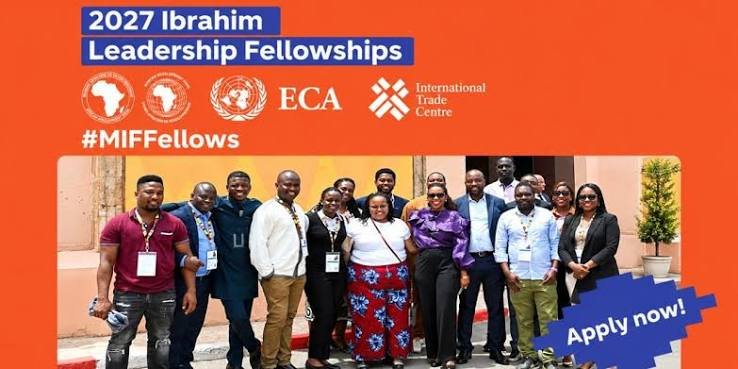
Mo Ibrahim Foundation Leadership Fellowship Program 2027
Applications are now open for the Mo Ibrahim Foundation Leadership Fellowship Program 2027, a prestigious leadership development opportunity designed to prepare the next generation of outstanding African leaders. The programme was established in 2011 to give emerging African professionals practical experience within leading regional and international institutions while strengthening their technical, leadership and policy skills. Each year, three Fellows are selected to work for 12 months in the executive offices of the African Development Bank Group in Abidjan, the United Nations Economic Commission for Africa in Addis Ababa, or the International Trade Centre in Geneva. Fellows contribute directly to research, policy development and strategic work while receiving mentorship from senior leaders at their host institutions. The fellowship is intended for young professionals, mid career professionals and new executives from African countries who have relevant professional experience and a Master’s degree. The programme provides an opportunity to gain first hand exposure to institutional leadership, development policy and decision making at major African and international organisations. About the Fellowship The Ibrahim Leadership Fellowship Programme is supported by the Mo Ibrahim Foundation and provides high level professional exposure within institutions working on Africa’s economic and social development. During the fellowship, participants gain experience in research, policy design, strategic planning and institutional leadership. Fellows work alongside senior officials and receive direct mentorship from the leadership of their host organisation. The three host institutions are the African Development Bank Group in Abidjan, the United Nations Economic Commission for Africa in Addis Ababa and the International Trade Centre in Geneva. At the African Development Bank, the 2027 fellowship places particular emphasis on areas connected to Africa’s development priorities, including development finance, financial architecture, demographic trends, climate resilient infrastructure and value addition to natural resources. Fellowship Benefits • US$100,000 stipend for the 12 month fellowship • Professional experience within a leading African or international institution • Direct mentorship from senior leaders of the host organisation • Practical experience in research, policy development and strategic work • Exposure to high level institutional decision making • Development of technical and leadership skills • Opportunities to build professional networks across Africa and internationally • Membership of the Mo Ibrahim Foundation’s Now Generation Network after the fellowship • Opportunity to contribute to initiatives supporting Africa’s governance and development Host Institutions • African Development Bank Group, Abidjan, Côte d’Ivoire • United Nations Economic Commission for Africa, Addis Ababa, Ethiopia • International Trade Centre, Geneva, Switzerland The Mo Ibrahim Foundation states that three Fellows are selected each year, with one Fellow placed at each participating institution. Eligibility Criteria Applicants must meet the core eligibility requirements established for the Ibrahim Leadership Fellowships: • Be a national of an African country • Have a minimum of 7 years of relevant professional experience • Hold a Master’s degree • Be under 40 years of age • Women with children may be considered up to the age of 45 • Meet any additional eligibility requirements established by the selected host institution • Demonstrate professional experience relevant to the work of the host organisation Selection Focus The fellowship seeks candidates with strong professional experience, analytical ability and leadership potential. Host institutions may apply additional selection requirements according to their specific responsibilities and strategic priorities. For the 2027 African Development Bank fellowship, the selection criteria highlight strong professional experience, particularly in the private sector, analytical skills in development policy and strategy, and the ability to work with development models. The Bank has also identified four priority areas for the 2027 fellowship: • Mobilising resources at scale to finance Africa’s development • Reforming Africa’s financial architecture • Harnessing the demographic dividend to drive economic growth • Building climate resilient infrastructure and strengthening value addition to natural resources Applicants should therefore demonstrate how their professional background and expertise relate to the work of their selected host institution. Required Application Materials Requirements may differ depending on the host institution. Applicants should review the specific application instructions before submitting their application. For the African Development Bank fellowship, applicants are required to provide: • A comprehensive Curriculum Vitae including date of birth, nationality, education and relevant professional experience • Academic transcripts • Three letters of recommendation • Any additional documents requested through the online application system Applicants should ensure that all information is accurate and that their professional experience is clearly presented. How to Apply Review the Ibrahim Leadership Fellowship information provided by the Mo Ibrahim Foundation. Decide which host institution and fellowship opportunity best matches your professional background. Review the specific eligibility requirements and application instructions of the African Development Bank, United Nations Economic Commission for Africa or International Trade Centre. Prepare your Curriculum Vitae, academic documents, recommendation letters and any other required materials. Complete the online application through the relevant host institution. Submit your application before the November 20, 2026 deadline. Keep copies of your submitted application and supporting documents for your records.
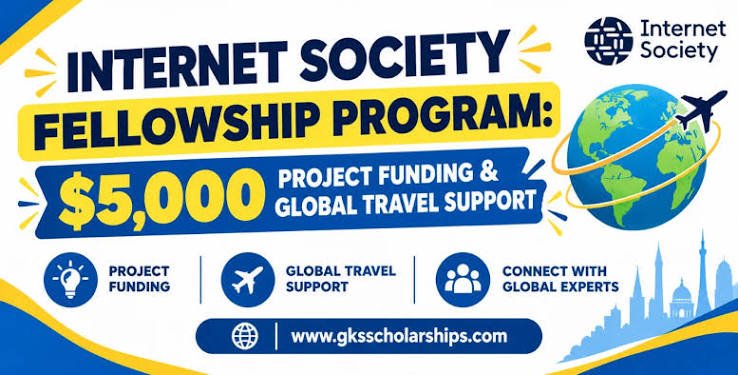
Internet Society Fellowship Program 2027
The Internet Society Fellowship Program 2027 is a 10 month learning, leadership and practical project programme designed for Internet changemakers and emerging leaders who want to create meaningful impact in their communities and contribute to a stronger, more open, globally connected and secure Internet. Organised by the Internet Society, the programme brings together training, mentorship, project development, expert engagement and participation in relevant Internet community events. Fellows will develop practical knowledge and leadership skills while working on locally grounded projects addressing challenges related to Internet policy, connectivity, safety and security. For the 2027 cohort, the programme will welcome 90 fellows across three main tracks: Internet Policy and Mobilization, Internet Connectivity, and Internet Safety and Security. Each track includes specialised sub tracks that allow fellows to develop expertise in areas aligned with their interests and proposed projects. The programme begins with a free pre fellowship training and project development experience. Participants must complete the required training modules before they can submit a Fellowship application. The training period provides participants with foundational knowledge and helps them develop a realistic project plan aligned with the Internet Society’s mission. About the Fellowship The Internet Society Fellowship Program is structured around learning, mentorship and practical implementation. Rather than focusing only on academic learning, the programme requires each selected fellow to design and implement a practical project that addresses an Internet related challenge in their community, country, region or area of expertise. The mentored project implementation period runs from June 1 to November 30, 2027. Projects can take different forms depending on the selected track, including policy initiatives, research projects, training programmes, community engagement activities, technical deployments, awareness campaigns, toolkits, implementation plans and practical Internet resources. Fellows will participate in foundational leadership learning covering the Internet ecosystem, leadership, project management, advocacy and communications. They will also receive specialised sessions connected to their chosen sub track and regular mentor support. Fellowship Benefits Selected fellows will receive: • Dedicated mentorship aligned with their project and selected fellowship track • Project stipend of up to USD 5,000, subject to submission and approval of a project budget • Travel support to attend a relevant global or regional Internet event • Opportunities to participate in relevant Internet community events • Expert engagement and specialised learning sessions • Access to a global network of Internet leaders • Membership opportunities through the Internet Society Alumni Network • Structured leadership, advocacy, communications and project management learning • Support for practical project implementation and reporting • Certificate of completion for the pre fellowship training. Programme Tracks The Internet Society Fellowship Program has three main tracks. Internet Policy and Mobilization This track supports people working to influence Internet policies and mobilize communities for local impact. Sub tracks include: • Internet Policy • Community Mobilization Internet Connectivity This track develops technical champions working on Internet infrastructure and connectivity. Sub tracks include: • Peering • Community Centered Connectivity Internet Safety and Security This track supports cybersecurity researchers and people working to improve online trust and safety. Sub tracks include: • Systems Security • Online Trust and Safety Applicants are expected to select the track and sub track that best matches their experience, interests and proposed project. Eligibility Criteria The programme is looking for individuals who demonstrate the following qualities: • Understanding of local Internet challenges and awareness of wider global issues related to Internet governance, connectivity, security or online trust and safety • An action oriented approach focused on practical projects, advocacy, training or community initiatives • Ability to work collaboratively with civil society, government, industry, technical communities and other stakeholders • Strong communication skills and the ability to explain complex technical, policy or security concepts clearly • Evidence based and strategic thinking • Commitment to long term public benefit and an open, trustworthy and inclusive Internet • High level reading, speaking and writing proficiency in English • Reliable Internet access and suitable equipment for virtual training sessions and programme calls • Availability to participate in weekly programme activities and dedicate at least four hours per week throughout the programme • A valid passport that remains valid for at least six months beyond anticipated fellowship related travel dates • Completion of all required pre fellowship training modules before applying • Applicants must not be current participants in the 2026 Internet Society Fellowship Required Application Materials Applicants should prepare: • Completion of the required pre fellowship training modules • A selected fellowship track and sub track • A realistic project plan developed during the training period • Evidence of relevant experience, expertise and community engagement • Information demonstrating how the proposed project addresses a practical Internet challenge • A valid passport meeting the programme travel validity requirement • Sufficient English language proficiency for participation in the programme Fellowship Timeline • September 23, 2026: Pre fellowship training enrollment opens • November 22, 2026: Deadline to complete the required pre fellowship training modules • December 18, 2026: Fellowship applications close • December 21, 2026 to January 29, 2027: Application review and selection • February 19, 2027: Fellowship notifications and acceptance • February 22, 2027: Fellowship kickoff and onboarding • June 1 to November 30, 2027: Mentored project implementation • December 3, 2027: Final project delivery • Early December 2027: Graduation ceremony How to Apply Review the Internet Society Fellowship Program and select the track and sub track that best match your interests and experience. Enroll in the required free pre fellowship training before November 22, 2026. Complete all required training modules and participate in the project development experience. Develop a realistic project plan addressing a relevant Internet challenge in your community, country, region or area of expertise. Once training completion is confirmed, wait for the Fellowship application link, which is sent by email within 24 hours. Complete and submit the Fellowship application as soon as possible after receiving the application link. Submit the application no later than December 18, 2026. Participate in the selection process and await the Fellowship outcome. If selected, complete onboarding and participate in the 2027 Fellowship