
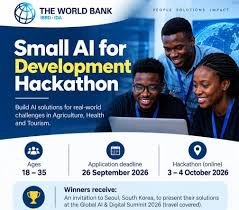
Applications are open for the World Bank Group Small AI for Development Hackathon Challenge 2026, an international innovation competition inviting young innovators to develop practical artificial intelligence solutions for real development challenges. The challenge is designed around the idea of Small AI, meaning targeted and use case driven AI solutions that can work in environments where connectivity, computing resources and access to advanced devices may be limited. The competition is organized by the World Bank Group’s Digital and AI Vice Presidency in collaboration with the World Bank Group Youth Summit, the Development Economics Vice Presidency and Information and Technology Solutions. Hack Nation manages the competition platform and hackathon process. The initiative is intended to give young innovators an opportunity to shape how AI can be designed for developing economies and communities that may not have access to sophisticated digital infrastructure. Applicants will select one of three development sectors: Agriculture, Health or Tourism. During the two day competition taking place on October 3 and 4, 2026, participants will build and submit a working Small AI solution that responds to a clearly defined challenge within their selected sector. About the Hackathon The Small AI for Development Hackathon responds to the challenge of making AI useful in environments where conventional AI systems may be difficult to deploy. The World Bank notes that more than 2 billion people remained offline as of 2025, while a large number of young people in developing economies are expected to enter the workforce over the coming decade. Rather than focusing on building increasingly large AI models, the challenge encourages participants to develop smaller, targeted solutions designed around specific problems and operating conditions. Such solutions can use local data and accessible technologies while working within constraints such as limited connectivity, limited computing power and limited access to smartphones or advanced digital services. Opportunity Benefits • Opportunity to participate in an international World Bank Group innovation challenge • Experience developing a working AI solution during a two day hackathon • Opportunity to address a real development challenge in agriculture, health or tourism • Exposure to an international community of young innovators • Opportunity for winning entries to be showcased at the Global AI and Digital Summit 2026 • Fully covered travel expenses for selected winners, subject to reasonable travel costs and organizer guidelines • Accommodation and designated event related expenses for winners traveling to Seoul • Opportunity to present a Small AI solution to an international audience in Seoul • International visibility for selected solutions and innovators Challenge Categories Agriculture Participants can develop Small AI solutions addressing challenges affecting agriculture and related development needs. Solutions should demonstrate clear practical value within the conditions of the target environment. Health Applicants can explore targeted AI applications that respond to specific health challenges while considering accessibility, connectivity and the needs of communities in developing economies. Tourism Participants can develop AI solutions addressing specific tourism challenges, particularly solutions that can operate effectively in resource constrained environments. Eligibility Criteria • Applicants must be between 18 and 35 years old at the time of application • Applicants must be from a World Bank member country • Applicants from emerging economies are strongly encouraged to apply • Applications may be submitted individually or by teams • Teams may have up to four members • Every team member must register individually • Each team member must satisfy the eligibility requirements • Team members must identify themselves as part of the same team before the registration deadline • An individual may participate in only one competition entry • Applications and competition submissions must be prepared in English • Active World Bank Group staff, including consultants and interns, are not eligible • Team membership cannot be changed after the hackathon begins What Participants Are Expected to Build Participants are expected to develop a Small AI solution addressing a clearly defined development challenge in one of the three competition sectors. Potential solutions should consider real world constraints such as: • Limited internet connectivity • Basic mobile phones • Limited computing resources • Local data requirements • Limited access to digital services • Familiar communication channels such as SMS and voice The World Bank encourages solutions that demonstrate development relevance, inclusivity, practical value and a clear understanding of the environment in which the technology will operate. Required Application Information Applicants should be prepared to provide the information required through the official Hack Nation registration platform. • Applicant information • Team information where applicable • Confirmation of eligibility • Selected challenge sector • Information required by the official hackathon registration form • Competition entry materials submitted during the official hackathon period All applications and competition submissions must be made in English. Each team member must complete the required registration individually. How to Apply Review the official World Bank Group Small AI for Development Hackathon Challenge information and confirm that you meet the age, nationality and participation requirements. Decide whether you will participate individually or as a team of up to four members. If participating as a team, ensure that every member registers individually and identifies the same team before the registration deadline. Complete the Hack Nation application process through the official application platform before September 26, 2026. Use the referral code WBGSmallAIGADS when completing the registration process. If accepted to participate, prepare to develop your Small AI solution during the official hackathon on October 3 and 4, 2026. Select one of the three sectors: Agriculture, Health or Tourism. Develop and submit your competition entry through the designated platform during the official competition period. Ensure that your submission follows the competition requirements concerning format, originality, technical requirements, team participation and submission deadlines. If selected as a winner, follow the organizers’ instructions for travel to Seoul and participation in the Global AI and Digital Summit 2026.
Global Mental Health Fellowship Program 2026 Cohort 5
Applications are open for the Global Mental Health Fellowship Program 2026 Cohort 5, an opportunity designed to equip young people with practical skills, global connections and the confidence to contribute to conversations and advocacy around mental health. The fellowship creates a space where young people can bring their experiences, perspectives and community insights into meaningful discussions about mental health. The programme is particularly suitable for young people who are curious about mental health, interested in advocacy and eager to develop the skills needed to create positive change within their communities. Applicants do not need previous experience in mental health advocacy. Instead, the fellowship places emphasis on passion, curiosity, willingness to learn and the ability to contribute personal and community perspectives. Cohort 5 is delivered entirely online, making it possible for participants to engage from their own locations while balancing the fellowship with other academic, professional or personal commitments. Current programme information describes the experience as lasting more than 10 weeks and providing participants with knowledge, community and practical tools for becoming changemakers in the mental health space. About the Global Mental Health Fellowship The Global Mental Health Fellowship is focused on creating opportunities for young people to engage meaningfully with mental health issues and develop the confidence and practical abilities needed to contribute to advocacy. For Cohort 5, the programme emphasizes the idea that people’s experiences shape how they understand the world, including how they understand mental health. Participants are therefore encouraged to bring their own perspectives, experiences and community knowledge into the fellowship. The programme combines learning with opportunities for connection and action. Rather than requiring applicants to arrive with extensive knowledge or professional experience, the fellowship welcomes young people who are willing to learn and interested in transforming their understanding into meaningful contributions. The virtual format also allows fellows to participate across geographical and cultural boundaries. This creates opportunities for participants to learn from people whose experiences may differ from their own while developing relationships with peers who share an interest in mental health advocacy. Fellowship Benefits Participants selected for Cohort 5 will gain access to: • Practical skills for becoming a mental health changemaker • Tools and knowledge that can support advocacy and community engagement • A global network of peers from different communities and cultures • An inclusive and supportive space for sharing perspectives • Opportunities to learn from different lived experiences and community insights • A flexible fellowship delivered entirely online • Opportunities to turn learning into action Fellowship Focus The Global Mental Health Fellowship Program 2026 Cohort 5 focuses on several interconnected areas: • Mental health awareness and advocacy • Practical changemaking skills • Youth perspectives on mental health • Community insights and lived experiences • Cross cultural learning and connection • Meaningful conversations around mental health • Turning learning into action • Developing confidence to contribute to mental health advocacy The fellowship is particularly relevant for young people who want to understand mental health from perspectives shaped by different communities and experiences. Participants are encouraged to contribute their own insights while learning from others. Eligibility Criteria Applicants for the Global Mental Health Fellowship Program 2026 Cohort 5 should meet the following requirements: • Be between 20 and 25 years old • No previous experience is required • Demonstrate passion for mental health or related advocacy • Show curiosity and willingness to learn • Be interested in bringing personal experiences and community insights into meaningful advocacy • Be willing to participate in a fully virtual fellowship The programme does not require applicants to have an established professional background in mental health. The application instead seeks to understand applicants’ perspectives, curiosity, experiences and what they hope to contribute and become. Required Application Information The fellowship application is designed to help the organisers understand who applicants are and what motivates them. Applicants should be prepared to share: • Their personal perspective • Their experiences and community insights • Their interest in mental health • Their curiosity and willingness to learn • What they hope to contribute to the fellowship • What they hope to learn and become through the programme Who Should Apply? The Global Mental Health Fellowship is suited to young people who are interested in mental health but may not yet have formal experience in the field. It may be particularly relevant to applicants who: • Want to learn more about mental health advocacy • Have personal or community experiences they want to bring into conversations about mental health • Want to develop practical changemaking skills • Are curious about how mental health is understood across different communities • Want to connect with young people from different cultures • Are willing to learn, participate and contribute • Want to develop their confidence as advocates and community changemakers The programme does not expect applicants to have all the answers. Instead, the application is intended to help organisers understand the applicant’s perspective, curiosity, experiences and aspirations. How to Apply Review the eligibility requirements and confirm that you are between 20 and 25 years old. Read the fellowship information carefully to understand what Cohort 5 offers and what participation involves. Prepare your responses by reflecting on your experiences, perspectives, interest in mental health and motivation to participate. Complete the official online application form. Provide thoughtful responses that clearly communicate your perspective, curiosity and what you hope to contribute. Review your application carefully before submitting it. Submit your application before the September 26, 2026 deadline.
OpenAI AI and Teen Development Research Grant Program 2026
OpenAI has launched the AI and Teen Development Research Grant Program 2026 to support independent research examining how generative artificial intelligence affects the lives, development and well being of young people between the ages of 13 and 17. The programme is committing up to $5 million in total research funding, with individual grants of up to $1 million available for selected projects. The research programme seeks to build a stronger evidence base around the ways teenagers use generative AI for learning, creativity, communication and advice, as well as the potential effects of these interactions. OpenAI notes that the impact of AI may differ depending on how young people use it, their individual circumstances, cultural and social environments, and the support available from families, schools, communities and technology providers. The programme welcomes researchers from different disciplines and countries to investigate both the opportunities and challenges associated with AI use during adolescence. Particular attention is given to social and emotional development, relationships, well being, safeguards, age appropriate design and policy approaches. About the Opportunity The AI and Teen Development Research Grant Program is designed to support independent research that can contribute meaningful evidence to discussions about artificial intelligence and adolescent development. OpenAI is interested in research that can improve understanding of how teenagers interact with generative AI and how those interactions may relate to developmental outcomes. The programme also seeks evidence that can inform the development of safer AI products, safeguards, educational approaches, regulatory strategies and future research. The programme welcomes interdisciplinary proposals involving fields such as child and adolescent development, psychology, public health, human computer interaction, communication, sociology, anthropology, data science and AI safety. Researchers may use qualitative, quantitative, experimental, observational, theoretical, participatory or mixed methods approaches. Projects involving teenagers in the design or interpretation of research are also welcome, although this is not required. Opportunity Benefits • Individual research grants of up to $1 million • Up to $5 million in total research funding • Funding for research involving students, graduate students and postdoctoral researchers • Opportunity to contribute evidence to discussions about AI and adolescent development • Potential to inform AI product development, safeguards and age appropriate design • Opportunity to contribute to policy and regulatory discussions • Maximum of 10 percent of each grant may support overhead or indirect costs • Opportunity to make findings publicly available through publications, preprints, public reports or similar formats Research Areas Applicants are encouraged to develop proposals addressing one or more of the following areas: • Emotional development and well being: Emotion regulation, resilience, identity, agency, self esteem and social connection. • Social development and relationships: Friendships, family relationships, belonging, communication, empathy, social skills and the relationship between AI and human connection. • Patterns and contexts of AI use: Differences related to time spent using AI, type and purpose of use, age, culture, language, socioeconomic circumstances and other individual factors. • Differences across populations: How AI related outcomes may vary across developmental stages, cultures, languages, populations and socioeconomic settings. • Mitigations and age appropriate design: Evaluation of safeguards, product interventions, AI literacy, parental support, educator support and healthy use practices. • Technical interventions: Research into technical approaches and design choices that may increase benefits or help keep teenagers safer. Eligibility Criteria • Applicants must be at least 18 years old. • Applicants must be affiliated with a research institution or organization, and/or have significant experience relevant to child or adolescent development, well being, human computer interaction, AI impacts or a closely related field. • Researchers from any country may apply. • Interdisciplinary research teams are encouraged. • For profit initiatives are not the primary focus of this programme. • Research may be conducted in any language. • Applications must be submitted in English. Selection Criteria Proposals will be evaluated based on the quality and relevance of the proposed research. Key considerations include: • Scientific rigor and appropriateness of the research design • Relevance to current discussions surrounding artificial intelligence • Clarity, focus and coherence of the proposal • Potential to translate findings into practical guidance • Ethics and safeguarding of minors and other research participants • Feasibility of completing the proposed project • Expertise and capability of the research team • Inclusion and generalizability across populations and contexts • Complementarity with existing evidence and research • Independence and credibility of the proposed work OpenAI also indicates that preference may be given to research involving ChatGPT, interdisciplinary teams, underrepresented populations or regions, and projects capable of producing evidence that could inform policy and regulatory decisions. Required Application Materials Applications should be prepared as a single spaced Google document and should include: • Project summary of less than one page • Research proposal of no more than three pages, excluding references • Research questions • Relevant prior research • Proposed methods and analysis • Study population and recruitment strategy • Evidence of feasibility or access to the proposed study population • Expected outputs • Potential limitations • Explanation of relevance to the programme goals • Project plan and timeline • Key activities and milestones • Expected project completion date • Requested budget and budget justification • Major cost categories • Other committed sources of support • Project dependencies and potential risks • Ethics and safeguarding statement where applicable • Short CVs or biographies of the principal investigator and key team members • Disclosure of relevant financial relationships, industry funding and potential conflicts of interest Research involving minors, sensitive information or vulnerable populations should clearly explain the applicable ethical protections and compliance strategy. How to Apply Review the programme priorities and determine how your proposed research addresses AI and teen development. Develop a focused research question supported by relevant existing evidence. Prepare the research proposal, including methodology, study population, recruitment strategy, expected outputs and limitations. Prepare the project plan, timeline, budget and budget justification. Include the required ethics and safeguarding information, particularly for research involving teenagers or other vulnerable participants. Prepare short CVs or biographies for the principal investigator and key team members. Disclose
Black Ideas Grant 4.0 2026
The Black Ideas Grant 4.0 is now open for Black led, Black mandated, and Black serving organizations across Canada. The grant programme is offered by the Foundation for Black Communities, a philanthropic organization focused on strengthening Black communities and supporting community driven solutions. The 2026 funding cycle will provide a total of $8 million in investment for initiatives that address important needs within Black communities and contribute to improved social and economic outcomes. The programme provides flexible one year funding through three distinct streams designed to support organizational operations, community programmes and services, and community spaces. The Black Ideas Grant 4.0 focuses on initiatives that combat anti Black racism, improve social outcomes, or improve economic outcomes. Eligible initiatives should also demonstrate alignment with the Sustainable Development Goals and Social Determinants of Health. About the Opportunity The Black Ideas Grant 4.0 is the fourth funding cycle of the Foundation for Black Communities flagship grant programme. It is designed to provide resources to Black mandated, Black led, and Black serving organizations working to strengthen communities across Canada. The programme uses a participatory grantmaking approach. Eligible applications are reviewed through Community Selection Circles made up of Black community members who bring different lived experiences, expertise, and perspectives to the assessment process. Funding is available through three streams. Organizations are expected to select the stream that best corresponds with their needs and the type of initiative they are proposing. The Core Stream provides funding for organizational and operational needs that are not directly related to programming. The Catapult Stream supports new programmes and the expansion of existing programmes and services. The Community Spaces Stream supports capital projects and social infrastructure. Opportunity Benefits • Access to a share of the $8 million Black Ideas Grant investment • Up to $30,000 through the Core Stream • Up to $80,000 through the Catapult Stream • Up to $200,000 through the Community Spaces Stream • Flexible one year funding • Support for organizational and operational needs • Funding for new or expanded community programmes and services • Funding for capital projects and social infrastructure • Opportunity to address anti Black racism • Support for initiatives improving social outcomes • Support for initiatives improving economic outcomes • Community focused participatory grantmaking • Online information sessions for prospective applicants • One to one coaching opportunities with programme managers • Oral application support for applicants who require this accommodation Programme Areas The Black Ideas Grant 4.0 supports initiatives connected to one or more of the following areas: • Combating anti Black racism • Improving social outcomes • Improving economic outcomes • Organizational strengthening • Community programmes and services • Community spaces and social infrastructure Initiatives should also demonstrate alignment with relevant Sustainable Development Goals and Social Determinants of Health. Eligibility Criteria • The applicant must be a Black mandated, Black led, and Black serving organization • The organization must be based in Canada • The proposed initiative must address at least one of the programme focus areas • The initiative must align with the Sustainable Development Goals and Social Determinants of Health • The use of grant funds must be completed by March 31, 2028 • Unincorporated organizations or groups may apply in partnership with an incorporated Black mandated, Black led, and Black serving organization • The application must be submitted through the designated application process Required Application Materials Applicants should review the application questions for their selected funding stream and prepare the information requested by the Foundation for Black Communities. • Organizational information • Details about the proposed initiative • Explanation of the community need being addressed • Description of how the initiative relates to the relevant focus areas • Information demonstrating alignment with the Sustainable Development Goals and Social Determinants of Health • Information about organizational capacity and implementation • Budget and proposed use of funds • Supporting information and attachments requested in the relevant stream application How to Apply Review the official Black Ideas Grant 4.0 guidelines and frequently asked questions. Confirm that your organization meets the eligibility requirements. Review the three funding streams and determine whether the Core, Catapult, or Community Spaces Stream best matches your organization and initiative. Review the application questions for your selected stream before beginning the online application. Prepare the required organizational information, initiative details, supporting information, and budget. Register through the official online application portal. Complete the application and carefully review all responses and attachments. Submit the completed application before October 20, 2026 at 12:00 PM Pacific Time. Monitor communications from the Foundation for Black Communities regarding the review process and funding decision.
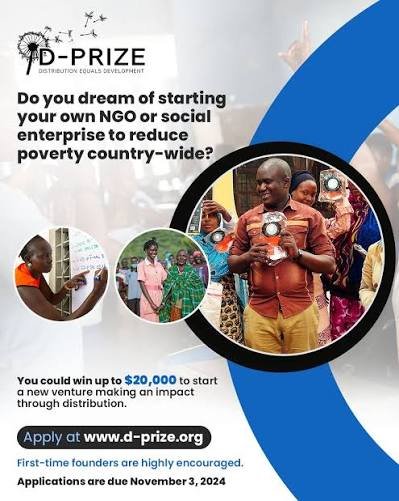
D Prize Global Competition 2026
The D Prize Global Competition 2026 is an international funding opportunity for entrepreneurs who want to launch new organizations that distribute proven solutions to people living in poverty. The competition is organized by D Prize, an organization focused on increasing access to evidence based products and services that are already known to improve lives but have not yet reached everyone who needs them. D Prize provides startup funding of up to US$20,000 to selected entrepreneurs. The funding is intended to help founders launch a new organization, conduct an initial pilot and begin building an organization capable of reaching thousands or even millions of people. The competition supports both social enterprises and nonprofit organizations, including NGOs and charities. The competition is particularly relevant to entrepreneurs in low and middle income countries where extreme poverty remains a significant challenge. D Prize encourages applicants to focus on the distribution of existing, evidence based poverty interventions rather than developing completely new products or untested solutions. About the D Prize Competition D Prize is built around the idea that many effective poverty solutions already exist, but often fail to reach people at the last mile. The competition therefore focuses on finding entrepreneurs who can develop practical and scalable distribution models. Selected entrepreneurs go through a competitive application and evaluation process. According to D Prize, the first round receives more than 3,000 submissions. Applicants submit a two page concept note and resume or resumes. The strongest applicants progress to additional written questions and interviews, with the top entrepreneurs receiving funding to launch their organizations. The 2026 competition includes interventions addressing maternal and child health, reproductive health, education, agriculture, water access, poverty graduation, public services and other development challenges. Opportunity Benefits • Startup funding of up to US$20,000 • Seed support for launching a new organization • Opportunity to pilot a proven poverty intervention • Support for distribution focused social enterprises and nonprofit organizations • Opportunity to develop a scalable model for reaching underserved communities • Access to a competitive global entrepreneur selection process • Opportunity to build an organization capable of expanding its social impact Challenge Areas Applicants can select an existing D Prize intervention or propose their own evidence based solution. • Childhood diarrhea treatment through distribution of oral rehydration salts and zinc • DMPA SC distribution to underserved populations • DMPA SC provider training • DMPA SC last mile inventory management • DMPA SC medical waste management • Distribution of reading and working glasses • Access to quality childcare for low income families • Phone based tutoring through ConnectEd • Foundational literacy and numeracy through Teaching at the Right Level • Road safety interventions • Government transparency and public service monitoring • Poverty graduation through coaching, capital and social support • Agriculture interventions supported by credible evidence • Post harvest loans and storage technology • Quality agricultural inputs and farmer training • Ceramic water filters • Kangaroo Care for infants born too soon or too small • Maintenance and repair of oxygen concentrators • Patient identification and referral for selected health conditions • Maternal health interventions using misoprostol • Prevention of mother to child HIV transmission • Childhood immunization • Sugar Daddy Awareness education • Other evidence based poverty interventions proposed by applicants Eligibility Criteria • Applicants should be launching a new organization or venture. • First time entrepreneurs who have not yet launched or raised outside funding are particularly encouraged to apply. • Applicants from low and middle income countries are especially encouraged. • Organizations with more than 18 months of full time operations are typically not supported. • Organizations that have raised more than US$30,000 are typically not supported. • Existing organizations may be considered when their core focus is distributing an existing, evidence based poverty intervention. • Proposed interventions should have credible evidence demonstrating that they can improve lives. • Applicants should be prepared to explain how their organization will distribute the selected intervention effectively and reach people who need it. Required Application Materials • Two page concept note • Resume or resumes • Selected D Prize intervention or a qualifying proposed intervention • Description of the poverty problem being addressed • Explanation of the proposed distribution model • Evidence supporting the selected intervention • Information about the applicant and founding team Applicants who advance beyond the first round may be asked to answer additional written questions. Finalists may also participate in phone or email interviews. Selection Process D Prize uses a multi stage selection process. Applicants submit a concept note and resume or resumes during the first round. D Prize reviews submissions and identifies the strongest entrepreneurs. Selected applicants are invited to complete additional written questions. Final candidates participate in interviews. The strongest entrepreneurs receive funding of up to US$20,000 to launch their organizations. Funded entrepreneurs use the initial support to pilot their distribution model and begin developing an organization capable of scaling its impact. How to Apply Review the available D Prize distribution challenges and identify a proven intervention that addresses a significant poverty related need. Download the official D Prize application packet from the D Prize website. Study the application instructions and requirements carefully. Prepare a two page concept note explaining the problem, intervention, distribution strategy and proposed organization. Prepare your resume or resumes and any other information requested in the application packet. Submit the application through the official online application form. D Prize does not accept applications submitted by email. If selected for the next stage, complete the additional written questions within the required timeframe. Prepare for a possible interview if you progress to the final stage.
Global Entrepreneurship Festival Entrepreneurs Investment Program 2026
The Global Entrepreneurship Festival Entrepreneurs Investment Program (EIP) 2026 is an investment and business development opportunity for entrepreneurs and startups building innovative solutions. The programme is designed to identify promising businesses, provide practical support, connect founders with investors and mentors, and help startups prepare for growth beyond their local markets. The Entrepreneurs Investment Program is an official programme of the Global Entrepreneurship Festival (GEF). It brings together entrepreneurs, investors, mentors, partners and other members of the global entrepreneurship ecosystem. The 2026 programme is intended for founders at different stages of development, including those with an innovative idea, a prototype or an operating business that is already generating sales. Selected participants can benefit from training, startup clinic sessions, mentorship and incubation, global exposure and opportunities to pitch to investors. The programme also offers access to seed investment of up to US$35,000. According to the official EIP terms, the investment is structured as 50 percent cash funding and 50 percent non cash business support, which may include coaching, mentorship, legal and regulatory support, financial advisory, technology support, branding, marketing, investor introductions and business development assistance. About the Entrepreneurs Investment Program The Entrepreneurs Investment Program is designed to support high potential startups through a combination of business development, investment readiness, mentorship and investor access. The programme is suitable for entrepreneurs who are launching a new venture, developing a prototype, scaling an existing business or preparing to expand into new markets. The programme provides a pathway for founders to strengthen their businesses while gaining exposure to investors, partners and other participants in the global entrepreneurship ecosystem. Its activities include training, startup clinics and investor pitching as well as continued mentorship and incubation support. The official application portal is open to founders from different countries and asks applicants to provide information about themselves, their country of operation, their startup, business sector and co founder status. Applicants must also confirm their availability to attend the programme in Cairo. Opportunity Benefits • Training and practical business development support • Startup clinic sessions • Investor pitch opportunities • Global exposure and visibility • Mentorship and incubation • Access to up to US$35,000 in total seed investment • Non cash business support including coaching, advisory and business development assistance • Opportunities to connect with investors and potential partners • Access to entrepreneurship ecosystem networks • Potential introductions to investors and strategic partners Programme Areas The Entrepreneurs Investment Program is open to innovative businesses across different sectors. The application form asks applicants to identify their business sector or industry. The programme is particularly relevant to founders who are: • Developing an innovative idea • Building a prototype • Already selling products or services • Scaling an existing business • Preparing to enter new markets • Seeking investment to reach the next stage of growth Eligibility Criteria The programme is open to: • Anyone with an innovative business idea • Startups at the idea stage • Startups with a prototype • Businesses that are already selling products or services • Founders seeking to grow beyond their home market • Businesses that need investment to reach their next stage of development Required Application Information Applicants should be prepared to provide: • Full name • Email address • Phone number • Country of operation • Social media handle and link • Date of birth • Idea, business or startup name • Co founder information • Website or landing page, if available • Business sector or industry • Confirmation of availability in Cairo from November 6 to November 8, 2026 Investment Structure The advertised investment of up to US$35,000 should not be understood as an unrestricted cash grant. The official EIP terms state that the investment consists of 50 percent cash funding and 50 percent non cash business support. The non cash component may include: • Business coaching • Mentorship • Legal and regulatory support • Accounting and financial advisory • IT and digital solutions • Branding and brand development • Marketing and publicity • Investor and partner introductions • Business development support • Access to office infrastructure and shared workspaces • Training and networking • Strategic advisory services The official terms also state that the cash investment may be distributed in tranches, with disbursement dependent on agreed milestones and programme requirements. How to Apply Review the Entrepreneurs Investment Program 2026 eligibility requirements and official terms. Prepare your founder and business information, including your startup name, sector, country of operation and website or landing page where applicable. Complete the official EIP 2026 online application form. Provide accurate information about your business and current stage of development. Confirm your ability to be in Cairo from November 6 to November 8, 2026 if selected. Carefully review the investment, participation, intellectual property and media terms before accepting them. Submit your application before the October 6, 2026 deadline.
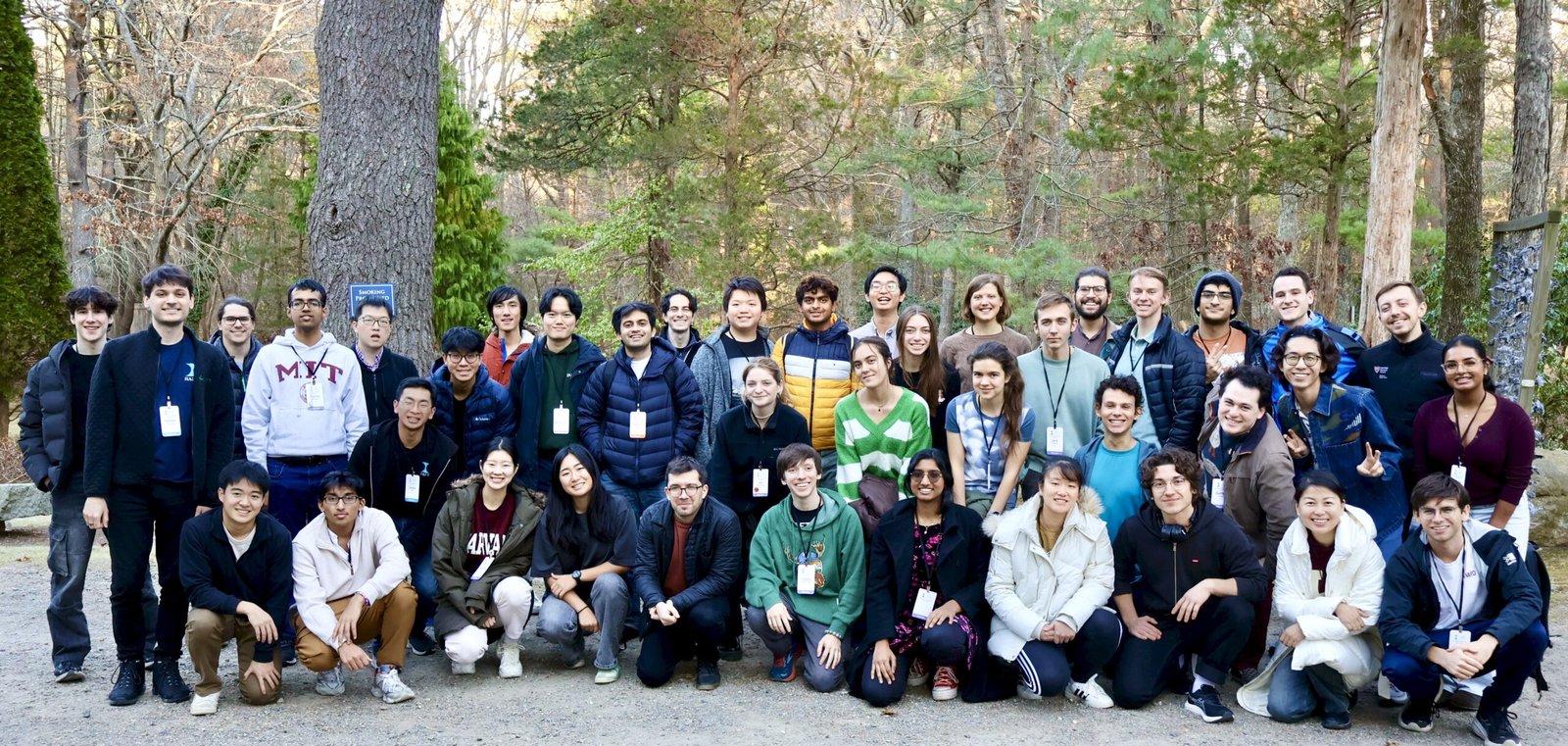
MAIA AI Safety Fundamentals Fellowship Fall 2026
Applications are open for the MAIA AI Safety Fundamentals Fellowship Fall 2026, an eight week introductory fellowship designed for people who want to understand the foundations of artificial intelligence safety. The programme is organised by MAIA and serves as its flagship introduction to AI safety and one of the main pathways for people interested in becoming involved with the MIT AI Alignment community. The fellowship provides participants with an opportunity to explore some of the most important technical, strategic and policy questions surrounding advanced artificial intelligence. Participants examine the current trajectory of AI development, evidence related to AI misalignment, possible threat models, technical approaches to AI safety, the policy landscape and potential research and career opportunities in the field. The Fall 2026 fellowship begins during the week of September 28, 2026 and runs for eight weeks. Participants meet weekly in small groups at MAIA’s office in Kendall Square. Fall sections generally include around 10 fellows and are facilitated by two MAIA members with experience in AI safety research. Dinner is also provided during the weekly sessions. About the Fellowship The AI Safety Fundamentals Fellowship introduces participants to the central questions and research areas within AI safety. It combines guided reading and group discussion, giving fellows the opportunity to engage with difficult and unresolved questions concerning the development and deployment of advanced AI systems. The programme is facilitated by experienced members of the MAIA community. Small group discussions allow participants to examine technical concepts, evaluate arguments and develop a stronger understanding of the challenges associated with aligning increasingly capable AI systems with human objectives. The fellowship is particularly suitable for students, researchers and other curious individuals who want to build foundational knowledge before exploring more specialised areas of AI safety research, policy or governance. Opportunity Benefits • Eight week introduction to AI safety • Weekly small group reading and discussion sessions • Guidance from experienced AI safety researchers and MAIA members • Exploration of technical AI safety approaches • Introduction to AI governance and policy • Exposure to AI safety research questions and career pathways • Opportunity to engage with other people interested in AI safety • No additional work assigned outside weekly fellowship meetings • Dinner provided during Fall fellowship sessions • Access to an introductory pathway into the MIT AI Alignment community Programme Areas The fellowship covers several foundational areas of artificial intelligence safety and alignment. • Current trajectory of AI development • Empirical evidence for AI misalignment • Threat models and potential harms from misaligned AI • Technical approaches to AI safety • AI alignment and safety research • AI policy and governance • Research opportunities in AI safety • Careers and pathways within the AI safety field Eligibility Criteria • Open to applicants from any background • MIT undergraduate and graduate students receive preference • Applicants with machine learning experience are especially encouraged to apply • Previous AI safety experience is not required • Applicants should have genuine curiosity about AI safety • Applicants should be willing to engage seriously with difficult and open questions Required Application Information MAIA states that the application contains both technical and non technical portions. • Completed MAIA AI Safety Fundamentals application • Responses to the technical portion of the application • Responses to the non technical portion of the application Applicants should allow approximately one hour to complete the application. The application is intended to assess both technical understanding and broader interest in AI safety. How to Apply Review the MAIA AI Safety Fundamentals Fellowship information and curriculum. Confirm that you are available to participate in the eight week programme beginning the week of September 28, 2026. Prepare to complete both the technical and non technical portions of the application. Complete the MAIA AI Safety Fundamentals Fellowship application. Submit your application by September 23, 2026 at 11:59 PM Eastern Time. If selected, participate in the weekly fellowship sessions and engage actively with the readings and discussions.

Jean Monnet Fellowship in the Social Sciences and Humanities for Postdoctoral Researchers 2027 to 2028
Applications are open for the Jean Monnet Fellowship in the Social Sciences and Humanities for Postdoctoral Researchers 2027 to 2028 at the European University Institute. The fellowship is offered by the Robert Schuman Centre for Advanced Studies and provides an opportunity for experienced scholars to spend one year conducting research within an international academic community in Florence, Italy. The programme is designed for scholars who obtained their doctorate more than five years before the beginning of the fellowship. It is open to postdoctoral researchers, tenure track academics and academics who wish to spend their sabbatical at the Centre. Up to 20 Jean Monnet Fellowships are offered each year. The fellowship begins on 1 September 2027 and runs for 12 months. Fellows are based at the Robert Schuman Centre for Advanced Studies and are expected to participate actively in its academic life. They become associated with one of the Centre’s research projects or programmes and are encouraged to collaborate with researchers, other postdoctoral scholars and EUI academic staff. About the Fellowship The Jean Monnet Fellowship is hosted by the Robert Schuman Centre for Advanced Studies at the European University Institute. It provides an environment for established researchers to advance their research, engage with an international academic community and contribute to the Centre’s research activities. Fellows are expected to develop research that can lead to an academic publication, such as an EUI Working Paper, a scientific journal article or a publication with a reputable academic publisher. They may also participate in activities associated with the EUI postdoctoral programme and collaborate with scholars across the Institute. The fellowship is open to candidates of all nationalities. For the 2027 to 2028 cohort, applicants must have obtained their PhD before 1 September 2022. Fellowship Benefits • Basic fellowship grant of €2,850 per month • Fellowship grant may be adjusted to a minimum of €2,100 per month where the fellow receives other eligible income • Household allowance of up to €310 per month for an eligible partner living with the fellow in Florence • Dependant allowance of €210 per month for each dependent child living with the fellow in Florence • €650 research allowance for eligible research expenses, including conference participation • Reimbursement of eligible incoming and outgoing travel expenses, normally up to €1,200 in total • Visa related cost reimbursement of up to €250 for eligible fellows who require an Italian visa • Support with visa and residence requirements for non European Union fellows • Access to the academic community and research activities of the Robert Schuman Centre • Opportunity to collaborate with EUI researchers, postdoctoral scholars and academic staff • Opportunity to develop research leading to an academic publication Research Environment Jean Monnet Fellows are integrated into the Robert Schuman Centre for Advanced Studies and associated with one of its research programmes, projects or themes. The proposed research should demonstrate a clear connection with the Centre’s academic activities. Fellows are expected to contribute to the intellectual life of the Centre while developing their own research. The programme can therefore be particularly relevant to established scholars in the social sciences and humanities whose research connects with the Centre’s areas of academic work and European or international research questions. Eligibility Criteria • Applicants must have obtained a doctorate more than five years before the start of the fellowship • For the 2027 to 2028 fellowship, the PhD must have been awarded before 1 September 2022 • Candidates of all nationalities are eligible • Applicants may be postdoctoral researchers, tenure track academics or scholars seeking a sabbatical period at the Centre • Applicants must propose research that fits with a research programme, project or theme of the Robert Schuman Centre • Fellows must be able to reside in the Florence area during the fellowship • Applicants should have a strong academic record relevant to their proposed research • Applicants should demonstrate a strong and well developed research proposal Required Application Materials • Curriculum vitae with publication list in PDF format • Letter of motivation of 1 to 2 pages • Research proposal of 2 to 4 pages • Copy of passport in JPG format • Names and contact details of two academic referees • Two academic reference letters submitted directly by the referees How to Apply Review the Jean Monnet Fellowship requirements and confirm that you meet the doctoral eligibility condition. Identify the Robert Schuman Centre research programme, project or theme that best matches your proposed research. Prepare your CV and publication list, motivation letter and research proposal. Register your application through the European University Institute online application system. Enter the details of two academic referees as early as possible so they can receive the reference request. Upload the required documents and complete all sections of the online application. Ask your referees to submit their reference letters directly through the application system. Submit the completed application by 23 October 2026 at 14:00 CEST. Monitor your email for the selection outcome. The EUI states that candidates will be informed of the results by the end of January at the latest.
MTN ICT and Business Skills Training Programme Phase 8
Applications are now open for the MTN ICT and Business Skills Training Programme Phase 8, an initiative designed to equip young Nigerian micro business owners with practical digital, technology and business skills needed to strengthen and grow their businesses. The programme is focused on young women between the ages of 18 and 35 who own and manage micro businesses that have been operating for no more than two years. For Phase 8, applicants must have businesses located in Rivers, Abia, Ogun, Kwara, Kano or Gombe State. The MTN ICT and Business Skills Training Programme has been implemented since 2018 and has delivered seven previous phases in partnership with organisations including Google, Oracle, KPMG, IBM, Digital Bridge Institute, Cisco, Meta and Microsoft. According to the current programme listing, more than 15,000 young micro business owners have completed the training across 29 states and the Federal Capital Territory. Phase 8 will run for five weeks through a blended learning model. Participants will combine self paced online learning with instructor led sessions, masterclasses delivered by experienced entrepreneurs and a capstone project challenge. Participants will also receive data support to help them participate effectively throughout the programme. About the Programme The MTN ICT and Business Skills Training Programme is designed to support young micro business owners with practical skills that can help them operate and develop their businesses in an increasingly digital economy. The initiative combines technology focused learning with practical business development. Through training sessions, online modules, entrepreneurship masterclasses and a final project challenge, participants are expected to apply what they learn to real business situations. Since its launch, the programme has expanded through several phases and partnerships with major technology, professional services and digital skills organisations. Phase 8 continues this approach while targeting eligible young female entrepreneurs in six Nigerian states. The training will last five weeks and will use a blended format. This means participants will engage with online learning materials while also taking part in instructor led activities and masterclasses. The capstone challenge provides an opportunity to demonstrate how the knowledge and skills gained during the programme can be applied to their businesses. Programme Benefits • Five weeks of practical ICT and business skills training • Self paced online learning modules • Instructor led training sessions • Masterclasses from experienced entrepreneurs • Capstone project challenge • Data support for participants during the training • Opportunity to strengthen digital and business capabilities • Opportunity to apply new skills to an existing micro business • Equipment grants for the top 100 participants • Access to a share of the ₦100 million equipment grant fund • Up to ₦1,000,000 equipment grant for each selected top participant Training Areas The programme combines several forms of learning designed to support business development. • ICT and digital skills • Business skills • Practical entrepreneurship learning • Digital application for business growth • Entrepreneurial masterclasses • Capstone project development The programme is designed around practical application, allowing participants to connect the training with the needs of their existing businesses. Eligibility Criteria Applicants must meet the following requirements: • Be a Nigerian citizen • Be a female entrepreneur • Be between 18 and 35 years old • Own and manage a micro business • Have a business that has been operating for no more than two years • Have a business located in Rivers State, Abia State, Ogun State, Kwara State, Kano State or Gombe State Applicants should ensure that their business meets the location and operating period requirements before submitting an application. Required Application Information Applicants should provide the information requested through the official application process and ensure that their details accurately reflect their personal and business circumstances. In particular, applicants should be prepared to demonstrate: • Nigerian citizenship • Age between 18 and 35 • Female entrepreneur status • Ownership and management of a micro business • Business operating history of no more than two years • Business location in one of the six eligible states Applicants should carefully review the application form before submission and provide accurate information. How to Apply Review the eligibility requirements for the MTN ICT and Business Skills Training Programme Phase 8. Confirm that your micro business is located in Rivers, Abia, Ogun, Kwara, Kano or Gombe State. Confirm that you are a Nigerian woman between 18 and 35 years old. Ensure that your micro business has been operational for no more than two years. Complete the official online application form with accurate personal and business information. Submit your application before the deadline. If selected, participate fully in the five week blended learning programme, including online modules, instructor led sessions, masterclasses and the capstone project challenge. Complete the programme requirements and participate in the activities required for consideration among the top performing participants.
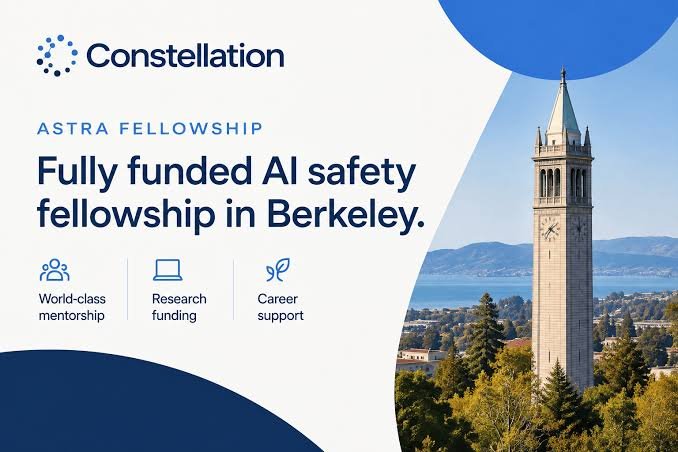
Constellation Astra Fellowship 2026–2027: Fully Funded AI Safety Fellowship in the USA
Applications and expressions of interest are available for the Constellation Astra Fellowship 2026–2027, a fully funded, full-time opportunity for talented researchers and professionals interested in working on some of the most challenging questions surrounding artificial intelligence safety and governance. The Astra Fellowship is organized by Constellation Institute and takes place in person at the organization’s research centre in Berkeley, California, United States. The programme brings fellows together with experienced mentors and other researchers while giving them the time, resources, and professional support to pursue substantive work related to advanced AI safety. The current Strategy and Governance Stream runs from September 2026 to February 2027. Fellows work on research projects aimed at reducing catastrophic risks associated with advanced artificial intelligence, with projects potentially covering areas such as AI strategy, governance, policy, security, and related research questions. About the Constellation Astra Fellowship Artificial intelligence is developing quickly, creating new research questions about how increasingly capable systems should be evaluated, governed, and made safer. The Constellation Astra Fellowship was created to bring talented people into this emerging field and give them an environment where they can work intensively on AI safety problems. Constellation describes Astra as its flagship fellowship for accelerating AI safety research and talent. The programme pairs fellows with senior mentors and gives them access to research management and career support throughout the fellowship. The Strategy and Governance Stream is aimed at people who are comfortable working on difficult and relatively unstructured problems. Applicants are expected to have a strong understanding of catastrophic AI risks and be able to develop research ideas independently. Previous experience specifically in AI safety is not always required. Constellation states that many fellows have entered the field from adjacent areas and gone on to make contributions to AI safety. Relevant backgrounds can include policy, strategy, governance, technical research, security, grantmaking, or other areas connected to advanced AI. Fellowship Benefits Successful fellows can receive: A monthly stipend of $8,400. A $2,000 travel budget. Research and project support. Weekly mentorship from experienced AI safety researchers and strategists. Research management support. Career development and placement assistance. Access to Constellation’s Berkeley research centre. Opportunities to connect with researchers and professionals in the AI safety community. Support for specified U.S. visa pathways for eligible international candidates. Potential incubation support for fellows developing new projects or organizations. Research Areas The Strategy and Governance Stream focuses on strategic and governance questions related to advanced AI. Fellows may explore questions surrounding AI policy, governance, security, strategy, international coordination, AI progress, risk assessment, or other areas where research can contribute to reducing catastrophic risks from advanced AI. Constellation notes that some mentors may have additional preferences, including candidates with strong policy backgrounds or relevant technical expertise. Applicants do not necessarily need to arrive with a fully developed research proposal. However, they should be able to demonstrate strong analytical ability, independence, and an interest in tackling difficult problems. Who Should Apply? The Astra Fellowship may be suitable for researchers, technologists, policymakers, strategists, and other professionals who want to dedicate themselves to AI safety work. A strong candidate should be comfortable dealing with complex questions where there may not be an obvious answer or established research path. The ability to think independently, communicate clearly, conduct research, and turn broad questions into useful projects is important. The fellowship may also appeal to people who want to transition into a full-time AI safety career or establish an organization focused on AI safety. Applicants who are interested in technical AI safety should note that Astra also has an Empirical Stream, which covers areas such as AI alignment, AI control, model evaluations, and scalable oversight. Application Process Interested candidates should first review the official Astra Fellowship information and determine which stream best matches their background and interests. For the Strategy and Governance Stream, applicants should consider how their previous experience relates to AI safety, governance, strategy, policy, security, or other relevant areas. Candidates should also be prepared to explain why they want to work on AI safety and what types of research or problems they would like to explore.