
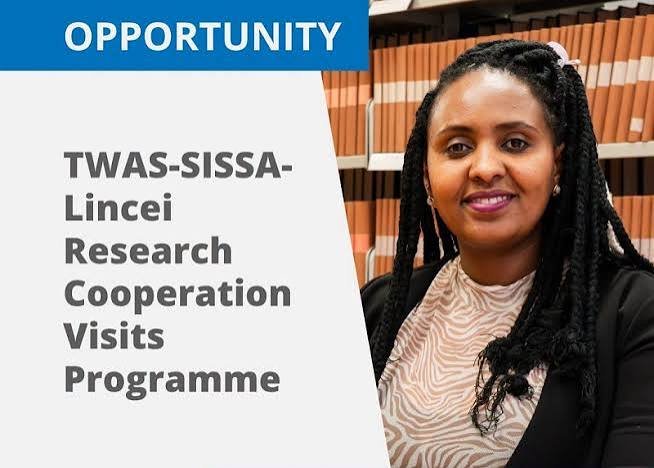
The TWAS SISSA Lincei Research Cooperation Visits Programme 2026 is inviting young scientists from Least Developed Countries to undertake collaborative research visits at leading research institutions in the Friuli Venezia Giulia Region of Italy. The programme is offered by UNESCO TWAS in collaboration with the Accademia Nazionale dei Lincei and the International School for Advanced Studies, known as SISSA. The programme provides an opportunity for promising researchers to spend three months in Italy carrying out collaborative research projects or training activities with eligible host laboratories. Research proposals should fall within the broad area of sustainability science and contribute to areas connected to the United Nations Sustainable Development Goals. The exchange programme is designed to strengthen the research capacity of promising scientists, particularly researchers who are at the beginning of their careers. It also aims to establish lasting scientific connections between researchers and institutions in developing countries and research centres in Italy. About the Opportunity The TWAS SISSA Lincei Research Cooperation Visits Programme is part of a South North South circular programme supporting sustainable development through international scientific cooperation. The programme enables researchers from Least Developed Countries to visit research laboratories within the Friuli Venezia Giulia scientific and innovation system. Participants can undertake collaborative research or training internships while developing international research networks and gaining access to facilities and expertise that can contribute to their work at home. Applicants are expected to propose research that has clear relevance to sustainability science and the Sustainable Development Goals. The programme particularly encourages research that can strengthen scientific capacity and contribute to sustainable development in the applicant’s home country. The visit lasts three months and must be full time. Successful applicants are also expected to return to their home country after completing the fellowship. Opportunity Benefits • Travel expenses to and from Italy covered • Subsistence support for the duration of the research visit • Three month research visit in Italy • Access to eligible research laboratories and scientific facilities • Opportunity to undertake collaborative research with Italian researchers • Opportunity to receive research training and develop scientific skills • International research collaboration and networking • Development of links for future scientific cooperation • Exposure to research environments connected to the Sustainable Development Goals • Opportunity to strengthen research capacity and contribute to scientific development in the home country Programme Areas Research proposals must be connected to sustainability science and relevant to the Sustainable Development Goals. Eligible fields at SISSA include: • Astroparticle Physics • Astrophysics and Cosmology • Theory and Numerical Simulation of Condensed Matter • Physics and Chemistry of Biological Systems • Statistical Physics • Theoretical Particle Physics • Data Science • Cognitive Neuroscience • Neurobiology • Functional and Structural Genomics • Geometry • Mathematical Analysis • Mathematical Modelling • Mathematical Physics • Numerical Analysis and Scientific Computing • Science Outreach The programme also allows research visits at other eligible institutions within the Friuli Venezia Giulia scientific system, including the International Centre for Genetic Engineering and Biotechnology, National Institute for Nuclear Physics, National Institute of Oceanography and Applied Geophysics, University of Trieste, University of Udine, Materials Foundry National Research Council, Area Science Park and Elettra Sincrotrone Trieste. Eligibility Criteria • Applicants must be a maximum of 40 years old on December 31, 2026 • Applicants must hold an MSc or a higher degree • Applicants must be nationals of a Least Developed Country • Applicants must hold a research position in a Least Developed Country • Applicants must propose research within an eligible scientific field • The proposed research should be relevant to sustainability science and areas supporting the Sustainable Development Goals • Applicants must not already be in the host country at the time of application • Applicants must be prepared to undertake a full time three month research visit • Applicants must provide evidence that they will return to their home country after completing the programme • Women scientists are particularly encouraged to apply • Applicants must not take up another assignment during the fellowship period • Part time visits are not eligible • Applicants may apply for only one programme within the TWAS and OWSD portfolio in a calendar year Required Application Materials • Completed online application form • Copy of passport showing personal details • Curriculum vitae • Statement of scientific interests and future research plans • Explanation of how the proposed research contributes to sustainability science and the Sustainable Development Goals • Full list of publications • Copy of MSc or higher degree certificate • Recent invitation letter from an eligible host laboratory • Proposed research visit period of three months stated in the invitation letter • Evidence of prior contact and agreement between the applicant and proposed host supervisor • Two recent signed recommendation letters from referees familiar with the applicant’s work How to Apply Review the official TWAS SISSA Lincei Research Cooperation Visits Programme requirements and confirm that you meet the eligibility criteria. Explore the research areas of the eligible host institutions and identify a laboratory and potential host supervisor whose research matches your proposed work. Contact the potential host supervisor and discuss your research interests, proposed visit and collaboration plan. Obtain an official invitation letter from the eligible host laboratory confirming the proposed three month visit and the research arrangements. Prepare your curriculum vitae, scientific interests statement, publication list, academic certificate, passport copy and signed recommendation letters. Complete the online application form in English. Submit the complete application before October 31, 2026. Ensure that all required documents are included because applications are assessed on scientific merit and incomplete applications may not be considered.
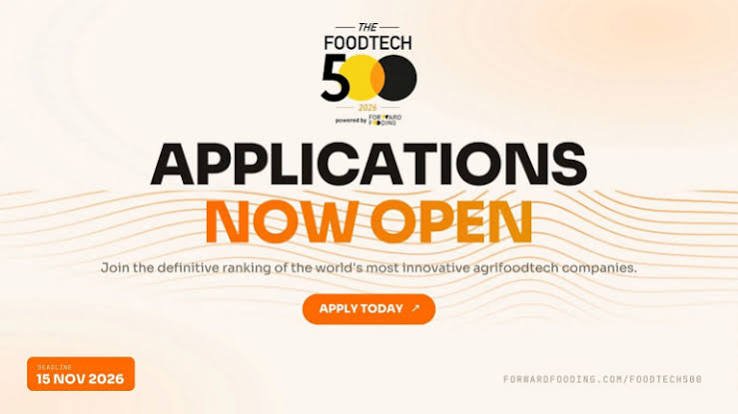
FoodTech 500 Competition 2026
Applications are now open for the FoodTech 500 Competition 2026, an international recognition opportunity for startups and scaleups working at the intersection of food, technology and sustainability. The initiative is organised by Forward Fooding and is inspired by the Fortune 500, bringing together innovative companies that are helping transform the global food system. The FoodTech 500 showcases selected AgriFoodTech companies through a ranking methodology that considers business performance, digital presence and sustainability. For the 2026 edition, the methodology has been further developed to assess business viability, innovation and differentiation, and sustainability, with greater emphasis on evidence of commercial traction, technological substance and measurable impact. The competition is open to companies across the food supply chain, from early stage ventures to more established businesses. Relevant areas include alternative proteins, vertical farming, packaging and materials, food waste management, restaurant technology, food processing, food safety, nutrition, kitchen robotics, irrigation, water technology, precision farming and agricultural biotechnology. About the Competition The FoodTech 500 is a global ranking and recognition platform created by Forward Fooding to identify companies developing technology driven solutions for the future of food. Since its launch, the initiative has reviewed thousands of applications from companies across many countries and has built a global community connecting entrepreneurs with investors, corporations, media organisations and other food innovation stakeholders. For the 2026 edition, companies are assessed using a framework built around three major dimensions. Business Viability considers the maturity and commercial validation of a company. Evidence such as customers, pilots, deployments, market presence and other indicators of adoption can contribute to the assessment. Innovation and Differentiation examines how novel the company’s solution is, how the technology works and what makes the solution difficult to replicate. Sustainability considers the company’s contribution to a more sustainable and inclusive food system, including its relationship with the Sustainable Development Goals and its impact on diverse and underserved communities. Companies that have participated in previous editions must submit a new application because the 2026 ranking is based on current and verified information. Competition Benefits • Recognition through the global FoodTech 500 ranking • International visibility across the Forward Fooding network • Access to a network of more than 22,000 industry professionals • Exposure to investors, food and beverage corporations and government representatives • Inclusion on the official FoodTech 500 website • Inclusion in the official FoodTech 500 White Paper • Potential media coverage and editorial exposure • Opportunities to connect with strategic partners and collaborators • Potential speaking or exhibition opportunities at relevant industry events • Opportunities to participate in a global AgriFoodTech community Areas of Focus The FoodTech 500 welcomes companies working across the wider AgriFoodTech ecosystem, including: • Alternative proteins • Vertical farming • Packaging and materials • Surplus and food waste management • Restaurant technology • Bio engineered ingredients • Circular food systems • Functional foods • Food processing innovation • Food safety and traceability • Nutrition • Kitchen robotics • Irrigation and water technology • Precision farming • Agricultural biotechnology • Other technology driven food and agriculture solutions Eligibility Criteria • Open to startups and scaleups operating in the FoodTech or AgriFoodTech sector • Companies may be at an early stage or more established • The company should operate somewhere across the food supply chain • The company must be incorporated • The company must have an active website • The company must be less than 15 years old • The company should use technology to create greater efficiency, sustainability or innovation within the food system • Companies from different countries and regions can apply Selection Criteria Applications are considered using the FoodTech 500 methodology and supporting evidence provided by applicants. The main assessment areas for the 2026 edition are: • Business viability and commercial traction • Innovation and differentiation • Sustainability and contribution to a more sustainable food system • Evidence supporting company claims and achievements • Strength and distinctiveness of the underlying technology or solution • Relevant information available through the company’s website and application Forward Fooding may also conduct additional research and cross check information using available company and industry data. Required Application Information Applicants should be prepared to provide current and verifiable information about their company and solution. This may include information concerning: • Company activities and FoodTech solution • Business and commercial development • Customers, pilots or deployments • Innovation and technological approach • Sustainability activities and achievements • Company website and other relevant information • Current company developments and supporting evidence Applicants are encouraged to ensure that their website and company materials contain up to date information before submitting. How to Apply Review the FoodTech 500 definition and confirm that your company operates within the AgriFoodTech sector. Confirm that the company is incorporated, has an active website and is less than 15 years old. Review the 2026 FoodTech 500 methodology and prepare current information about your company’s business, innovation and sustainability activities. Prepare evidence that demonstrates commercial traction, innovation, technological differentiation and sustainability achievements. Complete the FoodTech 500 2026 application through the official Forward Fooding platform. Submit the application before November 15, 2026 at 23:59 CET.
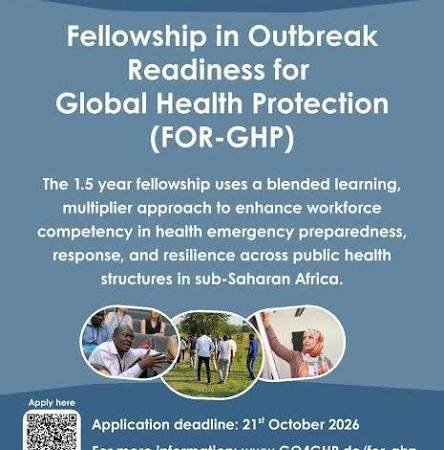
Fellowship in Outbreak Readiness for Global Health Protection 2026
Applications are open for the Fellowship in Outbreak Readiness for Global Health Protection (FOR GHP) 2026. The programme is designed to strengthen outbreak preparedness, response and resilience among public health structures across sub Saharan Africa through a blended training of trainers approach. The fellowship is funded by the German Federal Ministry of Health through the Global Health Protection Programme and implemented through a consortium comprising the Africa Field Epidemiology Network, Bernhard Nocht Institute for Tropical Medicine, Robert Koch Institute and Swiss Tropical and Public Health Institute. The programme runs for approximately 1.5 years and combines in person workshops, distance based learning, self study eLearning modules, simulations and the development of practical teaching case studies. Fellows will participate in workshops in Hamburg, Accra and Kampala while applying their learning within their home institutions. About the Fellowship The FOR GHP Fellowship uses a multiplier approach to build a stronger public health workforce capable of responding to natural and intentional disease outbreaks. The programme aims to equip professionals with practical competencies that can be transferred to colleagues and institutions in their home countries. Training covers outbreak management, One Health, global health security, infectious disease surveillance, public health intelligence, emergency preparedness, adult learning, communication, leadership and systems thinking. The programme also encourages fellows to develop and implement context specific teaching case studies at their home institutions. This allows participants to become facilitators, trainers and institutional multipliers who can contribute to stronger preparedness beyond their own professional development. The fellowship includes seven eLearning modules as part of the selection process, followed by three major in person workshops. The first workshop will take place in Hamburg, Germany, from April 12 to 17, 2027. The second workshop will take place in Accra, Ghana, from October 11 to 15, 2027. The final workshop will take place in Kampala, Uganda, from July 3 to 7, 2028. Successful participants will receive a certificate and 10 European Credit Transfer System points from the University of Basel upon completion of the programme. Fellowship Benefits • No tuition fees • Economy class flights for the three workshops • Visa fees for the three workshops • Accommodation during the three workshops • Daily meals during the workshops • Certificate upon successful completion • 10 ECTS points from the University of Basel • Training in outbreak management and global health security • Practical experience in developing and delivering teaching case studies • Training in One Health and systems thinking • Professional networking across sub Saharan Africa • Opportunities for peer learning and mentorship • Participation in a regional public health community of practice • Development of leadership and facilitation skills Programme Areas • Outbreak management • One Health • Global health security • Infectious disease surveillance • Public health intelligence • Emergency preparedness and response • Infection prevention and control • Public health communication • Adult learning and training design • Leadership in public health emergencies • Systems thinking • Cross sector collaboration • Simulation and case based learning • Sustainable public health workforce development Eligibility Criteria • Applicants must originate from the sub Saharan Africa region. • Applicants must currently be employed in the sub Saharan Africa region. • Applicants must have at least two years of professional experience in the public health or biomedical sector. • Experience in infectious disease management, prevention or control is preferred. • Applicants should have a degree or relevant proficiency in Public Health, Medicine, Epidemiology, Microbiology, Biology or an allied health sciences discipline. • Applicants must obtain endorsement from their current employer. • The employer must confirm that the applicant can attend the three in person workshops alongside their professional responsibilities. • The employer must support the applicant in implementing teaching case studies at their institution. • Applicants must provide a recommendation from at least one current and contactable referee. • The reference should not be older than three years. • Applicants must demonstrate advanced proficiency in English. • Accepted English evidence includes IELTS 6.0, TOEFL Paper 550, TOEFL Computer 213, TOEFL Internet 79 to 80, native English proficiency or higher education completed in English with written proof. • Applicants must have access to a computer with a stable internet connection, functioning audio and microphone. • Participation in virtual activities cannot be completed using only a mobile phone or tablet. • All gender identities are strongly encouraged to apply. Required Application Materials • Completed online application form • Motivation letter in English in PDF format • Employer endorsement document using the provided template • Employer confirmation of release from work for the three workshops • Employer support for implementation of teaching case studies • Letter of recommendation from at least one current referee • Referee email address and telephone number • Proof of English language proficiency Applicants should ensure that all required information and documents are submitted electronically. Incomplete applications will not be considered. How to Apply Review the FOR GHP fellowship eligibility requirements and programme structure. Prepare your motivation letter in English. Obtain the required endorsement from your current employer using the official template. Request a recommendation letter from a current and contactable referee. Prepare proof of English language proficiency. Complete the official online application form. Upload all required documents before the October 21, 2026 deadline. If selected, complete the seven initial eLearning modules and participate in the subsequent selection process. Applicants invited to the next stage should prepare for the January 2027 online interview. Successful fellows will sign a learning contract before beginning the full fellowship programme.

National AI Innovation Challenge 2027
The National AI Innovation Challenge 2027 is a national technology competition designed to strengthen the development, adoption and practical use of Nigeria’s sovereign artificial intelligence capabilities. The challenge is centred on N ATLAS, the Nigerian Atlas for Languages and AI at Scale, an open source multilingual large language model developed to support Yoruba, Hausa, Igbo and Nigerian accented English, alongside automatic speech recognition capabilities for voice applications. The challenge invites Nigerian universities, research institutions, startups, technology companies, social enterprises, independent developers and innovation teams to build practical solutions using N ATLAS. Applicants are expected to move beyond concepts and proposals by developing working technical artefacts that can be tested in real world settings. The programme focuses on three major areas: developer infrastructure, voice first access and sectoral fine tuning. Solutions can address practical needs in areas including education, agriculture, healthcare, legal rights, civic information and financial literacy. The challenge is implemented through the National Centre for Artificial Intelligence and Robotics and the Office for Nigerian Digital Innovation, under the Federal Ministry of Communications, Innovation and Digital Economy, in partnership with Awarri Technologies. About the Opportunity The National AI Innovation Challenge is designed to help transform N ATLAS from an open source AI model into practical national infrastructure. Participants are expected to develop tools and applications that make the model easier to use, expand access to digital services through supported Nigerian languages and adapt AI capabilities to important sectors. The challenge has three problem statements: • Developer Infrastructure: Build tools such as software development kits, browser based testing environments, fine tuning starter kits, evaluation tools and developer documentation that make N ATLAS easier to integrate and extend. • Voice First Access: Develop accessible services using N ATLAS automatic speech recognition. Possible channels include WhatsApp voice services, USSD based applications, interactive voice response systems and low bandwidth mobile applications. • Sectoral Fine Tuning: Adapt N ATLAS for specific Nigerian sectors such as education, primary healthcare, smallholder agriculture, legal rights, civic literacy and financial literacy. Each team may submit to only one problem statement. All submissions must demonstrate genuine integration with N ATLAS rather than simply connecting another general purpose AI model. Opportunity Benefits • Technical clinics and office hours • N ATLAS onboarding support • Technical resources and reference materials • University roadshows and ecosystem briefings • N ATLAS API credentials for shortlisted teams • Compute credits through partner infrastructure • Technical mentorship during the acceleration phase • Support to strengthen and improve submitted solutions • Invitations to the Nigeria AI Innovators Summit • Inclusion in the NITDA AI talent registry • Priority consideration for government AI pilot opportunities • NCAIR research laboratory partnership opportunities for academic winners • N ATLAS co contributor recognition for eligible winners • Federal Government recognition • Publication and model card support • National AI researcher registry inclusion • Government procurement pathway review for eligible enterprise winners • ONDI incubation support • Investor introductions • N ATLAS API integration support • Inclusion in the national AI startup ecosystem directory Programme Areas 1. Developer Infrastructure Applicants can create developer tools that improve how N ATLAS is accessed, tested, adapted and deployed. Examples include Python or JavaScript software development kits, browser based playgrounds, fine tuning tools, evaluation resources and bilingual technical documentation. 2. Voice First Access This area focuses on applications for Nigerians who may not rely primarily on typing. Potential applications include education support, agricultural advisory services, primary health information, civic information and financial literacy delivered through voice enabled channels. 3. Sectoral Fine Tuning Teams can fine tune N ATLAS for a clearly defined sector and demonstrate measurable improvement over the base model. The resulting model must be made available through a documented API that other developers can integrate. Eligibility Criteria General Eligibility • Applicants must be Nigerian citizens or registered Nigerian entities • Submissions must be original work that has not previously received an award in another competition • Each team may submit to only one problem statement • Every submission must contain a functioning technical artefact integrated with N ATLAS • Applications and supporting materials must be submitted in English • Concept only proposals without working builds are not eligible • Solutions that are not integrated with N ATLAS are not eligible Academia and Research Track • Teams should consist of 2 to 5 members • The team must include at least one enrolled student or postgraduate researcher • The team must have a faculty supervisor • The team lead must be enrolled in or employed by an accredited Nigerian university or research institution • An institutional endorsement letter signed by the Head of Department or equivalent is required Innovation and Enterprise Track • Teams should consist of 2 to 5 members • Individual applicants must be Nigerian citizens aged 18 or above • Company applicants must be registered with the Corporate Affairs Commission • Diaspora teams must have at least 50 percent of their members based in Nigeria • Registered organisations must provide a CAC certificate • Individual applicants must provide valid identification Required Application Materials Every submission must include: • A working technical artefact such as a repository, deployed application, published model, live API or dataset • Documentation demonstrating N ATLAS integration • Evidence of real world validation using actual users, real data or live benchmarks • Technical documentation covering architecture, setup and usage • A three to five minute video demonstrating the solution from end to end • Team profile containing names, affiliations and roles • Institutional endorsement for the Academia and Research Track • CAC certificate or valid identification for the Innovation and Enterprise Track Additional validation requirements apply according to the selected problem statement: • Developer Infrastructure submissions require at least two external beta testers • Voice First Access submissions require at least 50 documented real user interactions • Sectoral Fine Tuning submissions require a benchmark containing at least 500 examples compared with the base N ATLAS model How to Apply Review the official National AI Innovation Challenge requirements and
IHS AI Workforce Faculty Research Grant Program 2027
The Institute for Humane Studies (IHS) is inviting applications for the AI Workforce Faculty Research Grant Program 2027. The program supports academic scholars conducting research on how artificial intelligence is changing employment, productivity, occupations, economic opportunity, and innovation over time. The grant is designed to support research that contributes to a better understanding of the long term relationship between artificial intelligence and the workforce. IHS is particularly interested in research that bridges academic disciplines and produces findings that can contribute to scholarly and public discussions about the future of work. Selected scholars may receive grants of up to $20,000. Larger awards may be considered for exceptional projects. Funding can support research activities, data and research materials, collaboration, publication, and dissemination expenses. About the Grant The AI Workforce Faculty Research Grant is part of the Institute for Humane Studies research funding opportunities for scholars. The program responds to the need for additional long term research and data on the effects of artificial intelligence adoption on work. IHS is seeking research that examines important questions surrounding technological change and the workforce. Proposals that bring together perspectives from different disciplines are particularly encouraged. Potential research may examine issues including employment, productivity, occupational change, economic opportunity, and innovation. Research can result in academic publications, policy focused work, or useful research databases. The grant can also help researchers cover practical costs associated with conducting and sharing their work, including research collaboration, datasets, specialized research resources, and publication expenses. Grant Benefits • Grants of up to $20,000 • Larger awards may be considered for exceptional projects • Funding for travel connected to conference presentations and archival research • Support for research collaboration, including hiring research assistants • Funding for purchasing relevant datasets • Support for specialized LLM subscriptions used for research • Funding for journal submission fees • Support for book publication expenses such as copyediting and indexing • Funding for preparation of research manuscripts • Opportunity to develop peer reviewed research and policy focused outputs • Research dissemination through shareable research databases and other scholarly outputs Research Areas Applicants should propose research related to the relationship between artificial intelligence and the workforce. Relevant areas include: • Employment and artificial intelligence • Productivity and technological change • Occupational change • Economic opportunity • Innovation • Long term effects of artificial intelligence adoption • Interdisciplinary research on AI and work • Research producing policy white papers • Research producing peer reviewed publications • Research databases and other shareable research resources Eligibility Criteria The program is intended for academic scholars whose research addresses how artificial intelligence influences work and economic activity over time. Applicants should: • Be academic scholars conducting research relevant to the AI and workforce theme • Propose research addressing employment, productivity, occupational change, economic opportunity, innovation, or related questions • Demonstrate a research project suitable for the objectives of the grant • Consider interdisciplinary approaches where appropriate • Develop research capable of producing scholarly or publicly useful outputs Prior affiliation with IHS is not required for IHS scholar funding opportunities. Eligible Grant Expenses Grant funding may be used for research related expenses such as: • Travel for conference presentations • Travel for archival research • Research collaboration • Research assistant costs • Purchase of datasets • Specialized LLM subscriptions and research sources • Journal submission fees • Book publication expenses • Copyediting and indexing • Preparation of research manuscripts The grant does not cover living expenses, hardware purchases, retroactive expenses, conference travel where the applicant does not have a scheduled presentation, or institutional overhead and indirect costs. How to Apply Review the AI Workforce Faculty Research Grant information provided by the Institute for Humane Studies. Confirm that your research fits the program focus on artificial intelligence and the workforce. Develop a research project addressing questions related to employment, productivity, occupational change, economic opportunity, innovation, or related long term workforce effects. Identify the research activities and eligible expenses that the grant would support. Prepare your application according to the requirements provided through the IHS application system. Submit the completed application before December 15, 2026. Monitor your application for the funding decision, which is scheduled for January 15, 2027.
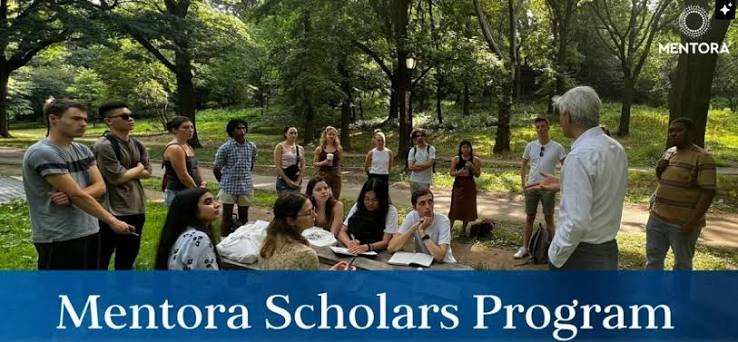
Mentora Scholars Fellowship 2027
Applications are open for the Mentora Scholars Fellowship 2027, a fully funded leadership development opportunity designed for undergraduate students in the United States and Canada who are committed to personal growth, leadership and positive change in their communities. The programme is offered by the Mentora Foundation and is rooted in the research and teachings of Dr. Hitendra Wadhwa, longtime Columbia Business School faculty member and author of Inner Mastery, Outer Impact. The Mentora Scholars Fellowship seeks to prepare a new generation of changemakers by helping participants develop greater clarity around their values, strengthen their character, build meaningful relationships and translate personal growth into positive action. The programme brings together a selective cohort of students who are interested in creating meaningful impact through their careers and communities. The 2027 programme consists of two connected stages. From February to April 2027, Scholars participate in a virtual Core Curriculum focused on reading, reflection and community building. This is followed by a 12 day Residential Immersion from May 17 to May 28, 2027, at the Scarritt Bennett Center in Nashville, Tennessee. Participants must complete the virtual component to take part in the residential experience. About the Fellowship Mentora Scholars is a practice based, whole person leadership development programme. It encourages students to examine their inner development while also learning how to create meaningful external impact. The residential component focuses on three central areas: • Inner Mastery, including Purpose, Wisdom, Growth, Love and Self Realization • Outer Impact, including practical actions for applying these core energies in important moments • Changemaking, including translating personal development into meaningful action in the wider world After completing the fellowship, Scholars become part of a lifelong community with opportunities to remain connected through Mentora initiatives, including potential opportunities to serve as Mentora Ambassadors or apply for the advanced Mentora Fellows programme. Fellowship Benefits • Full scholarship covering programme costs • Room and board during the residential programme • Virtual leadership development and guided reflection • 12 day residential leadership experience in Nashville, Tennessee • Peer relationships with a selective cohort of emerging changemakers • Practice based personal and leadership development • Opportunities to clarify personal values, purpose and beliefs • Lifelong Mentora community after completion • Potential opportunities to serve as a Mentora Ambassador • Potential opportunity to apply for the advanced Mentora Fellows programme Scholars are responsible for their own travel to and from the residential programme as well as incidental expenses. Programme Structure Virtual Core Curriculum The Core Curriculum takes place from February to April 2027. It includes reading, reflection and community building and serves as the foundation for the residential experience. Completion of the Core Curriculum is mandatory. Students who do not complete this stage will not be invited to participate in the Residential Immersion. Residential Immersion The Residential Immersion takes place from May 17 to May 28, 2027, at the Scarritt Bennett Center in Nashville, Tennessee. The 12 day experience provides an intensive cohort based environment where Scholars explore inner development, leadership principles, reflective practice and practical approaches to creating positive change. Eligibility Criteria • Open to current undergraduate students enrolled at colleges or universities in the United States or Canada • Applicants who completed their undergraduate degree within the past year may also apply • Graduating seniors are eligible to apply • Applicants should be highly invested in their personal transformation and growth • Applicants should demonstrate a commitment to excellence in a field of their choosing • Applicants should be committed to creating positive change in the world • Applicants should be ready to participate in a practice based, whole person development journey • Applicants must be able to participate in the required virtual Core Curriculum • Applicants must be able to participate in the Residential Immersion if selected The programme is not affiliated with any single religion, and applicants do not need to follow a particular belief system to participate. Required Application Information • Personal and educational information requested through the online application • Responses demonstrating personal growth and leadership interests • Information about the applicant’s commitment to positive change • Information demonstrating readiness for a practice based development experience • Any additional information requested through the official application form There is no application fee for Mentora Scholars. How to Apply Review the official Mentora Scholars eligibility requirements and programme structure. Confirm that you are currently an undergraduate student at a college or university in the United States or Canada, or that you completed your degree within the previous year. Prepare the information required for the online application, including your educational background and responses concerning your growth, values, leadership and commitment to positive change. Submit the application through the official Mentora Scholars application platform. Apply by November 8, 2026 to receive early priority consideration, or by the final deadline of January 17, 2027. If selected, complete the virtual Core Curriculum from February through April 2027. Participate in the Residential Immersion from May 17 to May 28, 2027 in Nashville, Tennessee.
Commonwealth Foundation Grant 2026 to 2027
Applications are open for the Commonwealth Foundation Grant 2026 to 2027, a funding opportunity supporting civil society organisations, grassroots communities, creative organisations, networks, coalitions, alliances and collectives across eligible Commonwealth countries. The programme supports projects that aim to contribute to meaningful social, cultural and political change through constructive engagement with governments and other decision makers or through creative advocacy. The 2026 to 2027 grant call introduces two funding streams. The Individual Organisation Grant supports eligible not for profit civil society and creative organisations delivering standalone projects, while the Collective Action Grant supports networks, coalitions, alliances, platforms and creative collectives working together to strengthen participation and collective action. Projects must address at least one of the Commonwealth Foundation’s three strategic impact areas: climate and environmental justice, economic inclusion, or freedom of expression. Applicants must also demonstrate how gender and intersectionality have been considered in project design and implementation. Projects are expected to begin between August 1 and September 30, 2027. About the Commonwealth Foundation Grant The Commonwealth Foundation is expanding its grants programme under its new strategic plan to create additional opportunities for civil society networks and collective action, while continuing support for individual civil society and creative organisations. The programme is designed for organisations with experience in advocacy, civic participation, community engagement, constructive engagement with decision makers, or creative practices that influence public discussion, policy, behaviour or decision making. Individual Organisation Grants provide between £15,000 and £30,000 per year for a maximum of two years. Collective Action Grants provide between £15,000 and £20,000 per year for a maximum of two years. The Foundation encourages projects that meaningfully involve young people and welcomes applications from organisations in Commonwealth small states. Creative organisations may use creative advocacy as a central approach to advancing social, cultural or political change. Grant Benefits • Individual Organisation Grants of £15,000 to £30,000 per year • Collective Action Grants of £15,000 to £20,000 per year • Funding for projects lasting up to two years • Support for civil society advocacy and constructive engagement • Support for creative advocacy and creative organisations • Opportunities for networks, coalitions, alliances and collectives • Support for projects addressing climate and environmental justice • Support for projects promoting economic inclusion • Support for projects advancing freedom of expression • Opportunities to strengthen youth participation and leadership Programme Areas Climate and Environmental Justice Projects may address climate and environmental injustice, participation in climate decision making, environmental policies, clean energy transitions, Indigenous and local knowledge, environmental accountability and access to justice. Economic Inclusion Projects may focus on reducing socioeconomic inequality, strengthening labour rights, promoting participation by women and young people, sustainable livelihoods, entrepreneurship, decent employment, health and wellbeing, creative industries and youth led economic initiatives. Freedom of Expression Projects may promote freedom of expression, association and assembly, access to information, independent media, transparency, digital rights, civic participation, open dialogue and protection from online violence. Eligibility Criteria • Applicants must be not for profit civil society or creative organisations registered in an eligible Commonwealth Foundation member country for the Individual Organisation Grant. • Collective Action Grant applicants must be eligible not for profit networks, coalitions, alliances, platforms, community based organisations, groups, creative actors or creative collectives. • An unregistered collective must have an eligible registered member organisation act as the lead applicant. • Individual applicants must have been registered and operating for at least three years. • Applicants must have at least three years of relevant experience connected to the proposed project and strategic impact areas. • Applicants should have significant experience working with the communities where the project will take place. • The project must be implemented at minimum in the applicant’s country of registration. • Multi country projects must demonstrate strong local participation in each country. • Average annual income over the previous two years must be below £2.5 million. • The requested grant must not exceed 70 percent of the applicant’s average annual income over the previous two years. • Applicants currently implementing a Commonwealth Foundation grant, or awaiting final payment from a recently completed grant, are not eligible. • Projects must advance at least one of the three strategic impact areas. • Projects must demonstrate how gender and intersectionality will be integrated throughout implementation. • Projects must be expected to begin between August 1 and September 30, 2027. Eligible Countries Eligible countries include: • Ghana • Kenya • The Gambia • Botswana • Eswatini • Lesotho • Mauritius • Mozambique • Namibia • Rwanda • Seychelles • Sierra Leone • South Africa • Uganda • Zambia • Bangladesh • Brunei Darussalam • India • Malaysia • Maldives • Pakistan • Sri Lanka • Cyprus • Malta • Antigua and Barbuda • Bahamas • Barbados • Belize • Grenada • Guyana • Jamaica • St Kitts and Nevis • St Lucia • Kiribati • Papua New Guinea • Samoa • Solomon Islands • Vanuatu Canada, Australia, New Zealand and the United Kingdom may participate as partners but organisations registered in these countries cannot apply as lead applicants under this call. Required Application Materials • Completed online application form • Project logic model using the Foundation’s template • Applicant or lead applicant registration certificate • Evidence of not for profit status where this is not clear from the registration certificate • Board or trustee information including names, roles, responsibilities and contact details • Financial accounts according to the grant amount and Foundation requirements • Collective structure, governance arrangements, secretariat information and current membership list for Collective Action Grant applicants • Examples of previous or current creative work for creative applicants • Certified translation of original organisational documents where required for shortlisted applicants. How to Apply Review the Commonwealth Foundation eligibility criteria and confirm that your organisation or collective is based in an eligible country. Complete the Foundation’s eligibility quiz before beginning the application. Register for an account on the Commonwealth Foundation’s online application platform. Select the appropriate Individual Organisation Grant or Collective Action Grant stream. Complete the online application form and prepare
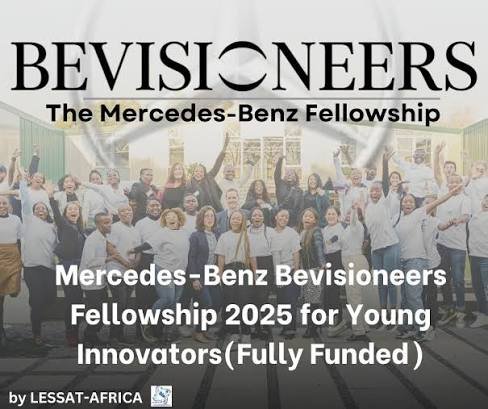
beVisioneers The Mercedes Benz Fellowship 2027 to 2028
Applications are open for the beVisioneers: The Mercedes Benz Fellowship 2027 to 2028, a global fellowship designed to support young innovators who are developing solutions to environmental challenges. The fellowship is implemented by The DO School Fellowships and supported by Mercedes Benz. Launched in 2023, beVisioneers equips young people with the skills, networks, mentoring and resources needed to turn planet positive ideas into practical projects. The programme is designed for emerging innovators who want to address pressing environmental problems and develop solutions that can create lasting impact in their communities. The fellowship runs for two years and begins with a 12 month Foundation Year. During this period, Fellows participate in online innovation training, receive venture coaching and mentoring, connect with peers and experts, and work toward developing a market tested prototype. Fellows are expected to commit at least 24 hours per month to their projects. About the Fellowship beVisioneers is intended for young people with an existing environmental project or a strong idea that can become a planet positive solution. Applicants do not need previous entrepreneurial experience or formal technical training. The fellowship places particular emphasis on early stage innovation. Applicants may be at the idea, prototype or pre revenue stage, although the programme is primarily seeking founders who have already started developing, testing or validating their solutions. The fellowship supports projects that directly contribute to environmental improvement through one or more of its impact areas, including clean energy, water conservation, biodiversity, sustainable agriculture, circular economy, sustainable mobility, and sustainable construction. Fellowship Benefits • Free participation in the fellowship • Innovation training through online learning modules • Venture coaching and one to one mentoring • Community based Local Hub gatherings • Access to expert and peer support • Opportunities to attend Regional Summits • Potential invitation to international Global Summit activities • Project development support and entrepreneurial training • Financial support based on individual needs • Cost of living support for eligible Fellows • Online access support for economically disadvantaged Fellows • Project scholarships of up to €15,000 to advance eligible projects • Access to scaling mentors and skills gap workshops during the acceleration phase • Membership of a global alumni and innovation community • Travel, accommodation and relevant expenses covered for key programme events Programme Areas beVisioneers welcomes planet positive projects addressing environmental challenges in areas such as: • Clean energy and energy access • Water access, resilience and conservation • Biodiversity and ecosystem restoration • Sustainable agriculture and food systems • Alternative materials, waste and circular economy • Sustainable transport and mobility • Sustainable construction and infrastructure Eligibility Criteria • Applicants must be between 18 and 28 years old on January 31, 2027. • Applicants must currently reside in one of the eligible countries for the duration of the fellowship. • Fellows must live in an eligible country for the majority of each fellowship year. • Applicants must plan to implement their project in an eligible country. • Applicants must have a good command of English, both written and spoken. • Applicants must demonstrate dedication to positive environmental change. • Applicants should demonstrate entrepreneurial spirit, persistence, resilience and determination. • Applicants must have an existing project or a strong idea for a planet positive project. • Projects should directly address an environmental challenge. • Applicants do not need previous entrepreneurial or technical experience. • Applicants should preferably have a prototype or project that has already been tested or developed, although exceptional idea stage applications may also be considered. • Applicants must not work for Mercedes Benz. • Applicants must not have a parent or guardian who works for Mercedes Benz. • Project teams may apply, but each individual seeking to participate must submit a separate application. Eligible Countries For the 2027 fellowship, applications are accepted from residents of eligible countries and territories across Europe, as well as India, Indonesia, Kenya, Malaysia, Mexico, Rwanda, South Africa, Tanzania, Uganda, the United States and Zimbabwe. Applicants must currently live in an eligible location and remain in an eligible country during the fellowship when implementing their project. Required Application Information • Written application responses • Short application video • Information about the applicant and their environmental project or idea • Evidence of progress, where applicable • Explanation of the environmental problem being addressed • Description of the proposed solution and its potential impact • Information demonstrating commitment to the project Applicants who require financial support for participation can indicate this during the application process. How to Apply Review the eligibility requirements and confirm that you live in an eligible country. Identify an environmental project or idea that directly contributes to positive environmental impact. Register on the beVisioneers application platform. Complete the written application and provide information about your project, motivation and environmental goals. Submit the required short video application. Indicate whether you require financial support for participation, if applicable. Submit the completed application before January 31, 2027 at 23:59:59 Central European Time. Shortlisted applicants may be invited to complete an online selection activity before the final selection stage.
Jim Leech Mastercard Foundation Fellowship on Entrepreneurship 2027
The Jim Leech Mastercard Foundation Fellowship on Entrepreneurship 2027 is an opportunity for African students and recent graduates who want to develop entrepreneurial skills, address pressing challenges and turn innovative ideas into ventures. The eight month fellowship provides participants with entrepreneurship training, virtual coaching, mentorship, networking opportunities and financial support as they progress through different stages of venture development. The programme is delivered by the Dunin Deshpande Innovation Centre at Queen’s University in Canada, known as DDQIC, in partnership with delivery organisations across Africa. It is designed to help emerging African entrepreneurs develop the mindset, knowledge and practical capabilities needed to create ventures that can generate social and financial impact. The fellowship is particularly suitable for students and recent graduates who have an entrepreneurial idea or are already working on a business and want structured support to develop it further. Participants move through three online phases covering the foundations of entrepreneurship, development of their business idea and preparation for launching their venture. About the Fellowship The Jim Leech Mastercard Foundation Fellowship on Entrepreneurship was created to support young Africans interested in entrepreneurship and venture creation. Participants receive access to entrepreneurship courses developed through Queen’s University and learn through the Disciplined Entrepreneurship framework developed at the Massachusetts Institute of Technology. The programme combines structured online learning with coaching, workshops, mentorship and opportunities to receive feedback on business ideas. Participants who demonstrate commitment and complete the requirements can progress through the programme phases and gain access to additional opportunities. The 2027 fellowship consists of three main phases: • Phase 1: Explore Entrepreneurship, January to February 2027 • Phase 2: Ignite Entrepreneurship, March to April 2027 • Phase 3: Launch Entrepreneurship, May to August 2027 The programme is delivered virtually, allowing participants from different African countries to participate without relocating to Canada. Fellowship Benefits • Business bootcamp delivered by Queen’s University faculty and experienced industry leaders • Training based on the Disciplined Entrepreneurship framework • Pitch coaching and practical pitch development • Live workshops covering marketing, goal setting and recruiting • Opportunity to earn Queen’s University entrepreneurship micro credentials after successfully completing courses • Virtual coaching throughout the programme • Access to mentors and speakers from innovation and entrepreneurship communities in North America • Access to a global network of Queen’s entrepreneurial alumni • Membership in a large community of students and recent graduates from across Africa • Matching with industry leaders and entrepreneurs during the final phase • Feedback at important startup development milestones • Up to 60 fellows selected in the final phase may receive a CAD $500 stipend • Opportunities to pitch for prizes of up to CAD $15,000 through the final pitch competition • Potential opportunities to travel to the Dunin Deshpande Queen’s Innovation Centre for entrepreneurial connections and activities Programme Areas The fellowship focuses on practical entrepreneurship development, including: • Entrepreneurship foundations • Business idea development • Problem identification and customer understanding • Venture development • Disciplined entrepreneurship • Marketing • Goal setting • Recruiting and team development • Pitch preparation • Startup milestone development • Social and financial impact Eligibility Criteria Applicants should meet the following requirements: • Be a citizen of an African country • Be currently enrolled in a post secondary institution or be a recent graduate within the past five years • Come from any academic discipline • Be enrolled at or have graduated from an African post secondary institution • Have a desire to solve pressing problems and bring an entrepreneurial idea to life • Be interested in developing an entrepreneurial mindset and building an enterprise • Be able to commit to completing all three phases of the online programme if selected • Have reliable access to the internet • Have a device suitable for participating in virtual sessions and completing online assignments Required Application Information The current 2027 programme listing does not publish a detailed checklist of application documents. Applicants should therefore use the official Queen’s University application system and follow the instructions provided in the application form. Applicants should be prepared to provide information relevant to their education, entrepreneurial interests and proposed business or venture idea, as requested by the official application portal. The application itself is free. Queen’s University has previously warned applicants about fraudulent individuals requesting fees for this fellowship and confirmed that the Dunin Deshpande Innovation Centre and Mastercard Foundation do not charge an application fee. How to Apply Review the official Jim Leech Mastercard Foundation Fellowship information from Queen’s University. Confirm that you are an African citizen and meet the student or recent graduate requirement. Develop or clarify the entrepreneurial idea or venture you want to work on during the fellowship. Prepare the information requested in the official online application. Submit your application through the official Queen’s University application system before the December 1, 2026 deadline. If selected, complete the three programme phases and meet the requirements for progression. Participate actively in the training, workshops, coaching, mentorship and venture development activities throughout the fellowship.

Rare Disease Reporting Fellowship and Grants 2026
Applications are open for the Rare Disease Reporting Fellowship and Grants 2026, an international journalism fellowship organized by the National Press Foundation with support from Fondation Ipsen. The programme is designed to help professional journalists develop deeper knowledge and produce informed reporting on rare diseases, biotechnology, medical research, healthcare access and the experiences of patients and families. The fellowship responds to the growing need for stronger public understanding of rare diseases. More than 300 million people worldwide live with one of more than 7,000 identified rare diseases, while many countries continue to face gaps in healthcare infrastructure, diagnosis, treatment, research and public policy. Through the programme, accepted journalists will participate in one week of free online training featuring expert briefings and question and answer sessions. Topics will include rare disease research in Africa, AI driven drug development, childhood genetic testing and screening, inclusive clinical trials, patient advocacy and approaches to reporting complex medical and scientific issues. About the Fellowship The Rare Disease Reporting Fellowship is the fifth journalism fellowship in a series supported by Fondation Ipsen. It brings together journalists with medical, scientific, policy and patient advocacy experts to strengthen reporting on rare diseases and biotechnology. The training will provide participants with access to expert perspectives on emerging developments in rare disease research and treatment. Journalists will also hear from leaders of global patient advocacy organizations and experienced journalists covering the field. The programme is delivered entirely online, making it accessible to professional journalists based in different parts of the world. However, participants must be able to attend every scheduled session live. Fellowship Benefits • Free one week online journalism training • Expert briefings on rare disease research and biotechnology • Access to medical, scientific and policy experts • Insights into rare disease research on the African continent • Training on AI driven drug development • Information about childhood genetic testing and screening • Discussion of inclusive clinical trials • Perspectives from global patient advocacy leaders • Guidance from experienced journalists • Up to $2,000 in reporting grants for qualifying fellows • $1,000 grant payment after completing the training • Additional $1,000 payment after submission of the completed published work • Opportunity to develop specialized reporting on rare diseases • Opportunity for accepted reporting to be reprinted in a compilation produced by Fondation Ipsen Programme Areas The fellowship will explore several areas connected to rare disease reporting, biomedical research and healthcare. • Rare disease research in Africa • Biotechnology and medical innovation • AI driven drug development • Childhood genetic testing • Rare disease screening • Inclusive clinical trials • Patient advocacy • Healthcare access and policy • Experiences of people living with rare diseases • Reporting complex scientific and medical issues Eligibility Criteria • Open to professional journalists based in any country • Applicants may work in print, broadcast, online or social media • Journalists may work in any language, but fluency in English is required because the training will be conducted in English • Applicants must be available to attend all fellowship sessions • Participants must be able to attend the sessions from 8:00 a.m. to 12:00 p.m. Eastern Time from November 16 to November 20, 2026 • Employed journalists must obtain support from their editor to attend the full training • Freelance journalists must demonstrate interest from an editor or publication in publishing their reporting on the topic Required Application Materials • Completed online application form • Letter of support from an editor for employed journalists • Confirmation from the editor that the journalist will be released from work for four hours each day during the fellowship • Letter from an editor indicating interest in publishing the proposed work for freelance journalists Applicants should ensure that their supporting documentation clearly demonstrates their ability to participate fully in the programme and develop publishable reporting on rare disease issues. How to Apply Review the fellowship requirements and confirm that you are a professional journalist eligible to participate. Confirm that you can attend all online sessions from November 16 to November 20, 2026, between 8:00 a.m. and 12:00 p.m. Eastern Time. If you are employed by a media organization, obtain a letter of support from your editor confirming permission to attend the four hour sessions each day. If you are a freelance journalist, obtain a letter from an editor showing interest in publishing your proposed rare disease reporting. Complete the online application form with accurate professional and contact information. Submit the application before October 22, 2026 at 11:59 p.m. Eastern Time. Accepted fellows should participate fully in the training and follow the requirements for any reporting grant they receive. Grant recipients must complete and publish their reporting project no later than March 1, 2027.