

Applications are open for the Harrison Middleton University (HMU) Fellowship in Ideas 2027, a writing and discussion programme designed for university graduates who want to explore the humanities, engage with important intellectual questions, and strengthen their writing and communication skills. The fellowship welcomes graduates from any academic discipline who have a strong interest in interdisciplinary learning and the history of ideas in Western civilization. The programme is offered by Harrison Middleton University, an institution focused on interdisciplinary education and the humanities. Over nine months, the selected fellow will engage in virtual Socratic discussions with university faculty and other fellows, contribute written work to university publications, and connect with readers, scholars, and thinkers from different academic backgrounds. The fellowship is suitable for graduates who enjoy reading, researching, analysing ideas, and communicating their thoughts through clear, well supported writing. Applicants do not need to hold a degree specifically in the humanities. Graduates from fields such as science, social science, literature, philosophy, and other disciplines can apply if they can demonstrate a genuine interest in the humanities and the ability to produce thoughtful written work. About the Fellowship The HMU Fellowship in Ideas is a nine month intellectual enrichment programme that combines writing assignments with guided academic discussion. Its purpose is to encourage thoughtful engagement with major ideas, strengthen interdisciplinary understanding, and give an emerging scholar opportunities to share original analysis with a wider audience. An important feature of the programme is its use of Socratic discussion. Fellows participate in virtual conversations with university faculty and other fellows, examining ideas through questions, reasoned arguments, and the exchange of different perspectives. These discussions offer participants an opportunity to deepen their understanding of complex subjects while learning from people with varied academic interests. Writing is another central part of the fellowship. The selected fellow will prepare two entries for the Harrison Middleton University Blog and a book review for HMU: Dialogues, the university’s biannual publication. These assignments provide practical experience in developing arguments, evaluating written works, and communicating ideas to readers. The programme also encourages intellectual independence. Applicants are expected to present their own ideas, analysis, and insights rather than simply repeat existing arguments. The fellowship can therefore be valuable for graduates interested in academic writing, publishing, research, education, or other careers that require careful thinking and strong communication. Fellowship Benefits Successful applicants will receive the following benefits: • US$500 stipend paid by check or PayPal. • Participation in virtual Socratic discussions with university faculty and other fellows. • Opportunities to publish two blog entries through the Harrison Middleton University Blog. • An opportunity to publish a book review in HMU: Dialogues. • Experience developing and presenting original ideas through structured writing assignments. • Opportunities to engage with academics, lifelong learners, readers, and thinkers from different disciplines. • A complimentary set of three Great Books Foundation publications at the conclusion of the fellowship. • A platform for strengthening reading, research, writing, and communication skills. Fellowship Activities The fellowship centres on intellectual discussion and written contributions. The selected fellow should be prepared to participate in the programme throughout its nine month duration and complete the required assignments. Key activities include: • Taking part in virtual Socratic discussions with university faculty and other fellows. • Exploring major questions and ideas connected to the humanities and Western intellectual traditions. • Preparing two original entries for the Harrison Middleton University Blog. • Writing a book review for HMU: Dialogues. • Applying critical thinking and research skills to a selected topic in the humanities. • Communicating arguments clearly and supporting them with appropriate references. Eligibility Criteria Applicants must meet the following requirements: • Hold a Bachelor’s, Master’s, or Doctoral degree in any academic field. • Demonstrate a genuine interest in the humanities and the major ideas of Western civilization. • Have strong reading and writing abilities. • Demonstrate effective communication skills and the ability to express ideas clearly. • Be willing to participate in virtual discussions with university faculty and other fellows. • Commit to writing two entries for the Harrison Middleton University Blog and one book review for HMU: Dialogues. • Be prepared to submit original work that reflects independent thought, analysis, and insight. The fellowship is not restricted to graduates of humanities programmes. Applicants from other academic backgrounds may be suitable if their interests and written submissions demonstrate a clear connection to the humanities. Required Application Materials Applicants should prepare the following materials: • A completed fellowship application form. • A biographical statement of no more than 500 words. • An expository essay of no more than 1,500 words. • A works cited page accompanying the essay. The biographical statement should explain the applicant’s background as a student, interest in the humanities, and reasons for applying to the HMU Fellowship in Ideas. The expository essay should explore a major idea in the humanities connected to one of the programme’s specified concentrations. Applicants should cite their sources appropriately and ensure that the essay reflects their own original thinking and analysis. The permitted concentrations are: • Imaginative literature. • Natural science. • Philosophy and religion. • Social science. Applicants are encouraged to use appropriate technology and research tools where useful, while maintaining academic integrity and ensuring that their submissions demonstrate their own creativity and reasoning. How to Apply Interested applicants should follow these steps: Review the fellowship requirements. Confirm that you hold a Bachelor’s, Master’s, or Doctoral degree and can meet the writing and participation commitments. Prepare your biographical statement. Write no more than 500 words describing your educational background, interest in the humanities, and motivation for joining the fellowship. Develop your expository essay. Choose a major idea related to imaginative literature, natural science, philosophy and religion, or social science. Prepare an original essay of no more than 1,500 words and include a works cited page. Complete the application form. Enter the required information and ensure that your application materials are ready for submission. Review your documents. Check the essay’s clarity, structure, originality, and references. Make sure the biographical
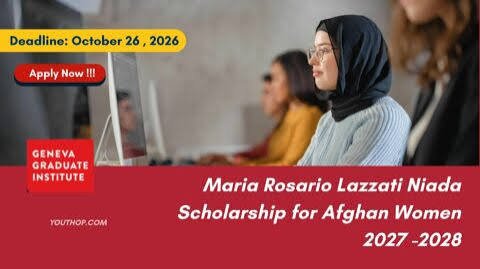
Maria Rosario Lazzati Niada Scholarship 2027- 2028
The Maria Rosario Lazzati Niada Scholarship for Afghan Women 2027 to 2028 is an opportunity for talented Afghan women with a university degree to pursue postgraduate studies in international relations and development at the Geneva Graduate Institute in Switzerland. Established in memory of Maria Rosario Lazzati Niada, the scholarship aims to support Afghan women seeking to strengthen their academic knowledge and professional prospects through graduate education. The programme is particularly relevant in the context of restrictions on women’s access to higher education in Afghanistan and is intended to expand opportunities for Afghan women to continue their studies abroad. Successful applicants will enrol in a two year master programme at the Geneva Graduate Institute. The scholarship provides CHF 25,000 per year and is renewable for the second year subject to satisfactory academic progress. Scholarship beneficiaries are required to prepare a report at the end of their first year demonstrating their progress and success. About the Scholarship The Maria Rosario Lazzati Niada Scholarship was established to help talented Afghan women develop advanced knowledge in international relations and development. The scholarship is administered in connection with the Geneva Graduate Institute and supports recipients through a two year master programme. The programme can provide an opportunity for successful candidates to develop expertise relevant to academic and diplomatic careers, international and non governmental organisations, and international corporate environments. Applicants first apply for the scholarship through the designated scholarship process. A selected scholarship candidate must then apply separately to a suitable master programme at the Geneva Graduate Institute and receive admission. The scholarship selection and university admission procedures are independent. Scholarship Benefits • CHF 25,000 scholarship per year • Two years of scholarship support • Opportunity to pursue a master programme at the Geneva Graduate Institute • Graduate level study in fields related to international relations and development • Opportunity to develop academic and professional expertise in an international environment • Support for Afghan women pursuing higher education abroad Eligibility Criteria • Open exclusively to Afghan women • Applicants must hold a university degree • Applicants must meet the admission requirements of the Geneva Graduate Institute • A bachelor’s degree or equivalent qualification is required for admission to the Institute’s master programmes • The previous degree should be in a discipline relevant to the selected master programme • Applicants must meet the Institute’s language requirements • An English proficiency certificate is required at the Institute application stage • Two academic references are required at the Institute application stage • Applicants should demonstrate a clear academic and professional interest in their proposed field of study Required Application Materials Applicants for the scholarship should prepare: • Motivation letter explaining why they are applying for the scholarship • Motivation letter identifying the Geneva Graduate Institute master programme they wish to pursue • Explanation of why they selected the Institute and programme • Statement of financial needs • Explanation of post graduation plans • Curriculum vitae • Copies of university diplomas and qualifications obtained • Official academic transcripts showing coursework, grades and credit values Scholarship Renewal The Maria Rosario Lazzati Niada Scholarship is awarded for two years. Renewal for the second year depends on satisfactory academic progress. At the end of the first year, the scholarship beneficiary must prepare a report providing evidence of their academic success. The scholarship is then renewed based on the review of this progress. The scholarship amount is CHF 25,000 per year. Official scholarship materials describe the award as supporting living costs and tuition fees. How to Apply Review the scholarship requirements and identify a suitable master programme at the Geneva Graduate Institute. Prepare a motivation letter explaining your reasons for applying, your preferred master programme, reasons for choosing the Institute, financial needs and post graduation plans. Prepare your curriculum vitae, university diplomas, qualifications and official academic transcripts. Submit the scholarship application and required documents through the designated application process before the October 26, 2026 deadline. If selected for the scholarship, complete the separate application for admission to the Geneva Graduate Institute. Prepare the English proficiency certificate and two academic references required for the Institute application. Complete the Institute admission process and await the final admission decision.
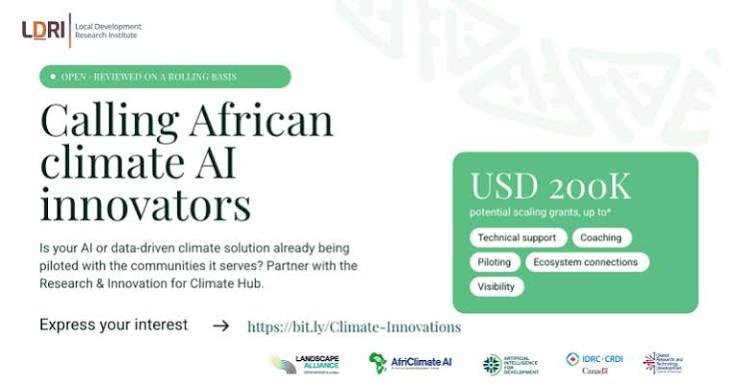
RICH Hub Call for African Climate AI Innovators 2026
The Research and Innovation for Climate (RICH) Hub is inviting African climate AI innovators, researchers, startups, organisations and technology developers to submit expressions of interest for innovations that can strengthen climate resilience across Africa. The initiative seeks practical solutions that use artificial intelligence (AI) and data driven technologies to address climate and environmental challenges affecting communities, ecosystems, institutions and economies. Climate change creates significant challenges for Africa, including threats to livelihoods, food systems, water resources, infrastructure and sustainable development. AI and data technologies can help communities and organisations understand environmental risks, improve decisions and develop more effective responses. However, promising innovations can face difficulties moving from early development to practical implementation and wider adoption. Through this call, the RICH Hub aims to identify innovations that have already progressed beyond the idea stage and are being tested or used in real world settings. The initiative is intended to help promising solutions develop further, connect with relevant partners and potentially expand their impact across African contexts. About the Opportunity The RICH Hub Climate AI Innovation call provides a pathway for African led or Africa based climate technology innovations to connect with technical expertise, research support, piloting opportunities and potential scaling partners. The call focuses on innovations that combine AI or data driven technology with a clearly defined climate or environmental challenge. The solution should have reached at least the pilot stage, with evidence that it is being tested or used by its intended communities, organisations or end users. The initiative is particularly relevant to innovators who have developed a practical solution and are looking for support to improve its effectiveness, strengthen its implementation or prepare it for wider use. Eligible applicants may come from research, entrepreneurship, technology development or organisations working on climate and environmental issues. The call is an expression of interest rather than a guaranteed grant award. The Hub will assess submissions against its objectives, the innovation’s development stage, eligibility and available resources before determining what support may be appropriate. Opportunity Benefits Selected innovations may be considered for the following forms of support: • Technical assistance to strengthen the innovation and address implementation challenges. • Coaching and guidance to support further development and practical application. • Research opportunities that can help improve the solution and assess its effectiveness. • Piloting opportunities to test or refine innovations in relevant settings. • Connections with researchers, organisations, technology experts and other ecosystem partners. • Knowledge exchange and opportunities to learn from other climate innovation initiatives. • Increased visibility for innovations and their potential contribution to climate resilience. • Opportunities to develop partnerships that can support adoption and expansion. • Potential scaling grants of up to US$200,000, subject to assessment, eligibility, available resources and alignment with the Hub’s objectives. Important funding note: The maximum grant amount is a potential opportunity, not a guaranteed award for every applicant. Submitting an expression of interest does not guarantee selection, technical assistance or funding. The type and level of support will depend on the individual innovation and the Hub’s assessment. Areas of Innovation The call is intended for practical innovations addressing climate and environmental challenges in African contexts. Applicants should be able to explain how their solution responds to a specific problem and how technology contributes to the proposed response. Relevant areas may include: • Climate resilience and adaptation. • Environmental monitoring and data analysis. • Climate risk assessment and decision support. • AI applications that support climate related planning and action. • Data driven solutions for communities, institutions and local economies facing environmental challenges. • Technologies that improve the implementation, adoption or expansion of climate solutions. These examples illustrate the broader focus of the call. Applicants should describe their actual innovation and its relevance rather than assume that every listed area is a separate funding category. Eligibility Criteria The RICH Hub is seeking African led or Africa based innovations that meet the following conditions: • The innovation addresses a clearly defined climate or environmental challenge relevant to African communities, ecosystems, institutions or economies. • Artificial intelligence or data driven technology plays a meaningful role in the solution. • The innovation has reached the pilot stage or beyond. • The solution is already being tested or used with its intended communities, organisations or end users. • The innovation has potential for further development, adoption or expansion. • The applicant can explain the problem being addressed and how the innovation responds to it. Required Application Information The announcement directs interested applicants to submit an Expression of Interest through the RICH Hub’s application process. The published summary does not provide a complete fixed checklist of required documents, so applicants should consult the official form for the current questions and submission requirements. Applicants should be ready to clearly communicate: • The climate or environmental challenge their innovation addresses. • The communities, organisations or end users the solution is designed to serve. • How AI or data driven technology contributes to the solution. • The current development stage of the innovation. • Evidence that the solution has reached the pilot stage or is already being used. • The innovation’s potential for further development, adoption or scale. • The kind of technical, research, piloting or partnership support that may help it progress. Providing clear and specific information about the innovation can help the Hub understand its relevance and potential. How to Apply Review the official call. Read the RICH Hub Climate AI Innovation announcement and confirm that your innovation meets the stated eligibility criteria. Assess your innovation’s readiness. Make sure the solution has reached the pilot stage or beyond and is being tested or used in a real world setting. Prepare your Expression of Interest. Describe the climate or environmental problem, explain the role of AI or data driven technology, and outline the innovation’s current stage and potential. Complete the official application form. Use the submission link provided on the official RICH Hub call page and answer the questions requested. Submit when ready. Expressions of interest are accepted on a rolling basis.
Changemakers for Youth Programme 2027
Applications are open for the Changemakers for Youth Programme 2027, an initiative supporting young social entrepreneurs who are creating positive change in their communities while empowering young people. Organised by ChangemakerXchange and supported by the Drosos Foundation, the programme connects youth focused changemakers across selected countries in Europe and the Middle East and North Africa. The programme is designed for young leaders who are already working on social or environmental initiatives and want to strengthen their impact, develop new skills and build partnerships beyond their immediate communities. Rather than focusing on one specific sector, it welcomes initiatives addressing social, educational, economic and environmental challenges, provided young people are central to the work. Over three years, Changemakers for Youth aims to support 80 young changemakers and social entrepreneurs. Participants benefit from tailored online capacity building, an immersive five day in person summit, opportunities for collaboration funding and access to an international network of social innovators. About the Opportunity Changemakers for Youth is part of ChangemakerXchange, an international organisation that connects social innovators and supports them in developing collaborative solutions to pressing challenges. The programme recognises that young people can play a significant role in addressing community problems when they have the skills, resources, confidence and opportunities to lead change. The initiative is open to changemakers whose existing ventures strengthen young people’s agency, develop their leadership and practical skills, or encourage them to participate actively in improving their communities. Projects may work in different sectors, including education, environmental sustainability, social inclusion, economic development and civic engagement. Applicants do not necessarily have to be the original founders of their organisations. However, they must hold a leadership or decision making role and demonstrate a meaningful contribution to an active initiative. The programme particularly values initiatives that have already been tested and can demonstrate tangible results. Early stage projects may also be considered if they show strong potential and, ideally, have completed a pilot. Applicants should be ready to share their experience, learn from peers and explore ways to expand or replicate their impact. Opportunity Benefits Selected participants can access the following benefits: • Tailored capacity building: Online learning activities adapted to participants’ needs and led by experienced experts and practitioners. • Five day in person summit: A dedicated gathering for peer learning, relationship building, wellbeing and collaborative problem solving. • Collaboration funding: Potential seed funding for selected cross border projects developed by participants. Funding is not guaranteed to every participant. • International networking: Opportunities to connect with social entrepreneurs, mentors, experts, supporters and potential collaborators. • Leadership development: Support to strengthen the skills, confidence and capacity needed to grow youth focused initiatives. • Cross border partnerships: Opportunities to exchange ideas and develop joint solutions with changemakers in other eligible countries. • Lifelong community membership: Continued access to the ChangemakerXchange community, learning activities, resources and networking opportunities. • Additional support connections: Potential access to relevant partner opportunities, coaching, grants and other forms of professional support through the wider community. Programme Areas Changemakers for Youth does not restrict applications to a single theme or industry. Initiatives should address a meaningful challenge while strengthening young people’s agency, skills or leadership. Relevant areas include: • Education and youth development • Social inclusion and community wellbeing • Economic opportunity and youth empowerment • Environmental protection and sustainability • Civic engagement and youth participation • Leadership development and community mobilisation • Innovative approaches to social challenges • Projects that support disadvantaged young people Applicants should explain how their initiative responds to a clearly identified need and how young people participate in, benefit from or lead the work. Eligibility Criteria To apply for the Changemakers for Youth Programme 2027, applicants must meet the following requirements: • Be between 18 and 35 years old. • Currently live and/or create impact in Egypt, Germany, Jordan, Lebanon, Morocco, Palestine, Switzerland or Tunisia. • If based in Germany, ensure the initiative creates tangible impact in Eastern Germany. • Hold a leadership or decision making role in an active social or environmental venture or organisation addressing youth development. • Demonstrate that the initiative empowers young people, strengthens their skills or agency, is youth led, or identifies young people as its key target group. • Have sufficient English language skills to participate in the online programme, interviews and in person summit. • Demonstrate an understanding of the challenge the initiative addresses and its potential for meaningful community impact. • Show readiness to collaborate, learn from other changemakers and participate fully in programme activities. • Submit a complete application before the deadline. The programme welcomes applicants from diverse backgrounds and particularly encourages people working in marginalised contexts or using approaches that recognise how different forms of disadvantage can overlap. Selection Criteria Applications are reviewed against the eligibility requirements and assessed by members of the ChangemakerXchange team and community. The selection process considers: • The relevance and importance of the problem being addressed. • The current stage of the initiative and evidence of progress. • Demonstrated impact or credible potential for future impact. • Innovation and the suitability of the proposed approach. • The initiative’s potential to grow, be replicated or contribute to wider change. • Alignment with the programme’s youth centred and collaborative principles. • The applicant’s motivation, values, entrepreneurial mindset and readiness to participate. • The diversity and overall composition of the selected cohort. Shortlisted applicants will be invited to an informal online interview lasting approximately 30 to 45 minutes. The organisers expect to inform applicants about the outcome of the selection process around mid January 2027. How to Apply Interested applicants should follow these steps: Review the official programme information. Confirm that you meet the age, location, leadership and youth impact requirements. Assess your initiative. Be prepared to explain the challenge you address, your approach, the progress made so far and the role young people play in your work. Complete the online application form. Provide accurate information about yourself, your organisation or venture, its impact and your motivation for joining the programme. Explain your programme
France Excellence Eiffel Scholarship Program 2026 to 2027
Applications are open for the France Excellence Eiffel Scholarship Program 2026 to 2027, an initiative of the French Ministry for Europe and Foreign Affairs designed to attract outstanding international students to higher education institutions in France. The program supports talented students pursuing master’s degrees and doctoral studies, helping prepare future leaders and decision makers in the public and private sectors. The Eiffel Scholarship aims to strengthen the international appeal of French higher education while encouraging academic excellence, research, and international cooperation. It is intended for high achieving students from outside France who want to pursue advanced studies in priority academic disciplines at eligible French institutions. The program covers a broad range of subjects across science and technology, as well as the humanities and social sciences. Applicants can explore opportunities in areas such as engineering, mathematics, biology, ecological transition, economics, law, political science, history, and French language and civilization. About the Opportunity The France Excellence Eiffel Scholarship Program is administered by Campus France on behalf of the French Ministry for Europe and Foreign Affairs. Its primary objective is to help French institutions recruit exceptional international students for advanced academic programs and develop future international leaders. The scholarship has two main components: the master’s level and the doctoral level. At the master’s level, support may be available for master’s year one or year two, as well as eligible engineering programs. At the doctoral level, the program supports doctoral research through arrangements that involve joint supervision or a dual degree in partnership with an institution abroad. The program is competitive. Applicants should demonstrate strong academic potential and a clear connection between their intended studies, professional ambitions, and the academic opportunities offered by their chosen French institution. Opportunity Benefits Successful candidates can receive financial and practical support during their studies in France. • Monthly allowance for master’s students: €1,200, according to the rate effective from January 2026. • Monthly allowance for doctoral students: €2,100, according to the rate effective from January 2026. • International transportation: Support for eligible international travel. • National transportation: Assistance with eligible travel within France. • Insurance services: Access to insurance related services under the program arrangements. • Accommodation assistance: Support with finding suitable accommodation. • Cultural activities: Opportunities to participate in cultural activities and become familiar with life in France. • Academic and professional development: The opportunity to study at a French higher education institution and build international academic connections. Important funding note: The Eiffel Scholarship does not cover tuition fees. Applicants should confirm tuition costs and any additional expenses with their chosen institution before accepting an offer. Programme Areas The scholarship covers seven academic fields grouped into two broad disciplinary areas. Science and Technology • Biology and Health • Ecological Transition • Mathematics and Digital Sciences • Engineering Sciences Humanities and Social Sciences • History, French Language and Civilization • Law and Political Science • Economics and Management Applicants should check that their intended course falls within an eligible field and that their selected institution offers a suitable program at the relevant study level. Eligibility Criteria The scholarship is intended for international students who are nominated by French higher education institutions. Applicants should review the official program regulations and confirm their eligibility with their prospective university. • Applicants must be foreign students seeking admission to an eligible master’s or doctoral program in France. • Master’s applicants must meet the program’s age requirement of no more than 29 years under the applicable campaign rules. • Doctoral applicants must meet the program’s age requirement of no more than 35 years under the applicable campaign rules. • Applicants must demonstrate strong academic ability and suitability for their intended course of study. • Candidates must identify a French higher education institution willing to support and nominate their application. • The intended course must fall within one of the eligible academic fields. • Doctoral candidates must pursue an eligible doctoral arrangement, such as joint supervision or a dual degree involving a partner institution abroad. Meeting the basic requirements does not guarantee selection. Universities and the scholarship program assess candidates through competitive selection procedures. Required Application Materials The precise documents and formats may differ according to the institution and academic program. Prospective applicants should request the current application checklist from the university they intend to attend. Applicants should prepare the following where requested: • Academic transcripts and degree certificates. • Curriculum vitae outlining academic achievements and relevant experience. • Statement of motivation explaining the proposed course of study and future objectives. • Information about the intended master’s or doctoral program. • Evidence of academic excellence and relevant research experience, where applicable. • Supporting documents requested by the chosen French institution. • Any additional forms or declarations required under the current Eiffel Scholarship regulations. Applicants should ensure that all documents are accurate, complete, and submitted before the university’s internal deadline. Selection Criteria The Eiffel Scholarship is designed to attract academically outstanding international students. Candidates should demonstrate a strong academic record, a clear study or research plan, and a convincing explanation of why the proposed program in France is appropriate for their goals. The relevance of the proposed studies to the scholarship’s priority fields is also important. Doctoral applicants should be prepared to explain their research direction and the value of the proposed academic partnership. Because French institutions nominate candidates, their internal assessment processes are an essential part of selection. Applicants should contact their intended institution early rather than assuming that submitting documents to Campus France themselves will be sufficient. How to Apply Research suitable French institutions. Identify universities or higher education institutions offering an eligible master’s, engineering, or doctoral program in your chosen field. Contact the institution. Reach out to the international relations office or relevant academic department to ask whether it participates in the Eiffel Scholarship campaign. Check the university’s internal deadline. Institutions may require applications well before the official Campus France submission date. Prepare the required documents. Follow the university’s instructions and ensure that your academic records, motivation statement, and other supporting
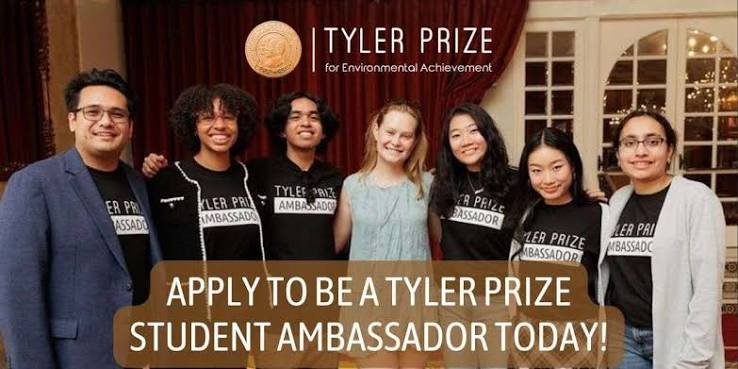
Tyler Prize Student Ambassador Program 2027
Applications are open for the Tyler Prize Student Ambassador Program 2027, an international opportunity for university students who are passionate about environmental sustainability, climate action, science communication, public policy, and social impact. The program invites undergraduate and postgraduate students to help promote environmental achievement and raise awareness of solutions to some of the world’s most pressing environmental challenges. The initiative is associated with the Tyler Prize for Environmental Achievement, an internationally recognized award that honours outstanding contributions to environmental science, environmental policy, and the protection of the planet. Established in 1973, the prize recognizes individuals and organizations whose work has helped advance environmental understanding and deliver meaningful environmental benefits. It is administered by the University of Southern California in Los Angeles, United States. Through the Student Ambassador Program, selected students will have opportunities to engage with the prize’s laureates, participate in discussions with environmental leaders, and communicate environmental ideas to wider audiences. Ambassadors will also contribute their perspectives through social media, community engagement, blog posts, photographs, and videos. About the Opportunity The Tyler Prize Student Ambassador Program seeks to connect university students with influential voices in environmental science, policy, conservation, and advocacy. Its purpose is to increase awareness of environmental achievements while giving young people opportunities to participate in global environmental conversations. Student ambassadors help communicate the work and contributions of Tyler Prize laureates. They may share information through their own networks, participate in live events and question and answer sessions, and create content for the Tyler Prize platform. The program also emphasizes communication, storytelling, and public engagement. Rather than focusing solely on environmental knowledge, it encourages participants to explain important ideas clearly, connect scientific achievements with wider audiences, and encourage conversations about practical responses to environmental challenges. Students from a range of academic disciplines may be suitable applicants, provided they have a genuine interest in the environmental themes associated with the prize and can communicate effectively in English. Opportunity Benefits Selected students may benefit from the following opportunities: • Engagement with environmental leaders: Interact with the 2027 Tyler Prize laureate or laureates, previous laureates, and other environmental professionals. • Exclusive events and discussions: Participate in selected sessions and events involving the Tyler Prize Executive Committee and laureates. • Communication skills development: Access professional training focused on storytelling, communication, and public engagement. • Social media experience: Develop skills in communicating environmental achievements and reaching audiences through digital platforms. • Public engagement experience: Participate in live events, question and answer sessions, and activities that introduce environmental ideas to broader communities. • International peer network: Connect with students who share an interest in environmental achievement, sustainability, and conservation. • Public recognition: Opportunities to be featured on the Tyler Prize website and social media platforms. • Alumni network: After successfully completing the ambassador year, participants will be invited to join the Student Ambassador Alumni Association, creating further opportunities to connect with professionals, scientists, and communicators. The program is primarily a professional development, networking, and environmental engagement opportunity. Applicants should consult the official program information for any details concerning financial support, travel arrangements, or other participation expenses, as these should not be assumed to be covered. Programme Areas The program welcomes students interested in environmental issues and related fields, including: • Climate change and climate action • Oceans and marine environments • Environmental science and conservation • Energy and sustainable development • Pollution prevention and environmental health • Water resources and water management • Food systems and agriculture • Economics and environmental sustainability • Public policy and institutions • Equality and environmental justice These areas reflect the broad range of issues addressed by the Tyler Prize and its laureates. Applicants do not necessarily need to study an environmental subject, but they should be able to demonstrate a meaningful interest in relevant issues. Eligibility Criteria Applicants should review the following eligibility requirements before applying: • Must be an undergraduate or postgraduate university student. • Students enrolled on either a full time or part time basis may apply. • Applicants may attend universities in any country. • Must demonstrate a strong interest in environmental themes relevant to the Tyler Prize. • Must be proficient in English, as communication and participation in program activities require effective English language skills. • Knowledge of additional languages is an advantage but is not stated as a mandatory requirement. • International applicants are welcome, although approximately half of the 2027 cohort is expected to consist of students from the University of Southern California. The official announcement does not specify a separate minimum age, academic grade requirement, or particular university major. Applicants should therefore use the official application form to confirm any additional questions or conditions. Required Application Information Applicants should prepare to provide the information requested through the official application process. Relevant information may include: • Personal and contact details. • Current university and academic enrollment information. • A description of interests related to the environment and sustainability. • Information demonstrating communication skills and interest in public engagement. • Relevant experience in environmental activities, student initiatives, volunteering, advocacy, research, or content creation, where applicable. • Any additional information specifically requested by the online application form. Applicants should ensure that all submitted information is accurate and that their responses clearly communicate why they are interested in representing the Tyler Prize. Selection Criteria The official announcement does not publish a detailed scoring system. However, applicants should demonstrate a clear connection to the program’s purpose and responsibilities. A strong application can explain the applicant’s interest in environmental achievement, their willingness to communicate important ideas to different audiences, and how they could help raise awareness of the work of Tyler Prize laureates. Experience in student leadership, environmental advocacy, community engagement, digital communication, blogging, photography, video production, or public speaking may help applicants explain how they would contribute. Such experience should be presented honestly and does not replace the formal eligibility requirements. How to Apply Interested students should follow these steps: Visit the official Tyler Prize Student Ambassador Program page. Read the program description, ambassador
African Climate Collaborative PhD Fellowships in Climate and Development 2026
Applications are open for the African Climate Collaborative PhD Fellowships in Climate and Development 2026, offering 12 fully funded doctoral opportunities for African researchers interested in addressing climate change and development challenges across the continent. The programme is hosted by the University of Cape Town (UCT) in South Africa through its African Climate and Development Initiative. The fellowship supports a four year doctoral training programme designed to prepare a new generation of African scholars to contribute to climate research, public policy, innovation and sustainable development. Fellows will combine structured academic training with independent research under the guidance of experienced supervisors. The programme begins with one year of structured predoctoral coursework, followed by three years of thesis research and doctoral skills development. Each fellowship is linked to a specific research topic and supervisory team, allowing candidates to pursue work aligned with their academic background and research interests. About the Opportunity The African Climate Collaborative brings together climate expertise and research initiatives to strengthen African capacity in climate and development. Through its doctoral training programme, the initiative aims to develop researchers who can produce evidence, generate practical solutions and contribute to more climate resilient societies. Climate change affects many interconnected areas of African life, including agriculture, biodiversity, urban infrastructure, energy systems, public health, education and livelihoods. Addressing these challenges requires researchers who can work across disciplines and connect scientific evidence with social, economic and policy considerations. The programme offers doctoral candidates the opportunity to undertake original research with academic supervision at the University of Cape Town. Applicants can choose from 19 research topics covering a range of climate and development questions. Each topic has specific academic requirements, so candidates must ensure their qualifications match the discipline required by their preferred project. Successful fellowship applicants will also need to apply for and secure admission to a PhD programme at UCT. The fellowship team indicates that assistance with the university admission process will be provided to successful candidates. Opportunity Benefits Selected fellows will receive financial support with a total stated value of R390,000 for 2027, allocated as follows: • R315,000 for stipend and academic fees. • Up to R75,000 for relocation, medical insurance, research and other eligible costs. • Four years of doctoral training in climate and development. • Structured coursework during the first year of the programme. • Three years of independent thesis research under academic supervision. • Doctoral skills training to support academic and professional development. • Access to research supervision connected to the selected project topic. • Opportunities to develop research that can inform climate policy, development practice and sustainable futures. The overall fellowship value includes support for several cost categories. Applicants should consult the official programme information for the applicable funding arrangements and conditions. Programme Areas The 19 available research topics span different disciplines and climate related challenges. Examples published by the programme include: • Urban flooding, health risks and the organisation of care in vulnerable communities. • Climate change and the management of locust outbreaks. • Energy transitions, electricity governance and implementation of the Paris Agreement. • Climate resilient water infrastructure and inequality in African cities. • Urban climate adaptation, governance and the use of different forms of knowledge. • Sustainable concrete technology for African urban development. • Climate change impacts on energy demand and renewable energy systems. • Biodiversity monitoring through remote sensing and ecological modelling. • Innovation systems and the transition to electric cooking. • Climate and development education relevant to African contexts. • Climate resilience, fisheries management and coastal livelihoods. • Remote sensing approaches to smallholder farming resilience. Candidates should consult the official research topic descriptions because each project has its own academic background requirements, supervisor and research focus. Eligibility Criteria Applicants must meet the following general requirements: • Be a citizen of an African country. African citizens living outside the continent may also apply. • Be under 35 years of age as of 1 February 2027. • Hold a completed master’s degree in a discipline relevant to climate and development in Africa. • Meet the specific disciplinary requirements for the selected research topic. • Demonstrate an academic background and research interests suitable for the chosen project. • Be prepared to apply for and secure PhD admission at the University of Cape Town if selected. • Apply for only one of the 19 available research topics. Women and applicants with lived experience of displacement or disability are particularly encouraged to apply. Required Application Materials Applicants should prepare the following documents: • Curriculum vitae of no more than five pages, including names and contact details for three referees. One referee must have supervised the applicant’s master’s dissertation. • A writing sample demonstrating previous academic or research writing, preferably from the master’s dissertation. • Academic transcripts for bachelor’s and master’s degrees. • A letter of motivation explaining the applicant’s interest in the selected topic and programme, and how their education and experience prepare them for the research. • A copy of a national identity document or passport. Successful applicants may be asked to provide certified academic documents before the fellowship is confirmed. Selection Criteria Applicants should demonstrate a strong match between their academic qualifications and the chosen research topic. The programme’s topic descriptions outline the required disciplinary background and, where relevant, particular research skills. The strength and relevance of the applicant’s academic preparation, motivation and ability to undertake the proposed research will be important considerations. Candidates should explain clearly why the selected topic fits their interests and experience. Because each fellowship is connected to a particular supervisory team, applicants should read the topic requirements carefully before applying. A strong application should present a clear connection between previous training and the proposed area of doctoral research. How to Apply Visit the official African Climate Collaborative PhD fellowships page at https://acdi.uct.ac.za/africaclimatecollaborative/phd-fellowships-climate-and-development. Review the 19 research topics, including their descriptions, supervisory arrangements and required academic disciplines. Select one topic that matches your qualifications and research interests. Do not submit applications for multiple topics. Prepare your curriculum vitae, academic writing sample,
University of Michigan African Presidential Scholars Program 2027 to 2028
Applications are open for the University of Michigan African Presidential Scholars Program (UMAPS) 2027 to 2028, an academic fellowship that brings early career faculty members from African universities to the University of Michigan in Ann Arbor, United States. The programme aims to strengthen African higher education by supporting faculty research, encouraging international academic collaboration, and helping scholars develop their own research agendas. Organised by the University of Michigan African Studies Center, UMAPS provides scholars with the opportunity to work alongside University of Michigan faculty collaborators, access academic resources, and participate in a vibrant research community. The fellowship is intended for academics who want to advance their research, produce scholarly publications, develop grant proposals, and build lasting professional connections. The programme welcomes applications from a broad range of academic disciplines, including the humanities, social sciences, science, technology, engineering, mathematics, and related fields. Applicants whose work aligns with the university’s African Heritage and Humanities Initiative, African Social Research Initiative, or STEM Africa initiative are particularly encouraged to apply. About the Opportunity The University of Michigan African Presidential Scholars Program was established to strengthen academic institutions across Africa while fostering mutually beneficial research partnerships between African universities and the University of Michigan. Through mentored research, interdisciplinary engagement, and cohort activities, the programme helps scholars develop the knowledge, experience, and networks needed to advance their academic careers. During the residency, selected scholars work closely with a University of Michigan faculty collaborator on a research project or another relevant academic activity. They can use university libraries, computing resources, and other facilities to support their work. Depending on their academic goals, scholars may develop research manuscripts, prepare publications, pursue research related to an academic degree, or work on competitive grant proposals. UMAPS also promotes interaction among scholars from different disciplines and African countries. Participants take part in academic presentations, seminars, workshops, and community activities designed to encourage the exchange of ideas and the development of collaborative research relationships. The programme expects fellows to return to their home institutions with stronger research capabilities, expanded professional networks, and knowledge that can contribute to teaching, scholarship, and institutional development. Opportunity Benefits Selected UMAPS scholars receive support and access to resources intended to make their research residency productive. • A stipend to help cover food, clothing, and personal expenses. • Housing during the fellowship residency. • Utilities, including wireless internet access. • Access to University of Michigan libraries and computing facilities. • A one time research allocation of US$1,000 for eligible academic expenses, such as books, laboratory equipment, or conference participation. • Access to university facilities and services through a University of Michigan identification card. • Opportunities to work closely with an experienced University of Michigan faculty collaborator. • Opportunities to attend seminars, workshops, academic presentations, and selected courses as auditors. • Participation in the UMAPS Research Colloquium Series and interdisciplinary academic activities. • Opportunities to develop publications, research proposals, and other scholarly outputs. • Connections with international researchers and fellow scholars from across Africa. • Opportunities to build long term academic partnerships and strengthen research collaboration between African institutions and the University of Michigan. Applicants should review the official programme information carefully to understand which expenses are covered. The programme handbook states that visa fees and certain domestic travel and accommodation costs in the scholar’s home country are not reimbursed. Programme Areas UMAPS accepts applications from a wide range of academic disciplines. Research proposals that connect with the following initiatives are encouraged. African Heritage and Humanities Initiative This initiative supports research in the arts, humanities, and interpretive social sciences, including work examining African cultures, histories, identities, and social experiences. African Social Research Initiative This initiative promotes social science research on democratic governance, distributive politics, income dynamics, poverty, gender, health, and development. STEM Africa Initiative This initiative supports research in science, technology, engineering, and mathematics, with an emphasis on advancing scientific knowledge and developing solutions to important challenges. Applicants whose research falls outside these specific areas may still apply, as the programme welcomes scholars from diverse academic disciplines. Eligibility Criteria Applicants must meet the programme’s academic and institutional requirements. • Be an early career faculty member who has taught in the higher education system for fewer than ten years. • Be currently employed in an ongoing position at a university or college in an African country. • Be actively engaged in teaching or academic work at their home institution. • Demonstrate institutional support through a recommendation letter from a department head, dean, or vice chancellor. • Be able to undertake a five month residential stay in Ann Arbor, Michigan. • Present a scholarly research proposal that explains the intended academic work during the fellowship. • Be prepared to work closely with a University of Michigan faculty collaborator and participate in programme activities. • Have a research interest that can benefit from the university’s academic resources and research environment. • Not have previously received a UMAPS fellowship. The programme accepts direct applications from faculty members at institutions in Botswana, Cameroon, Egypt, Ethiopia, Ghana, Kenya, Malawi, Mozambique, Rwanda, South Africa, and Uganda. Faculty members working in other African countries may apply only if nominated by a University of Michigan faculty member with whom they already have an established relationship. The African Studies Center does not arrange introductions to potential faculty nominators. Preference is given to applicants without extensive international experience outside Africa. Required Application Materials Applicants should prepare the following documents and information before completing the online application. • A completed online application form. • An up to date curriculum vitae. • A scholarly programme or research proposal of no more than five pages. • The full name and contact information of the department head, dean, or vice chancellor responsible for providing the institutional support letter. • A letter of support from the applicant’s home institution. Applicants from countries requiring a University of Michigan faculty nomination must also ensure that the nominated faculty member submits the required endorsement. The endorsement should confirm the faculty member’s willingness to serve as a mentor

Interactivity Foundation Collaborative Discussion Emerging Fellowship 2027
Applications are open for the Interactivity Foundation Collaborative Discussion Emerging Fellowship 2027, a year long professional development opportunity for individuals committed to strengthening dialogue, community engagement and democracy. Organised by the Interactivity Foundation, the fellowship supports emerging leaders who want to help people discuss challenging issues constructively, understand different perspectives and work together to address community concerns. The fellowship forms part of the Foundation’s ongoing Collaborative Discussion Project, which explores how creative, culturally responsive and critically informed conversations can help communities build stronger relationships and improve democratic participation. Rather than focusing solely on classroom learning, the programme encourages participants to put collaborative discussion principles into practice through a project that responds to the needs of a real community. Selected Emerging Fellows are paired with experienced Senior Fellows who provide mentorship and guidance throughout the programme. Participants develop their leadership and facilitation abilities, receive specialist training and work towards producing a practical resource or publication that advances collaborative discussion. The fellowship welcomes people from a broad range of professional backgrounds, identities, political affiliations and lived experiences, with particular interest in nurturing new and diverse leadership. The programme combines virtual training and monthly online meetings with two in person gatherings in the United States. The opening gathering is scheduled for January 7 to 8, 2027, at the University of Delaware. The final Fellows Showcase is planned for November 4 to 6, 2027, with its location yet to be confirmed. The fellowship offers a US$6,000 stipend, a full scholarship for Collaborative Discussion Project Coach Training valued at US$495, and travel and expenses for the two required in person gatherings. However, it is important for prospective international applicants to note that the fellowship requires compensated services to be performed in the United States. Applicants must already have legal authorization to work in the country for the entire fellowship period because the Interactivity Foundation cannot provide visa sponsorship or obtain employment authorization. Application deadline: November 8, 2026, at midnight Eastern Time. About the Fellowship The Collaborative Discussion Emerging Fellowship is designed to help individuals develop practical approaches to constructive dialogue and democratic engagement. Through the Collaborative Discussion Project, the Interactivity Foundation examines how people can think more effectively together, explore complex questions and work through differences without losing sight of shared community goals. Fellows will work with their Senior Fellow mentors to develop and implement a project that brings collaborative discussion skills and mindsets to a community. Projects may involve designing and delivering a workshop, developing a certificate programme, creating a new activity for the Collaborative Discussion Toolkit or introducing the Collaborative Discussion Project to audiences that have not previously engaged with it. Participants will also produce a publication, video or new curriculum connected to the Foundation’s mission. This provides an opportunity to translate learning into a tangible output that can support community engagement and contribute to the wider practice of collaborative discussion. The programme runs throughout 2027 and requires participants to attend the scheduled training sessions, monthly meetings and in person gatherings. Fellowship Benefits • US$6,000 stipend paid in three installments throughout the fellowship. • Full training scholarship for Collaborative Discussion Project Coach Training, valued at US$495. • Travel and expenses covered for the two required in person fellowship gatherings. • Individual mentorship from a Senior Fellow experienced in collaborative discussion. • Leadership development through practical work in dialogue, facilitation and community engagement. • Real world project experience developing and implementing an initiative that advances collaborative discussion. • Co author credit on a written publication, curriculum or audiovisual media project. • Professional network through monthly virtual meetings with mentors and other fellows working to strengthen democracy and community dialogue. • Practical learning opportunities that help participants develop their own ideas and approaches to constructive public discussion. Programme Structure The fellowship combines training, mentorship, independent project development and opportunities to exchange ideas with other participants. • January 7 to 8, 2027: In person Fellows Launch at the University of Delaware. • January 20, 27 and February 3, 10 and 17, 2027: Virtual Collaborative Discussion Coach Training sessions, scheduled for Wednesdays from 12 pm to 3 pm Eastern Time. • March to October 2027: Monthly virtual meetings with mentors and fellow participants, generally scheduled for the first Wednesday of each month from 12 pm to 1 pm Eastern Time. • March 12, 2027: Project proposal submission deadline. • July 2, 2027: Progress report and project deliverable deadline. • October 1, 2027: Final project report deadline. • November 4 to 6, 2027: In person Fellows Showcase, with the location to be announced. Applicants should review the complete schedule before applying and ensure that they can participate in all required activities. Eligibility Criteria The fellowship is intended for people who have demonstrated a commitment to collaborative discussion or strengthening democracy within a particular community. • Applicants must show an interest in constructive dialogue, community engagement or democratic participation. • Individuals from a wide range of professional and educational backgrounds are welcome to apply. • Applicants from diverse ages, identities, political affiliations, racial and ethnic backgrounds, religions and socioeconomic backgrounds are encouraged. • People with varied lived experiences are welcome, including those who have not previously had access to similar fellowship opportunities. • Applicants should be interested in developing leadership skills and implementing a practical community project. • Applicants must be available for the required virtual training, monthly meetings and two in person gatherings. • Selected fellows must be legally authorized to work in the United States for the entire fellowship period. • Applicants must be able to perform the fellowship’s compensated services in the United States. • Applicants must be able to meet the programme deadlines and complete their project and reporting responsibilities. Important eligibility note: The programme welcomes applicants from diverse backgrounds, but this does not remove the United States work authorization requirement. The Foundation does not sponsor visas or obtain employment authorization for selected fellows. Required Application Information Applicants should consult the official application form for the exact questions and information required. The published fellowship

Vital Impacts Environmental Photography Fellowships and Mentorships 2027
Applications are open for the Vital Impacts Environmental Photography Fellowships and Mentorships 2027, an international opportunity supporting photographers and visual storytellers documenting environmental challenges, conservation efforts, and communities working to protect the natural world. Organized by Vital Impacts, the programme provides financial support, professional mentorship, and opportunities to share documentary photography with wider audiences. The programme is designed to help photographers develop long term visual storytelling projects that go beyond documenting environmental problems. It encourages applicants to highlight practical solutions, local conservation initiatives, biodiversity protection, and the people working to build a more sustainable future. Through photography, participants can bring attention to environmental issues while strengthening connections between communities, conservation practitioners, and the public. For the 2027 edition, Vital Impacts will award one fellowship worth US$20,000 to an established environmental photographer and six fellowships worth US$5,000 each to emerging photographers. In addition, ten emerging photographers will be selected for a mentorship programme offering professional guidance and opportunities to strengthen their documentary storytelling skills. About the Opportunity Vital Impacts is an organization dedicated to supporting visual storytellers who document environmental issues and the work of communities protecting people, wildlife, and natural habitats. Its Environmental Photography Fellowships and Mentorships help photographers develop substantial bodies of documentary work that can contribute to public understanding and environmental action. The programme supports projects addressing conservation challenges while emphasizing the people and initiatives responding to them. Rather than focusing exclusively on environmental damage, applicants are encouraged to tell stories about resilience, innovation, restoration, and locally led solutions. Selected fellowship recipients will have approximately twelve months to develop their proposed projects. During this period, they will receive professional guidance and be expected to make meaningful progress on their work. The resulting photography should be suitable for publication, exhibitions, or other forms of public engagement. The programme also includes mentorship opportunities for emerging photographers whose work demonstrates potential and would benefit from additional professional development. Previous applicants and former fellowship or mentorship recipients are welcome to apply again. Opportunity Benefits • One US$20,000 fellowship for an established environmental photographer. • Six US$5,000 fellowships for emerging photographers. • Ten mentorship placements for emerging visual storytellers. • Professional guidance from experienced photographers, editors, and other industry specialists. • Approximately twelve months to develop a documentary photography project. • Opportunities to strengthen visual storytelling, project development, and professional presentation skills. • Potential support from Vital Impacts in promoting projects through publications, exhibitions, and media opportunities. • An additional exhibition opportunity for one fellowship recipient at the 2027 Festival of Ethical Photography in Lodi, Italy. The festival will cover exhibition production and installation, international travel, and accommodation for the selected photographer. • Access to the Vital Impacts online speaker series, which offers insights and guidance to interested visual storytellers. The fellowships provide project funding rather than a general salary. Applicants should review the official fellowship agreement for payment schedules, project expectations, and reporting requirements. Fellowship and Mentorship Categories 1. Dr. Jane Goodall Environmental Photography Fellowship This US$20,000 fellowship honours Dr. Jane Goodall and her contribution to wildlife research and conservation. It supports an established photographer developing a compelling environmental story that reflects the importance of protecting wildlife, ecosystems, and the relationship between people and nature. 2. E.O. Wilson Environmental Photography Fellowships The programme also honours the legacy of biologist E.O. Wilson, whose work advanced biodiversity research and conservation. The fellowship opportunities support photographers documenting environmental challenges and initiatives aimed at protecting and restoring ecosystems. 3. Emerging Photographer Fellowships Six photographers will receive US$5,000 each to develop environmental and conservation projects. These opportunities are intended for emerging visual storytellers with promising documentary work and a clear plan for advancing their proposed stories. 4. Environmental Photography Mentorships Ten emerging photographers will receive mentorship designed to strengthen their craft and professional development. Participants will have opportunities for individual guidance and engagement with experienced professionals. Eligibility Criteria Applicants should meet the following expectations: • Be a photographer or visual storyteller working on an environmental or conservation related story. • Have a meaningful connection to the community, location, people, or issue they propose to document. • Demonstrate an understanding of the environmental challenge and the people or organizations involved. • Present a clear project concept with the potential to produce a substantial body of documentary photography. • Show commitment to long term storytelling rather than short term access to a subject. • Demonstrate an ethical and responsible approach to documenting people, communities, wildlife, and environmental issues. • Be prepared to develop the proposed project over the fellowship period. • Agree to follow the Vital Impacts Code of Ethics. • Agree to sign the applicable Environmental Fellowship or Mentorship Agreement if selected. Required Application Materials Applicants should prepare the following materials: • Up to 20 JPEG photographs representing one or two bodies of work or documentary photo stories. • A project synopsis of 25 words. • A project statement of approximately 500 words describing the proposed story, environmental issue, personal connection, and intended impact. • A biography of up to 1,500 characters. • Requested social media information. • A clear explanation of the applicant’s relationship with the community, people, or environmental issue being documented. • Agreement to comply with the Vital Impacts Code of Ethics. • Agreement to sign the relevant fellowship or mentorship agreement if selected. Selection Criteria Applications should demonstrate the strength and relevance of the proposed environmental story, the applicant’s photographic ability, and the potential for meaningful documentary work. Vital Impacts places particular value on established relationships with local communities, sustained engagement with environmental issues, ethical storytelling, and the ability to explore both challenges and potential solutions. Applicants should explain why they are well positioned to tell their proposed story and what they hope the project will communicate or change. A strong application will present a clear project direction, demonstrate knowledge of the subject, and show how the resulting photography could contribute to public understanding, conservation efforts, or community engagement. How to Apply Visit the official Vital Impacts Environmental Photography Fellowships and Mentorships page.