

The Marca College Beauty Content Creator Scholarship 2026 to 2027 offers a CAD $1,000 tuition award to creative individuals who are passionate about beauty, social media and content creation. The scholarship is designed for aspiring beauty professionals who want to develop their skills through formal education while demonstrating their creativity through social media content. Offered by Marca College of Hairdressing and Esthetics in Canada, the scholarship supports students enrolling in eligible diploma programmes in hairstyling, hairstyling and barbering, or esthetics. Applicants are expected to create an original short Instagram video that demonstrates their creativity and interest in the beauty industry. The opportunity is suitable for both domestic and international applicants who meet the relevant admission requirements. It provides an opportunity to combine professional beauty education with digital content creation while receiving financial assistance toward tuition. About the Scholarship The Marca College Beauty Content Creator Scholarship recognises individuals who use social media to express their passion for beauty. Rather than relying only on academic achievements, the scholarship gives applicants an opportunity to demonstrate creativity through visual content. Applicants can create content related to hairstyling, barbering, esthetics, skincare, makeup, grooming, beauty routines or other relevant areas. The submission should be original and demonstrate genuine enthusiasm for the beauty industry. The scholarship is available for the 2026 to 2027 academic year and provides a CAD $1,000 tuition award toward an eligible Marca College diploma programme. Scholarship Benefits • CAD $1,000 tuition scholarship • Financial support toward an eligible beauty diploma programme • Opportunity to study at Marca College • Recognition for creativity and beauty content creation • Opportunity to demonstrate social media and presentation skills • Support toward professional training in the beauty industry Programme Areas The scholarship can be used toward eligible diploma programmes including: • Hairstyling • Hairstyling and barbering • Esthetics Applicants may create content around areas such as: • Hair design • Hair transformations • Barbering • Makeup • Skincare • Beauty routines • Grooming • Beauty trends • Beauty services Eligibility Criteria Applicants should meet the scholarship and admission requirements of Marca College. • Be passionate about beauty, creativity and social media • Apply for an eligible Marca College diploma programme • Create an original beauty related Instagram video • Keep the video to a maximum of 30 seconds • Follow the Marca College Instagram account • Tag Marca College in the Instagram post • Include the required hashtags #MarcaCollege and #MarcaContentCreatorScholarship • Mention the intended programme and campus in the Instagram caption • Tag three friends in the post • Keep the Instagram profile public during the evaluation period • Submit the Instagram post or Reel link through the scholarship application process • Meet the admission requirements for the selected Marca College programme • Successfully enrol in the selected diploma programme International students may also apply, subject to meeting the applicable admission requirements for study in Canada. Required Application Information Applicants should prepare the following: • An original Instagram video of up to 30 seconds • Public Instagram profile • Instagram post or Reel link • Intended Marca College programme • Intended campus • Required hashtags • Three tagged friends in the Instagram post • Scholarship application form • Application for the selected diploma programme • Screenshot of the published Instagram Reel or post Applicants are also instructed to email a screenshot of their Instagram submission to the scholarship contact provided by Marca College and indicate that the submission is for the Beauty Content Creator Scholarship. Suggested Content Ideas Applicants have flexibility when deciding what to feature in their video. Possible ideas include: • Hair transformation • Hairstyling tutorial • Makeup tutorial • Skincare routine • Daily beauty routine • Get Ready With Me content • Barbering transformation • Grooming demonstration • Beauty tips • Beauty trends • Product demonstration The strongest submissions should communicate an authentic interest in the beauty industry while showing originality and creativity. Selection Criteria Scholarship submissions may be assessed according to factors including: • Creativity • Quality of the submitted content • Overall presentation • Audience engagement • Originality • Compliance with the scholarship requirements Applicants should make sure that their video is clear, visually engaging and directly connected to their intended beauty career. How to Apply Review the eligible Marca College diploma programmes and select the programme and campus you wish to attend. Create an original Instagram video that showcases your creativity and passion for beauty. The video should not exceed 30 seconds. Publish the video on a public Instagram account. Follow the Marca College Instagram account and tag the college in your post. Include #MarcaCollege and #MarcaContentCreatorScholarship in the caption. State your intended programme and campus in the caption. Tag three friends who may also be interested in careers in the beauty industry. Complete the scholarship application form and provide the link to your Instagram post or Reel. Email a screenshot of your Instagram submission to the scholarship contact provided by Marca College. Complete the admission application for your selected diploma programme. Submit the scholarship and programme applications at least four weeks before your intended programme start date. Ensure that you continue to meet the applicable admission requirements while your scholarship submission is being considered.
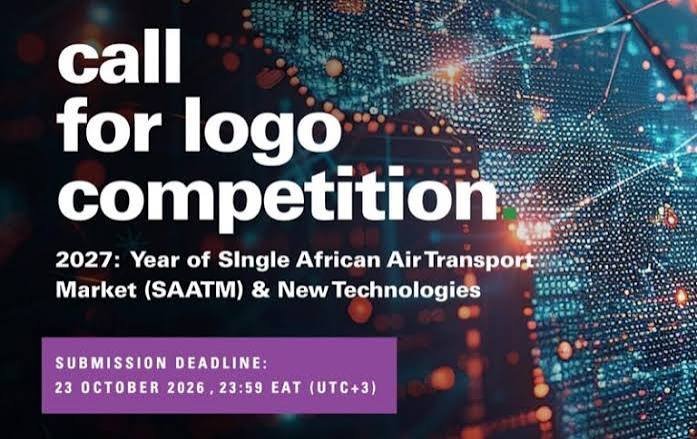
AU Theme of the Year 2027 Logo Competition
The African Union has opened applications for the AU Theme of the Year 2027 Logo Competition, inviting young African creatives to design the official visual identity for the African Union’s 2027 theme. The competition offers young designers, artists, students and digital creatives an opportunity to contribute to a major continental initiative while showcasing their creativity on an African and international platform. The AU Theme of the Year 2027 is “AU at the Dawn of its 25th Anniversary: Leveraging the Full Potential of SAATM and New Technologies for Continental Integration.” The theme connects the African Union’s 25 year journey with the aspirations of Agenda 2063, highlighting continental integration through physical connectivity, digital transformation, new technologies and institutional cooperation. The competition is being organised by the African Union Commission’s Infrastructure and Energy Department, with support from the African Union Development Agency and NEPAD. The selected logo will provide the visual identity for the theme throughout 2027 and will be used by the African Union and its partners across relevant communications and activities. About the Competition The AU Theme of the Year 2027 Logo Competition seeks to give young Africans a direct role in shaping the public identity of an important continental priority. The design should visually communicate the relationship between the African Union’s 25th anniversary, continental integration, the Single African Air Transport Market and new technologies. The African Union describes the competition as more than a design exercise, encouraging participants to express the aspirations of a connected, inclusive and prosperous Africa. The logo should capture ideas including open African skies, movement, connectivity, African led innovation, digital transformation, youth participation, inclusion, shared prosperity and Agenda 2063. The selected visual identity is expected to remain effective across different communication formats, including digital platforms, publications, events and other official materials. Competition Benefits • First prize of US$5,000 • Second prize of US$2,000 • Third prize of US$1,000 • Certificate of recognition • Official acknowledgement through African Union platforms • Training opportunities • Opportunity for the winner to participate in the AU Summit • Official unveiling of the winning logo at the AU Summit • Opportunity for the winning concept to be refined with the African Union for official use throughout 2027 • International visibility for emerging African creative talent Design Areas Applicants are expected to develop a visual concept that reflects several connected dimensions of the 2027 theme. • African Union at 25 • Continental integration and African unity • Single African Air Transport Market and open skies • New technologies and digital transformation • Artificial intelligence • Digital identity • Cybersecurity • Digital public infrastructure • African led innovation • Youth and inclusion • Connectivity and shared prosperity • Agenda 2063 The African Union advises applicants to avoid national flags, political symbols, distorted maps, cultural stereotypes, copied stock icons and overly literal combinations of aircraft and circuitry. The logo should remain clear and recognisable even when reproduced at small sizes. Eligibility Criteria • Open to citizens of African Union Member States • Applicants must be between 18 and 24 years old on the submission deadline • Applicants must submit individually • Only one entry is permitted per applicant • Students are eligible • Designers and artists are eligible • Digital creatives are eligible • Innovators are eligible • Formal academic or professional qualifications are not required • The design must be original and created specifically for the competition • The design must not have been previously published, licensed, sold, awarded or submitted to another competition • Applicants involved in the evaluation process are not eligible • African Union personnel and contractors are not eligible • Immediate family members of excluded personnel are also not eligible Generative artificial intelligence is not permitted. All submitted designs must be human created. Standard graphic design software may be used, provided its generative artificial intelligence features are not used. Required Application Materials • Completed application form • Applicant name, nationality, date of birth and contact information • Brief profile of the applicant • Proof of nationality and age • Presentation PDF containing the primary logo • Colour version of the logo • Black and white version • Reversed version • Basic colour palette • Typography direction • Three mock ups consisting of a digital card, event backdrop and publication cover • High resolution PNG or JPEG preview with a minimum width of 3,000 pixels • Concept and motivation statement of no more than 500 words • Signed originality, intellectual property and artificial intelligence declaration • Applicant identity removed from the design presentation The concept statement should explain the idea behind the logo, its symbolism, colours and visual elements, and how the design represents the AU Theme of the Year 2027. Selection Criteria Submissions will be evaluated according to several criteria. • Relevance to the complete AU Theme of the Year 2027 • Reflection of AU values and Agenda 2063 • Pan African identity and African ownership • Creativity and originality • Visual impact • Simplicity and clarity • Recognisability at different sizes • Adaptability and technical execution • Accessibility and cultural sensitivity • Multilingual usability • Quality of the concept statement The evaluation process includes administrative review, technical assessment, verification of shortlisted entries, final adjudication and institutional approval. Shortlisted applicants may be asked to provide editable vector files, preliminary sketches or evidence of their design process. How to Apply Review the official competition guidelines and terms of reference. Confirm that you meet the age and nationality requirements. Develop an original logo concept representing the complete AU Theme of the Year 2027. Prepare the primary logo together with colour, black and white and reversed versions. Prepare the required colour palette, typography direction and three mock ups. Write a concept statement of no more than 500 words explaining the design and its relationship to the theme. Prepare the required high resolution PNG or JPEG preview. Complete the originality, intellectual property and artificial intelligence declaration. Remove your name, photograph, signature and social media handle from the design presentation. Complete the official

Apple Hardware PhD Internships 2026
Applications are invited for the Apple Hardware PhD Internships 2026. This opportunity is designed for doctoral students in electrical engineering, computer engineering, electrical and computer engineering, and related technical fields who want to gain practical research and engineering experience within Apple. As a Hardware Engineering Intern, participants will contribute to the electrical and system design and integration of Apple products, including Apple Vision Pro, iPhone, iPad, Apple Watch, and Mac computers. Interns may work on the design, integration, implementation, testing, validation, and qualification of electrical subsystems while collaborating with engineering teams on challenging technical problems. Apple describes its internships as hands on opportunities in which students can become contributing members of technical teams and apply their academic knowledge to important projects. The Hardware PhD Internship provides exposure to advanced engineering areas including wireless technologies, ASIC and VLSI, embedded systems, firmware, cameras, displays, audio, acoustics, optical systems, and quality engineering. The internship is particularly relevant for PhD researchers whose work involves hardware design, computer architecture, semiconductor technology, wireless communication, signal processing, embedded systems, electrical systems, or related areas. Applications are accepted on a rolling basis, so interested candidates are encouraged to apply as early as possible. About the Internship The Apple Hardware PhD Internship offers doctoral students the opportunity to work alongside engineers developing technologies used in Apple products. Depending on the team and project, interns may contribute to research, prototyping, design, testing, system integration, validation, or engineering tools. Potential areas of work include: • Camera, touch and display engineering • Optical and mechanical design • Wireless technologies and RF engineering • Antenna design and wireless system validation • Automated software and engineering tool development • ASIC and VLSI design • RTL design and implementation • Verification, integration and validation • Physical design and low power design • Signal integrity and analog or mixed signal systems • Electrical system design and integration • System level testing • Schematic capture and circuit debugging • Audio, acoustics and optical hardware • Embedded systems and microcontroller development • FPGA based design verification • Firmware development and low level drivers • Quality engineering Internship Benefits • Hands on experience with advanced hardware engineering projects • Opportunity to contribute to products including iPhone, iPad, Mac, Apple Watch and Apple Vision Pro • Practical experience applying doctoral research to engineering challenges • Collaboration with experienced Apple engineers and technical teams • Exposure to hardware design, testing, integration and validation processes • Opportunity to develop professional engineering and research experience • Experience working on complex technical problems in a global technology company • Potential to strengthen technical knowledge and professional networks The official Apple listing does not specify a particular stipend, salary, accommodation package, travel allowance, or other financial benefit for this specific internship. Applicants should review the individual role and Apple internship information for the latest employment terms. Internship Areas The internship may involve one or more of the following technical areas: • Camera, touch and display engineering • Wireless and RF technologies • ASIC and VLSI • Computer architecture • Digital logic design • Analog and mixed signal circuits • CPU and GPU architecture • Electrical system development • Audio and acoustics • Optical systems • Embedded systems • Firmware development • FPGA design and verification • Hardware testing and qualification • Quality engineering Eligibility Criteria Applicants should meet the following requirements: • Currently pursuing a PhD in Electrical Engineering, Computer Engineering, Electrical and Computer Engineering, or a related field. • Be able to return to school after completing the internship to continue their education. • Alternatively, the internship may serve as the final requirement needed to complete the doctoral programme. • Have academic or practical experience relevant to the hardware engineering area for which they are applying. Apple also notes that candidates may benefit from knowledge of computer system architecture, digital logic design and verification, digital and analog circuit analysis, analog integrated circuits, chip design, microarchitecture, wireless communication, RF engineering, high speed signals, and related technical disciplines. Preferred Qualifications Applicants with experience in the following areas may be particularly competitive: • Computer system architecture • Digital logic design and verification • Digital and analog circuit analysis • Analog integrated circuits • Chip design and microarchitecture • Antenna design and cellular technologies • Wireless communication theory • RF circuit design • High speed signal systems • CPU and GPU architecture • Hardware measurement and testing • Circuit debugging • FPGA or printed circuit board development • Relevant research projects • Previous internship experience • Teaching assistant experience • Relevant professional experience Programming and technical skills may include C, C++, Python, Perl, SQL, Assembly, VHDL and Verilog RTL, depending on the specific position. Experience with measurement equipment such as spectrum analyzers, network analyzers, and oscilloscopes can also be valuable. Familiarity with schematics, physical design, FPGA systems, printed circuit boards, and circuit debugging is similarly relevant. How to Apply Review the Apple Hardware PhD Internship opportunity and confirm that your academic background matches the requirements. Identify the hardware engineering areas that best match your PhD research, technical experience, and career interests. Prepare an updated CV highlighting your doctoral research, engineering projects, technical skills, publications, internships, teaching experience, and relevant professional work. Visit the official Apple Careers platform and search for the Hardware PhD Internships position. Review the specific position details carefully because available teams and technical requirements may vary. Submit your application through Apple’s official careers platform. Since applications are considered on a rolling basis, apply as early as possible rather than waiting for a fixed closing date.
Bipartisan Policy Center Internship Program Spring 2027
Applications are open for the Bipartisan Policy Center Internship Program Spring 2027 in the United States. The Bipartisan Policy Center offers paid internships throughout the year, providing students and recent graduates with practical experience in policy research, events, communications, and the policymaking process in Washington, DC. The internship gives participants an opportunity to work directly with BPC teams and gain insight into how bipartisan policy solutions are developed. Interns work with professionals from different political perspectives and contribute to research, policy recommendations, written materials, events, legislative monitoring, and other activities that support the organization’s work. The Spring 2027 internship is a part time and paid opportunity. Interns receive a $3,000 stipend and have flexible working hours arranged with their intern manager. This structure allows students to gain professional policy experience while continuing their academic studies. BPC welcomes applicants from diverse backgrounds and political perspectives who are interested in advancing constructive bipartisan solutions. The internships are based in the organization’s Washington, DC office, with staff generally working in the office Tuesday through Thursday and having the option to work from home on Monday and Friday. About the Internship The Bipartisan Policy Center is a Washington based nonprofit organization that works to develop and advance practical policy solutions through bipartisan cooperation. Its internship programme is designed to provide a collaborative and intellectually stimulating environment where students can learn about policy development and the operations of a public policy organization. Interns work closely with an assigned intern manager and may help conduct research, develop policy recommendations, draft reports and explainers, support meetings and events, monitor legislative developments, and provide administrative assistance. The experience can also include professional development and networking opportunities with BPC staff and other interns in the Washington, DC area. Internship Benefits • $3,000 stipend for the Spring 2027 semester • Part time internship structure • Flexible working hours arranged with the intern manager • Practical experience in policy research and development • Exposure to the United States policymaking process • Experience working with bipartisan policy teams • Opportunities to support policy events, meetings, and congressional activities • Professional development and networking opportunities • Experience working with professionals across different policy areas • Washington, DC based professional experience Internship Areas BPC offers internships across policy programmes and functional departments. Available areas may include: • Government relations and advocacy • Economic policy • Energy and climate policy • Governance and democracy • Health policy • Housing policy • Human capital • Communications • Development and fundraising • Other organizational and functional departments Depending on the team, interns may conduct legislative research, monitor congressional activity, draft written materials, assist with communications, support events, analyze policy information, contribute to data collection, or help with administrative and project management activities. Eligibility Criteria • Applicants must be rising juniors or above • Applicants may be currently enrolled in an undergraduate programme • Graduate students are eligible to apply • Recent graduates may also be considered • Applicants should demonstrate strong research and writing abilities • Applicants should be able to communicate clearly and effectively • Applicants should demonstrate strong organizational skills • Applicants should be able to prioritize and manage multiple tasks • Applicants should have an interest in public policy, government, politics, or a relevant policy area depending on the internship • Non US citizens may apply if they have a valid work permit or visa that authorizes employment in the United States • BPC does not provide visa sponsorship There is no stated minimum GPA requirement. BPC notes that many applicants typically have a GPA of at least 3.0. Required Application Materials • Resume • Cover letter • Writing sample of 3 to 5 pages • College or university transcript, with an unofficial transcript accepted • Brief response of 5 to 8 sentences answering the question, “What does bipartisanship mean to you?” Selection Criteria BPC considers applicants based on their qualifications, writing and research abilities, communication skills, organizational capacity, policy interests, and fit with the needs of the relevant team. The organization also values applicants who are interested in constructive bipartisan engagement and who can contribute positively to a collaborative workplace. Applicants should tailor their materials to the specific internship area and demonstrate why their academic background, professional interests, skills, and experience are relevant to the position. How to Apply Review the available Spring 2027 internship opportunities on the Bipartisan Policy Center Careers page. Select the internship or policy area that best matches your academic interests and professional goals. Prepare your resume, cover letter, writing sample, transcript, and short response about the meaning of bipartisanship. Submit a separate application for each internship position you wish to be considered for. Submit your application through the official BPC Careers page. Apply as early as possible because applications are reviewed on a rolling basis and positions may close once qualified candidates have been identified.

Hamburg Sustainability Conference HSC Youth Ambassador Program 2027
Applications are open for the Hamburg Sustainability Conference HSC Youth Ambassador Program 2027, an international opportunity for young sustainability leaders from the Global South to participate in high level discussions on sustainable development and help shape the global sustainability agenda. The Hamburg Sustainability Conference brings together policymakers, private sector leaders, researchers, civil society representatives and other decision makers to develop partnerships and practical solutions for advancing the United Nations Sustainable Development Goals. The conference is a joint initiative of the German Federal Ministry for Economic Cooperation and Development, the United Nations Development Programme, the Free and Hanseatic City of Hamburg and the Michael Otto Foundation. Through the Youth Ambassador Program, selected young leaders become active contributors rather than observers. Youth Ambassadors can contribute to panels, workshops, moderations and high level dialogues, while sharing their experiences, expertise and sustainability initiatives with international decision makers and other participants. About the Youth Ambassador Program The HSC Youth Ambassador Program is designed to amplify the voices of young community leaders who are already working to address sustainability challenges and create measurable impact in their communities. The programme connects young leaders from the Global South with policymakers, business leaders, experts, journalists, local youth and fellow sustainability advocates. It also provides opportunities for Youth Ambassadors to exchange knowledge and experiences and develop lasting international connections. The Hamburg Sustainability Conference focuses on building partnerships and accelerating practical action toward the Sustainable Development Goals. The Youth Ambassador Program gives young leaders an opportunity to contribute their perspectives directly to these conversations and help develop solutions for a more sustainable future. Opportunity Benefits • Fully funded participation at the Hamburg Sustainability Conference • Travel costs covered • Accommodation costs covered • Opportunity to participate in conference sessions as a speaker or attendee depending on expertise • Opportunity to contribute insights, experiences and sustainability solutions to global leaders • Access to more than 1,600 international leaders and decision makers • Networking opportunities with policymakers, business leaders, experts and press representatives • Opportunity to connect with young people and sustainability leaders in Hamburg • Participation in the global HSC Youth Ambassador community • Opportunities to exchange ideas with fellow Youth Ambassadors before, during and after the conference • Opportunity to contribute to panels, workshops, moderations and high level dialogues • Participation in the HSC Youth Roundtable Series planned for December 2026, subject to selection and programme arrangements Programme Areas Applicants can select the sustainability and social impact themes that best reflect their work. These include: • Climate mitigation and decarbonization • Renewable energy and energy access • Sustainable food systems and agriculture • Biodiversity and nature conservation • Water security, sanitation and hygiene • Circular economy and waste management • Sustainable cities, housing and urban development • Sustainable mobility and transport • Technology, artificial intelligence and digital transformation • Climate finance and impact investing • Public policy and governance • Good health and wellbeing • Gender equality and women’s empowerment • Other relevant sustainability and social impact areas Eligibility Criteria • Applicants must be between 18 and 30 years old. • Applicants must come from and reside in a Global South country included on the current OECD Development Assistance Committee list of Official Development Assistance recipients. • Applicants must be young leaders actively driving sustainability efforts in their communities. • Applicants should have a demonstrated record of delivering concrete solutions to sustainability challenges. • Applicants should be able to show how they mobilize supporters or communities to advance their work. • Applicants may have founded their own initiatives or contributed to existing networks and organizations. • Applicants must be able to communicate confidently in English. • Applicants must be able to dedicate sufficient time to participate actively in the programme. • Applicants must be prepared to contribute to preparatory activities before the main conference. • Selected participants are expected to be available for the planned Youth Roundtable Series from December 7 to 11, 2026. • Previous participation in international sustainability conferences or youth programmes is not required. Required Application Information Applicants will be asked to provide information including: • First name and surname • Date of birth • Gender • Email address • Country of origin • Country of residence • Current occupation or professional activity • Name of organization, company, startup or initiative where applicable • Selected sustainability and social impact themes • Description of sustainability work, projects, achievements and future plans • Information about the impact of the applicant’s work and the communities or audiences reached • Description of challenges encountered in sustainability work • Response explaining which HSC 2026 session the applicant would most like to have participated in and why • Example of private sector collaboration with government or civil society to address a sustainability challenge in the applicant’s country • Information about participation in other sustainability related international conferences or youth programmes • LinkedIn profile • Links to social media, websites or other communication channels that showcase the applicant’s work • Agreement to the programme’s privacy policy Selection Process Applications open on October 6, 2026, with the deadline set for October 19, 2026. Shortlisted candidates are expected to participate in interview rounds toward the end of October. Participation confirmations are expected by the end of October or early November 2026. Selected Youth Ambassadors will then take part in the planned Youth Roundtable Series in December 2026 before joining the Hamburg Sustainability Conference in May 2027. The selection process is intended to identify young leaders with genuine sustainability engagement, concrete community impact, strong communication abilities and the capacity to contribute meaningfully to international discussions on sustainable development. How to Apply Review the eligibility requirements and confirm that your country of residence is included in the eligible Global South countries based on the OECD Development Assistance Committee list. Prepare information about your sustainability work, including projects, achievements, impact, challenges and future plans. Identify the sustainability themes that best represent your work. Prepare your responses to the programme questions, particularly the questions about sustainability impact, private sector collaboration
Novo Nordisk Foundation Postdoctoral Fellowships at MIT 2027
Applications are open for the Novo Nordisk Foundation Postdoctoral Fellowships at Massachusetts Institute of Technology 2027. The fellowship offers early career researchers an opportunity to undertake advanced interdisciplinary research in collaboration with researchers at MIT, one of the world’s leading institutions for science and technology. The programme is offered by the Novo Nordisk Foundation and is designed to strengthen the careers of outstanding early stage researchers through international research experience, scientific networking, knowledge exchange and collaboration between the Danish research environment and MIT. The fellowship supports research projects in natural and technical sciences, biomedicine and biotechnology. Proposed projects must have an interdisciplinary character and demonstrate potential impact on human health or sustainability. Fellows will spend the first two years of the fellowship conducting research at MIT before returning to a Danish university or another Danish public or nonprofit research institution for a final period of up to one year. About the Fellowship The Novo Nordisk Foundation Postdoctoral Fellowships at MIT provide an international research opportunity for early career scientists who want to develop independent research experience while working across institutional and disciplinary boundaries. The programme combines research at MIT with continued engagement in the Danish research ecosystem. This structure is intended to strengthen scientific independence, international collaboration and long term knowledge transfer. Fellows will work with an MIT Principal Investigator who serves as the primary research mentor during the international research period. Applicants are also expected to have a confirmed Danish host institution and host Principal Investigator who will employ the fellow and administer the fellowship throughout the grant period. Research proposals may range from fundamental studies to innovative research projects, provided they are interdisciplinary and have a clear potential contribution to human health or sustainability. Fellowship Benefits • Up to DKK 3.6 million in funding for three years • Approximately DKK 1.2 million available per year • Salary support for the fellow • Research equipment and operating expenses • Research consumables, analysis and computational resources • Travel expenses directly related to the research project • Conference participation and registration support • Publication costs • Relocation expenses of up to DKK 110,000 over the fellowship period • Living abroad expenses of up to DKK 70,000 per year • Additional support of up to DKK 55,000 for dependents • Opportunity to conduct research at MIT for two years • Access to an interdisciplinary international research environment • Opportunities for scientific networking and international collaboration • Continued research collaboration between MIT and the Danish research ecosystem • MIT postdoctoral fellow status and access to applicable MIT benefits Research Areas The fellowship welcomes interdisciplinary research in: • Natural sciences • Technical sciences • Biomedicine • Biotechnology Proposed research should have potential impact on: • Human health • Sustainability The Foundation supports projects ranging from fundamental research to innovative applications, provided the interdisciplinary nature and potential impact of the project are clearly demonstrated. Eligibility Criteria Applicants must meet the following requirements: • Have obtained a PhD in natural sciences, technical sciences, biomedicine or biotechnology within five years of the fellowship start date. • Leave of absence periods are excluded from the five year calculation, provided appropriate documentation can be supplied. • PhD students may apply if their current PhD supervisor confirms that they are expected to complete the degree before the fellowship begins. • Establish contact with a Principal Investigator at MIT who agrees to serve as the primary research mentor. • Have spent no more than one year as a postdoctoral researcher at MIT at the time of application. • Have a confirmed Danish host institution and Danish host Principal Investigator. • Have a Danish university or another eligible Danish public or nonprofit research institution employ them and administer the fellowship throughout the grant period. • Demonstrate an association with the Danish educational system or research environment. • Be able to develop a research project that is interdisciplinary and relevant to human health or sustainability. • Submit the application and all additional materials in English. Applicants can demonstrate their association with the Danish research environment in several ways, including having graduated from a Danish university, holding Danish citizenship or having several years of research experience at a Danish institution. Required Application Materials Applicants are required to prepare information and supporting documents through the Novo Nordisk Foundation NORMA application system. • Applicant CV with a short bibliographic overview • Publication list containing up to 10 relevant publications • Summary of previous research experience and its connection to the proposed project • Information about similar or related funding applications • Information about previous or current Novo Nordisk Foundation grants where applicable • Project title and brief project description • Detailed project description covering purpose, background, methods, collaborations and significance • Description of the interdisciplinary nature and novelty of the proposed research • Description of activities at MIT and the Danish host institution • Project timetable showing time spent at MIT and in Denmark • Literature references • Lay project description • Detailed project budget • Support Letter from the Danish Principal Investigator • Support Letter from the MIT Principal Investigator • Host Letter from the Danish administering institution • CV from the Danish Principal Investigator • Recommendation Letter from a former advisor • PhD Completion Letter if the applicant has not completed the PhD when applying • Leave of absence documentation if requested All supplementary documents must be submitted in PDF format. Selection Criteria Applications are assessed by the Novo Nordisk Foundation Committee on Interdisciplinary Research, with input from the MIT Research Development Faculty Committee. The main assessment criteria include: • Creativity, novelty and ambition of the proposed research • Innovation potential where relevant • Scientific excellence and merit of the applicant • Appropriateness and involvement of the proposed MIT research group • Quality of the recommendation letter • Strength of the support from the prospective MIT Principal Investigator • Strength and suitability of the Danish host institution The Foundation may select up to five proposals for additional evaluation by the MIT Research Development
Stanford CISAC Fellowship 2027 to 2028
Applications are open for the Stanford Center for International Security and Cooperation Fellowship for the 2027 to 2028 academic year. Hosted by the Center for International Security and Cooperation at Stanford University, the fellowship provides scholars and professionals with an opportunity to spend an academic year at Stanford researching major international security challenges and developing innovative solutions. The Stanford CISAC Fellowship brings together predoctoral scholars, postdoctoral researchers, junior faculty members and professionals working on important questions related to international security. Fellows spend the academic year engaged in research and writing while participating in seminars, workshops and intellectual activities alongside leading Stanford faculty and researchers. The fellowship welcomes applicants from the United States and other countries. International applicants do not need to be United States citizens, and Stanford provides visa support and guidance to successful international fellows. Applicants are considered for all CISAC fellowship opportunities for which they are eligible. About the Fellowship The Center for International Security and Cooperation is part of Stanford University’s Freeman Spogli Institute for International Studies. CISAC brings together researchers from different disciplines to study complex international security problems and produce research that can contribute to a safer world. CISAC fellows spend their fellowship period in residence at Stanford and work closely with faculty mentors. The programme supports rigorous scholarship while encouraging fellows to engage with policy discussions, interdisciplinary research and the wider CISAC community. Fellowships generally last between nine and twelve months, and some may be renewable depending on circumstances and available funding. During the fellowship, participants are expected to make substantial progress on their proposed research, participate actively in CISAC activities and contribute to the intellectual community. Fellowship Benefits • Stipend for predoctoral fellows comparable to Stanford Graduate Fellowships • Non matriculated student tuition paid for eligible predoctoral fellows as required by Stanford • Postdoctoral stipend based on experience and Stanford established minimums • Stipends for junior faculty and professionals based on experience • Medical insurance coverage according to Stanford requirements • One on one faculty mentorship • Opportunity to conduct research at Stanford University • Access to CISAC seminars, workshops and research activities • Interaction and collaboration with leading scholars and researchers • Opportunity to develop policy relevant research and public facing work • Visa sponsorship and guidance for eligible international fellows Fellowship Areas Artificial Intelligence and Laws of Armed Conflict This fellowship examines questions surrounding artificial intelligence, human decision making and compliance with the laws of armed conflict. Research may involve AI agents, wargaming, surveys, behavioral data and policy analysis. Artificial Intelligence in Strategic Stability and Military Competition This fellowship focuses on the relationship between artificial intelligence, strategic stability and military competition. Fellows work on research examining how AI technologies may influence international security and strategic decision making. Geopolitics of Artificial Intelligence This fellowship explores international competition surrounding artificial intelligence, including technology development, diffusion, regulation, export controls, AI sovereignty and geopolitical influence. India and United States Security Studies This fellowship supports early career scholars researching Indian foreign and defense policy, United States and India relations, United States, India and China security relations, security challenges in South Asia and the Indo Pacific region. Natural Sciences or Engineering International Security Researchers with backgrounds in natural sciences or engineering can apply their technical expertise to international security questions, policymaking and science communication. Nuclear Security This area supports research on nuclear weapons policy, nuclear terrorism, transnational flows of nuclear materials and knowledge, nuclear energy and nonproliferation. International Security The broader international security fellowship supports research on topics including nuclear security, cybersecurity, artificial intelligence, biosecurity, global health, terrorism, war and civil conflict, peacebuilding, global governance, migration and transnational challenges. Eligibility Criteria • Open to applicants from the United States and other countries • Applicants do not need to be United States citizens • Predoctoral applicants must currently be enrolled in a PhD programme or equivalent DPhil programme • Predoctoral applicants who are close to completing their doctorate are particularly competitive • Postdoctoral applicants should have completed their PhD before the fellowship begins • Junior faculty and professionals may also be eligible for relevant fellowship opportunities • Research must align with international security or one of the current CISAC fellowship areas • Applicants should demonstrate strong scholarly potential and a commitment to rigorous research • Applicants should be prepared to participate actively in CISAC seminars, workshops and research activities • International applicants must be able to meet applicable visa requirements Required Application Materials • Completed online application form • Resume or CV • Graduate school transcript • Research project prospectus or description of dissertation of no more than 1,500 words, excluding footnotes and endnotes • Research abstract of no more than 200 words • Writing sample of no more than 50 pages • Three confidential letters of recommendation • All application materials and recommendation letters must be submitted in English Applicants should not submit additional materials such as books, lengthy manuscripts or more recommendation letters than requested. Selection Criteria CISAC evaluates applicants based on the quality and relevance of their proposed research, their scholarly preparation and their potential contribution to the Center’s intellectual community. Applicants are considered for every CISAC fellowship for which they are eligible, even when they have indicated interest in a particular fellowship. Research compatibility with CISAC’s current programmes and faculty expertise is also important. Predoctoral applicants are evaluated in the same general pool as postdoctoral applicants, making substantial progress toward completion of the PhD particularly important for competitive applications. How to Apply Review the current CISAC fellowship areas and identify the research area that best matches your proposed work. Prepare your CV, transcript, research prospectus or dissertation description, research abstract and writing sample. Arrange for three confidential recommendation letters. Complete the Stanford CISAC online application through the official application portal. Ensure that all application materials and recommendation letters are submitted in English. Review your application carefully and submit all required materials before the deadline. Submit your completed application by December 2, 2026.
ECoWYERT Program 2027 for Women and Youth Led Enterprises
Applications are open for the Enhancing Capacities of Women and Youth led Enterprises for Regional Trade, known as the ECoWYERT Program 2027. The programme is designed for young people, entrepreneurs, traders and enterprises seeking to strengthen their skills, grow their businesses and explore opportunities in regional trade. The ECoWYERT Program is implemented in partnership with the Mastercard Foundation and led by the United Nations Development Programme. The initiative is co implemented with the COMESA Federation of Women in Business, the Better Than Cash Alliance and the Trade and Development Fund across Botswana, the Democratic Republic of the Congo, Malawi, South Africa, Zambia and Zimbabwe. The wider project runs from 2025 to 2030 and aims to strengthen the participation of women and young people in regional trade under the African Continental Free Trade Area. The programme provides practical and market focused support for participants at different stages of their employment, business and trade journeys. This includes young people preparing to enter employment or start businesses, informal traders seeking to improve their operations, growing enterprises looking for better market access and established businesses preparing to expand into regional markets. Participants can select a category that best reflects their current stage. The available categories include New to Trade Youth, Existing Traders, Growing Trade Enterprises and Scaling Trade Enterprises. Each category is designed around the specific needs of participants, from employability and entrepreneurship skills to export readiness and regional market expansion. About the ECoWYERT Program The Enhancing Capacities of Women and Youth led Enterprises for Regional Trade Program is a five year regional initiative focused on strengthening women and youth led enterprises in six African countries. The programme recognizes that entrepreneurs need more than business ideas to participate successfully in regional trade. They also need financial knowledge, business management skills, market information, digital tools, customer development skills and an understanding of export requirements. Through targeted training and support, ECoWYERT helps participants build the capacity needed to improve their businesses and identify opportunities beyond their domestic markets. Established enterprises can also receive support to strengthen their supply chains, improve export readiness and prepare for expansion across Africa. The programme is particularly relevant to entrepreneurs and young people in rural, peri urban and border communities, where access to business development services and regional market opportunities can be limited. Opportunity Benefits Depending on the selected category, participants can gain: • Practical employability skills • Entrepreneurship and business management skills • Financial literacy and financial management skills • Improved business record keeping • Business planning and growth strategies • Marketing and customer development skills • Digital business and selling tools • Business formalisation guidance • Cross border trade skills • Export readiness skills • Knowledge of regional markets • Understanding of opportunities under the African Continental Free Trade Area Programme Categories New to Trade Youth This category is designed for young women and men between 16 and 35 years old who are preparing to enter employment, start a business or develop an existing income generating activity. It is particularly relevant to: • Youth not in education, employment or training • Aspiring entrepreneurs • Young people transitioning from education or vocational training • Young people seeking employment or entrepreneurship opportunities • Young people seeking to transform farming or other income generating activities into sustainable businesses Participants receive practical support in employability, entrepreneurship, financial management and business development, alongside an introduction to cross border trade and regional markets. Existing Traders This category is intended for people already engaged in trading activities. It includes: • Sole traders • Rural traders • Peri urban traders • Small scale cross border traders • Informal businesses Participants can strengthen their business management and financial record keeping skills while improving marketing, customer engagement and digital business practices. The training also introduces participants to business formalisation and regional trade opportunities. Growing Trade Enterprises This category is designed for businesses that have moved beyond the initial idea stage and are seeking to strengthen their operations and prepare for growth. It includes: • Micro businesses • Small businesses • Home based enterprises • Small scale processors Participants can develop skills in business planning, financial management, marketing, customer development and market access. Scaling Trade Enterprises This category is intended for more established and growth oriented enterprises. It includes: • Medium sized businesses • Formal enterprises • Aggregators • Growth oriented businesses Participants receive support focused on export readiness, supply chains, business systems and regional market opportunities, helping them prepare for expansion across African markets. Eligibility Criteria Applicants should select the programme category that best reflects their current employment, business or trade situation. New to Trade Youth • Young women and men aged 16 to 35 • Youth not currently in education, employment or training • Aspiring entrepreneurs • Young people transitioning from education or vocational training • Young people seeking to develop farming or other income generating activities into sustainable businesses Existing Traders • Sole traders • Rural traders • Peri urban traders • Small scale cross border traders • Informal businesses Growing Trade Enterprises • Micro businesses • Small businesses • Home based enterprises • Small scale processors Scaling Trade Enterprises • Medium sized businesses • Formal enterprises • Aggregators • Growth oriented businesses The programme is implemented across Botswana, the Democratic Republic of the Congo, Malawi, South Africa, Zambia and Zimbabwe. Required Application Information Applicants should provide complete and accurate information through the online application form. • Completed online application form • Accurate personal or enterprise information • Selection of the category that best represents the applicant’s current stage Applicants should ensure that the information submitted accurately reflects their employment, business or trade situation. Selection Process Applications are reviewed on a rolling basis. Completing an application does not guarantee selection into the programme. Only shortlisted applicants will be contacted by the programme team. Applicants are therefore encouraged to provide complete and accurate information and select the category that most closely matches their current circumstances. How to Apply Review the four ECoWYERT categories and identify the one

University of Global Health Equity Master of Science in Health Professions Education Program 2027
Applications are open for the University of Global Health Equity Master of Science in Health Professions Education Program 2027 in Rwanda. The programme is designed for health professionals and emerging academic leaders who want to strengthen health professions education across Africa and contribute to improvements in healthcare quality, educational systems and health equity. The Master of Science in Health Professions Education is offered by the University of Global Health Equity and is supported through the Mastercard Foundation Scholars Program. The scholarship pathway is intended to provide talented young Africans with access to graduate education while developing the leadership, entrepreneurship and professional skills needed to create positive change in their communities. The programme prepares participants to design, deliver and evaluate innovative and equitable health professions education programmes. Students develop expertise in curriculum design, teaching and learning, assessment, educational research, quality assurance, educational leadership and programme evaluation. About the Programme The University of Global Health Equity is a health sciences institution in Rwanda focused on advancing health equity. Its Health Professions Education programme responds to the need for qualified educators, curriculum leaders, faculty developers, quality assurance professionals and educational researchers across Africa. Students in the MSc HPE programme receive training that connects academic theory with practical educational challenges. The programme places emphasis on workplace integration, institutional reform, leadership development, policy engagement and educational innovation. The curriculum includes courses covering curriculum and course design, innovative teaching and learning methods, assessment, clinical teaching, global health equity, programme evaluation, quality assurance and accreditation, educational leadership, educational research and scholarship. Programme Benefits • Fully funded opportunity through the Mastercard Foundation Scholars Program • Tuition and other academic costs covered • Living expenses supported through a monthly allowance • Housing and meals provided under the scholarship • Economy return airfare and relevant logistical support • Leadership, entrepreneurship and innovation skills development • Academic and social support throughout the programme • Mentorship and career guidance • Access to UGHE and Mastercard Foundation alumni networks • Opportunities for professional and leadership development • Exposure to a community of health educators across Africa • Blended learning designed for working professionals • Training in educational leadership, quality assurance and institutional reform Programme Areas The Master of Science in Health Professions Education covers areas including: • Principles of curriculum and course design • Innovative teaching and learning methods • Assessment in health professions education • Clinical teaching • Global health equity • Programme evaluation and faculty appraisal • Quality assurance and accreditation • Educational leadership and management • Theories of teaching and learning • Educational research and scholarship • Educational leadership practicum • Health professions education practicum or thesis Eligibility Criteria • Applicants must be 35 years old or younger at the time of application, with exceptions for applicants with disabilities. • Applicants must be citizens and residents of an African country or hold refugee status in an African country. • Applicants must have completed a Bachelor’s degree in a health related field. • Applicants must provide an official academic transcript and degree certificate as evidence of completion. • Professional experience in teaching, supervision or educational leadership within health related higher education institutions is preferred. • Early career applicants may be considered where they can demonstrate clear potential for teaching and educational leadership. • Applicants who are currently employed must provide a signed and stamped recommendation letter confirming institutional support and dedicated time to participate in online and in person sessions. • Applicants must demonstrate commitment to improving health professions education and contributing to educational quality. • Applicants must have strong written and spoken English. • Applicants who already hold a Master’s degree are not eligible for the Mastercard Foundation Scholars Program pathway. • Applicants should demonstrate academic potential, leadership potential and commitment to equity and positive change. • Young women, refugees and displaced persons, and persons with disabilities are particularly encouraged to apply. Required Application Materials • Completed online application form • Passport, national identity document or refugee identity document • Academic transcript or transcripts • Bachelor’s degree certificate • Employer recommendation letter where applicable • Required personal, academic and demographic information for the Mastercard Foundation Scholars Program Applicants whose academic documents are not in English may be required to provide translated and notarized copies alongside the original documents. Applicants should submit one complete application. Incomplete applications and multiple submissions will not be considered. Selection Considerations The University of Global Health Equity considers applications holistically. Academic ability is important, but the programme also seeks candidates who demonstrate leadership potential, commitment to health equity and the capacity to contribute to improvements in health professions education. Preference is given to applicants who show a clear connection between their professional experience, educational interests and the wider need for stronger health systems in Africa. Applicants should be able to demonstrate how the programme can help them contribute to their institutions, communities and countries. The Mastercard Foundation Scholars Program also seeks talented young Africans who have experienced significant barriers to higher education and who are committed to transformative leadership and community impact. How to Apply Review the Master of Science in Health Professions Education programme requirements and confirm that you meet the eligibility criteria. Prepare your academic documents, identification documents and employer recommendation where applicable. Complete the University of Global Health Equity online application. Provide the required personal, academic and demographic information. Complete the Mastercard Foundation Scholars Program section of the application. Upload all required supporting documents. Review the application carefully to ensure that all required sections and documents are included. Submit one complete application before the deadline.
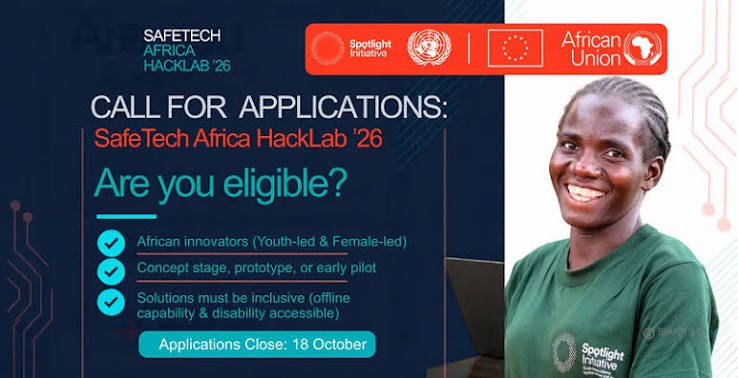
SafeTech Africa HackLab 2026
Applications are now open for the SafeTech Africa HackLab 2026, a Youth Social Innovation Challenge designed to support young African innovators developing practical solutions for safer communities, stronger digital rights, and greater protection for women, girls, and marginalized young people. The challenge is organized by the United Nations Population Fund (UNFPA) across Eastern and Southern Africa and Western and Central Africa, in partnership with the Spotlight Initiative Africa Regional Programme, the Global Programme to End Child Marriage, the African Union Women, Gender and Youth Directorate, UNDP, UNICEF, and UN Women. Launched during the African Union Innovation Festival 2026 in Addis Ababa under the theme “Vibrant Youth Ecosystems for AI and Digital Sovereignty,” the SafeTech Africa HackLab seeks to identify, incubate, fund, and scale youth led digital and community solutions. The programme focuses on addressing harmful practices and technology facilitated violence while strengthening safe access to information and digital spaces. Young innovators, social entrepreneurs, digital rights advocates, and youth led teams from across Africa are invited to submit innovative solutions under one of three priority themes. Shortlisted finalists will receive virtual mentorship and pitch preparation before presenting their solutions at the YouthConnekt Africa Summit in November 2026. Four winning solutions will receive seed capital grants ranging from US$5,000 to US$10,000. About the HackLab The SafeTech Africa HackLab is designed for young people who are building products, platforms, services, community models, or technology driven solutions that respond directly to challenges affecting women, girls, adolescents, and other underserved groups. The initiative recognizes that technology can contribute to both protection and harm. It therefore encourages solutions that combine innovation with safety, privacy, ethical technology, accessibility, and meaningful youth leadership. Applications should demonstrate a clear understanding of the communities being served and provide a realistic pathway from an initial solution or pilot to wider regional impact. Solutions should be youth led and should not simply replicate an existing programme without adapting it to the needs of the intended users. Standalone research papers, essays, or one time advocacy campaigns are not considered sufficient innovations. Opportunity Benefits • Seed capital grants of US$5,000 to US$10,000 for four winners • Virtual mentorship for shortlisted innovators • Pitch coaching using the UNFPA Social Innovation Toolkit • Live pitching opportunity at the YouthConnekt Africa Summit • Exposure to investors and venture funds • Connections with continental development partners • Visibility through UNFPA, Spotlight Initiative, African Union, and other media channels • Opportunity to develop and scale youth led solutions Programme Themes 1. Safe Physical and Community Spaces This theme focuses on innovative ways of preventing and responding to child marriage, female genital mutilation, gender based violence, and other harmful practices. Potential solutions may include mobile based early warning systems, referral platforms connecting girls to emergency support and legal services, digital tools supporting school retention, interactive community dialogue platforms, and youth led safe space networks. Solutions should strengthen physical and community safety while reaching young people who may be underserved by conventional services. 2. Safe Informational Spaces This theme focuses on improving access to accurate, confidential, youth friendly information on comprehensive sexuality education and sexual and reproductive health and rights. Possible innovations include confidential chatbots, messaging services, USSD systems, digital learning platforms, peer support spaces, and secure referral tools. Solutions should be accessible to rural youth, out of school adolescents, young people with disabilities, and communities with limited connectivity or digital literacy. 3. Safe Digital Spaces This theme addresses technology facilitated violence, online harassment, anti rights narratives, misinformation, censorship, and other digital threats. Potential innovations include safety by design tools, browser extensions, encrypted reporting systems, digital self defence platforms, algorithmic auditing tools, counter narrative resources, privacy preserving artificial intelligence solutions, and decentralized publishing platforms. Solutions should help users build digital agency while protecting privacy and supporting communities affected by online harm. Eligibility Criteria • Applicants must be young African innovators, social entrepreneurs, or digital rights advocates. • Applicants must be between 18 and 35 years old. • Applicants should reside in eligible countries across Eastern, Southern, Western, or Central Africa. • Teams of 2 to 5 members are strongly encouraged. • Each team should designate a team lead who will serve as the primary focal point. • Female led startups and teams with at least 50 percent female membership are prioritized. • Solutions should intentionally include marginalized and underserved groups. • Relevant groups include rural youth, young women, out of school adolescents, displaced persons, and young people with disabilities. • Young people should have meaningful leadership and ownership of the solution. • Solutions should demonstrate potential for implementation and scale. • Innovations should incorporate appropriate safety, privacy, ethical, and safeguarding measures. Selection Criteria Applications will be evaluated against several criteria, with particular attention to the relevance and practicality of the proposed solution. • Problem and solution fit • Innovation and originality • Feasibility and viability • Inclusion and disability accessibility • Youth leadership • Scalability and potential impact • Safety, privacy, and ethics Required Application Information Applicants should prepare the following information for the online application: • Team lead details • Team member details • Ages of team members • Gender composition • Nationalities • Contact information • Roles within the team • Selection of one HackLab theme • Problem statement of no more than 200 words • Innovation description of no more than 700 words • 12 month implementation roadmap • Expected outputs and milestones • Digital safety and inclusion note • Safeguarding measures • Data privacy considerations • Accessibility considerations The problem statement should clearly identify the affected community, where the community is located, the challenges being experienced, why the problem matters, and the potential cost of inaction. The innovation description should explain how the product, platform, or solution works, the technology involved, the benefits for users, and its potential for scalability. Selection Process Applications opened on September 29, 2026 and close on October 18, 2026. Following the application deadline, entries will undergo technical review by a multidisciplinary panel. Eight finalists are expected to be selected during the